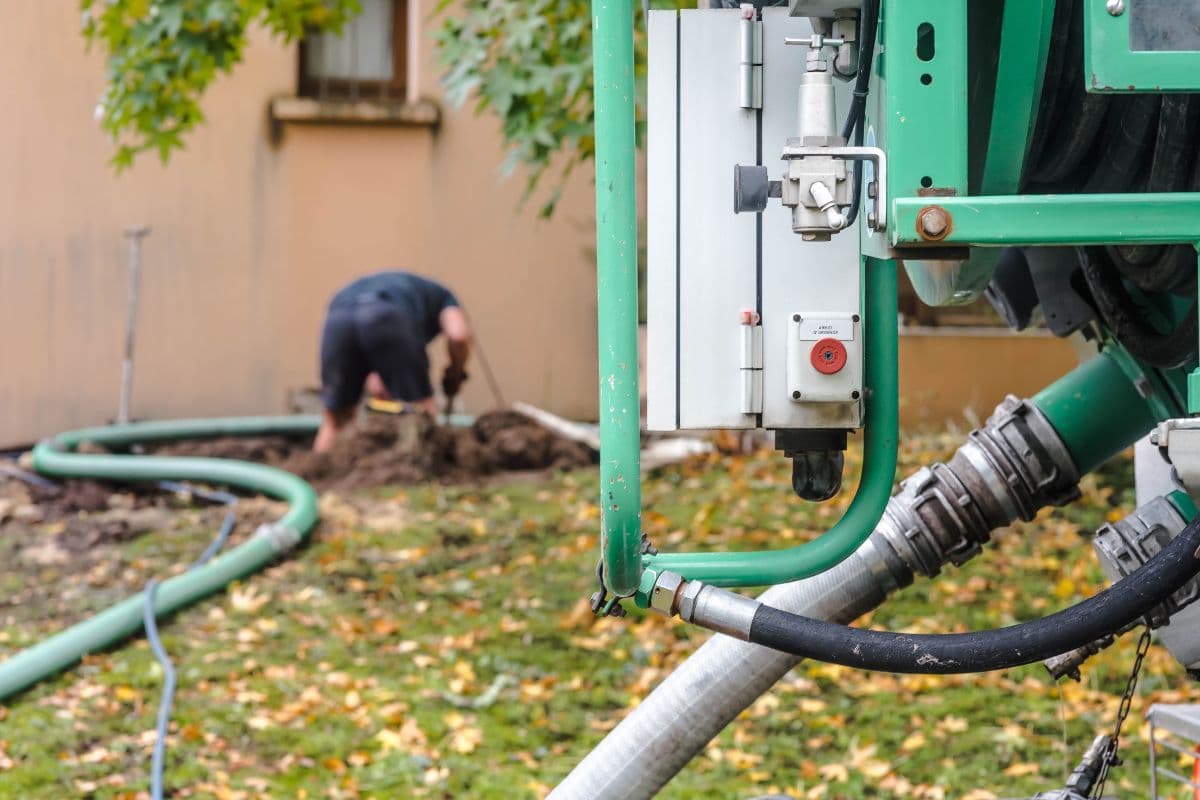
Septic system repair cost is the expense of diagnosing and fixing a specific failed or failing component of an on-site wastewater treatment system, which includes the tank, inlet and outlet baffles, effluent filter, distribution box, connecting pipes, pump, and drainfield. Each component can fail independently and at a different price point, meaning the cost of any specific repair is determined entirely by which part failed and how severely, not by the system as a whole. The most expensive repairs are almost always the result of deferred maintenance, particularly skipping regular tank pumping, which allows solids to escape into the drainfield and turns a $300 preventive pump-out into a $5,000 to $15,000 drainfield replacement.
Septic system repairs cost $600 to $3,000 on average. Minor repairs (filter replacement, baffle repair, lid fix) cost $100 to $500. Mid-range repairs (pump replacement, distribution box, line repair) cost $500 to $1,500. Major repairs (drainfield rejuvenation, tank crack repair, root removal) cost $1,000 to $5,000. Full drainfield replacement costs $5,000 to $15,000. Full system replacement costs $8,000 to $20,000+.
The range is enormous because septic repair covers everything from a $50 filter cleaning to a $15,000 drainfield replacement. This guide prices out every specific repair, so you know exactly what you're facing before calling a contractor. If you are looking at a tank replacement, drainfield replacement, or full system replacement, you can estimate septic system cost for your specific scenario before requesting quotes.
Every Septic Repair Priced Out
| Repair | Cost Range | Urgency |
|---|---|---|
| Effluent filter cleaning or replacement | $50 – $200 | Routine |
| Tank lid replacement | $100 – $300 | Low |
| Riser installation or repair | $200 – $400 | Low |
| Baffle repair or replacement | $250 – $900 | Medium |
| Septic pump repair | $250 – $400 | Medium |
| Septic pump replacement | $500 – $1,300 | Medium |
| Control panel replacement | $300 – $500 | Medium |
| Distribution box replacement | $500 – $1,500 | Medium |
| Septic line repair (per linear foot) | $50 – $250 | High |
| Cracked tank repair (patching) | $500 – $850 | High |
| Root removal from pipes or tank | $600 – $1,600 | High |
| Drainfield rejuvenation | $1,000 – $5,000 | High |
| Drainfield replacement | $5,000 – $15,000 | Critical |
| Full tank replacement | $3,000 – $7,000 | Critical |
| Complete system replacement (tank + drainfield) | $8,000 – $20,000+ | Critical |
This table is the most complete septic repair cost reference available. Bookmark it for when you need it.
Minor Repairs ($50 to $500)
These are routine maintenance items that are inexpensive and preventable with regular service.
Effluent Filter Cleaning or Replacement — $50 to $200
The effluent filter sits at the tank outlet and catches solids before they reach the drainfield. It clogs naturally over time as part of normal operation.
Cleaning is free if you do it yourself during a routine inspection, or $50 to $100 if the pumping crew does it. Replacement filters cost $50 to $200. This should be checked at every pumping visit.
Tank Lid Replacement — $100 to $300
Concrete lids crack. Plastic lid gaskets deteriorate. A damaged lid allows septic gases to escape into your yard and creates a safety hazard.
Replacement costs $100 to $300, depending on material and size. If your lids are buried, consider upgrading to risers at the same time.
Riser Installation or Repair — $200 to $400
Risers bring tank access to ground level. Installing new risers costs $200 to $400 per access point. Repairing a cracked riser or replacing a damaged riser lid is typically $100 to $200.
Risers are the single best investment for reducing future service costs because they eliminate digging fees at every pumping visit.
Mid-Range Repairs ($250 to $1,500)
These repairs indicate a component has worn out or failed. They're more expensive but still far cheaper than system replacement.
Baffle Repair or Replacement — $250 to $900
Your tank has two baffles: the inlet baffle directs incoming wastewater downward, and the outlet baffle prevents scum and sludge from exiting the tank. When baffles crack, deteriorate, or break off, solids escape into the drainfield.
This is one of the most important repairs to make promptly because a missing outlet baffle is the fastest path to drainfield failure. The repair involves accessing the tank interior and installing a new PVC or concrete baffle.
Septic Pump Replacement — $500 to $1,300
Systems that rely on a pump to move effluent to the drainfield (mound systems, pressure distribution systems, and any system where the drainfield is higher than the tank) will eventually need pump replacement. Pumps typically last 7 to 15 years.
Repair costs $250 to $400. Full replacement costs $500 to $1,300, including the pump, labor, and electrical connections.
Distribution Box Replacement — $500 to $1,500
The distribution box divides effluent equally among the drainfield lines. When a D-box cracks, shifts, or becomes unleveled, one section of the drainfield gets overloaded while the rest sits idle.
Replacement involves excavating the box, installing a new one, and reconnecting the pipes. According to EPA septic system maintenance guidance, ensuring equal distribution to all drainfield lines is critical for system longevity.
Control Panel Replacement — $300 to $500
Aerobic systems and pump-based systems have a control panel that monitors system functions, triggers pumps, and activates alarms. When the panel fails, the system can't regulate itself.
Replacement includes the panel, wiring, and reconfiguration.
Major Repairs ($500 to $5,000+)
These repairs indicate a significant problem that requires professional diagnosis and intervention.
Septic Line Repair — $50 to $250 Per Linear Foot
The sewer line from your house to the tank, or the pipe from the tank to the drainfield, can crack, separate, or be crushed by roots or soil movement. Repair cost depends on the length of damaged pipe, depth, and accessibility.
A camera inspection ($125 to $500) is usually needed first to locate and assess the damage. Total cost for a typical line repair runs $500 to $3,800.
Cracked Tank Repair — $500 to $850
Small cracks in concrete tanks can be repaired by pumping the tank dry and filling the cracks with hydraulic cement or specialized resin. This extends the tank's life by years.
However, large structural cracks or a tank that's shifted may require full tank replacement ($3,000 to $7,000). The pumping crew can assess crack severity during a routine pump-out.
Root Removal — $600 to $1,600
Tree roots infiltrate septic pipes and tanks through tiny cracks and joints. Removal uses a mechanical auger, drain cable machine, or hydro-jetting to cut through and clear the roots.
The problem will recur unless the tree is removed ($400 to $1,200 additional) or a root barrier is installed. A camera inspection before and after confirms the roots are fully cleared.
Drainfield Rejuvenation — $1,000 to $5,000
When a drainfield is struggling but hasn't completely failed, rejuvenation techniques can sometimes restore absorption capacity. Methods include soil aeration (fracturing compacted soil with pressurized air), hydro-jetting drainfield pipes to remove sediment, and bio-remediation (introducing bacteria to break down biomat).
Success depends on the cause and severity of the problem. This costs far less than replacement but doesn't work in all cases.
When Repair Isn't Enough: Replacement Costs
Some problems can't be fixed. Here's when replacement becomes necessary and what it costs.
Tank Replacement — $3,000 to $7,000
Replace the tank when it has major structural failure (large cracks, shifting, or collapse), when it's undersized for the home (bedrooms added since installation), or when the tank material has reached the end of its lifespan (steel tanks especially). Tank replacement reuses the existing drainfield if it's still functioning.
Drainfield Replacement — $5,000 to $15,000
Replace the drainfield when it has permanently lost absorption capacity from years of receiving solids, when pipes are crushed or collapsed, or when the system has reached the end of its natural lifespan (15 to 30 years). A new perc test and site evaluation ($500 to $1,500) are required. The replacement drainfield is installed in the designated reserve area identified in the original septic permit.
Complete System Replacement — $8,000 to $20,000+
When both the tank and drainfield need replacement, or when the entire system is non-compliant with current code, a complete replacement is necessary. Costs vary enormously based on system type. For a complete breakdown, see our septic system installation cost guide.
For repairs that escalate to full tank or drainfield replacement, use our septic tank cost calculator to estimate the larger project scope.
The Repair vs. Replace Decision
Use the 50% rule: if the repair cost exceeds 50% of the replacement cost, replacement is usually the better investment. Here are other factors that tip the decision:
Lean Toward Repair When:
- • The system is under 15 years old
- • The problem is a single component (pump, baffle, filter, D-box)
- • The drainfield is still absorbing properly
- • The tank is structurally sound
Lean Toward Replacement When:
- • The system is over 20 years old
- • You're facing multiple simultaneous failures
- • The drainfield shows signs of permanent failure (standing water in dry weather, sewage surfacing)
- • Repairs have become frequent (more than one per year)
- • The system doesn't meet current code and you're selling the home
What Is My Symptom? Find Your Repair and Cost
Match what you are observing to the most likely repair needed and its realistic cost range.
| What You Are Observing | Most Likely Cause | Repair Needed | Estimated Cost |
|---|---|---|---|
| Whole-house slow drains, tank recently pumped | Clogged effluent filter | Clean or replace effluent filter | $0 – $200 |
| Sewage odor near tank, no visible pooling | Cracked or unsealed tank lid | Replace lid or riser seal | $100 – $400 |
| Whole-house slow drains, tank overdue for pumping | Full tank | Pump-out | $300 – $600 |
| Gurgling from multiple fixtures | Blocked baffle or main line restriction | Baffle replacement or pipe inspection | $250 – $900 |
| Slow drains plus sewage odor in yard | Early drainfield stress or broken pipe | Camera inspection plus repair or rejuvenation | $500 – $5,000 |
| One drainfield section wet, others dry | Failing or unlevel distribution box | D-box replacement | $500 – $1,500 |
| Pump alarm activating on mound or ATU system | Failed or failing septic pump | Pump repair or replacement | $250 – $1,300 |
| Sewage odor at specific point along house-to-tank route | Cracked or separated sewer line | Camera inspection plus pipe repair | $600 – $3,800 |
| Roots visible in tank or pipes on inspection | Root intrusion | Root removal plus camera inspection | $600 – $1,600 |
| Small crack visible in concrete tank on inspection | Minor structural tank damage | Tank crack repair with hydraulic cement | $500 – $850 |
| Large structural crack or shifting tank | Major tank failure | Full tank replacement | $3,000 – $7,000 |
| Soggy soil over drainfield in dry weather, early stage | Moderate drainfield clogging | Drainfield rejuvenation | $1,000 – $5,000 |
| Standing water or surfacing sewage over drainfield | Complete drainfield failure | Full drainfield replacement | $5,000 – $15,000 |
| Sewage backing up into house | Total system failure | Emergency pump-out plus full assessment | $300 – $20,000 |
| Multiple components failing simultaneously, system 20+ years old | End of system lifespan | Full system replacement | $8,000 – $20,000 |
How to Save Money on Septic Repairs
Get three quotes
Repair pricing varies significantly between contractors. Three quotes help you identify fair pricing and avoid overpaying.
Maintain proactively
Most expensive repairs are caused by skipped maintenance. Pumping on schedule, cleaning the effluent filter, and following septic-safe practices prevent the majority of failures.
Install risers
Every repair that requires accessing the tank is cheaper when risers are already installed. You save $50 to $200 in digging fees per service visit.
Catch problems early
A $250 baffle repair today prevents a $10,000 drainfield replacement in two years. Annual inspections ($100 to $300) catch developing problems before they escalate.
Ask what's included
Some repair quotes include pumping, inspection, and the repair. Others charge each separately. Always ask for an itemized breakdown.
Frequently Asked Questions
How much does it cost to repair a septic system?
What is the most expensive septic repair?
Should I repair or replace my septic system?
Does homeowners insurance cover septic repairs?
How can I prevent expensive septic repairs?
How long do septic system components last?
Glossary
Related Guides
On theseptic.guide
- Drainfield Replacement Cost — The most expensive single septic repair priced out in full, with a complete breakdown by system type, site conditions, and what drives cost from the low end to the high end.
- Signs Your Drainfield Is Failing — The full warning sign progression from earliest to latest, what causes drainfield failure, and when the situation calls for rejuvenation versus replacement.
- Septic System Installation Cost 2026 — Full cost breakdown for new and replacement systems by type, relevant when repairs have reached the point where full replacement is the better investment.
- Septic Inspection Cost — What a professional inspection costs and why an accurate diagnosis before committing to any repair is essential for avoiding the wrong fix at the wrong price.
- Septic Tank Pumping Cost 2026 — The $300 to $600 service that prevents the majority of expensive repairs, with real pricing by tank size and region.
- How Often Should You Pump Your Septic Tank? — The pumping schedule that keeps solids out of the drainfield and prevents the repair cascade that starts with a neglected tank.
- Septic Tank Backing Up Into House — Emergency steps, causes, and what to do when a repair situation has escalated to sewage entering the home.
- Slow Drains on a Septic System — How to diagnose whether slow drains point to a localized pipe clog, a full tank, a clogged effluent filter, or a developing drainfield problem before calling for a repair.
- Septic Smell in Your Yard — Eight causes of outdoor septic odor, what each one means for the system's condition, and the specific repair or fix for each.
- Septic System Maintenance Checklist — The complete ongoing maintenance schedule that prevents the majority of expensive repairs by catching developing problems at the inexpensive end of the repair spectrum.
- Does Insurance Cover Septic Repair and Replacement? — Why most repairs are out-of-pocket expenses and what policy options exist to reduce financial exposure before a failure occurs.
- Septic Tank Cleaning vs Pumping — The difference between a thorough pump-out and a basic service, and why incomplete pumping accelerates the solid accumulation that leads to the most expensive repairs.
- Do Septic Tank Additives Work? — Why additives cannot replace repairs or pumping, and which additive types can actively cause the damage that leads to expensive system failures.
- Best Septic Tank Risers — The one upgrade that reduces the cost of every future repair and service visit by eliminating excavation fees and giving technicians immediate access to the tank.
From Our Network
- Sump Pump Design Ideas for 2026 — For homes where groundwater management is contributing to drainfield saturation and accelerating repair costs, a properly designed sump pump system can redirect water away from the septic area.
- Best Sump Pumps 2026 — Reviewed and ranked sump pump options for homeowners managing water intrusion and drainage problems that stress the septic system and increase repair frequency.
External Resource
- EPA Septic System Maintenance Guidance — The EPA's official guidance on septic system care including maintenance schedules, what to avoid, and how proper upkeep prevents the costly repairs covered in this guide.
Need a Septic Repair Quote?
Connect with licensed septic professionals in your area. Get free, no-obligation quotes and compare prices before you commit.
Get Free QuotesGet Expert Septic Help
Connect with qualified septic professionals in your area. Free quotes, no obligation.