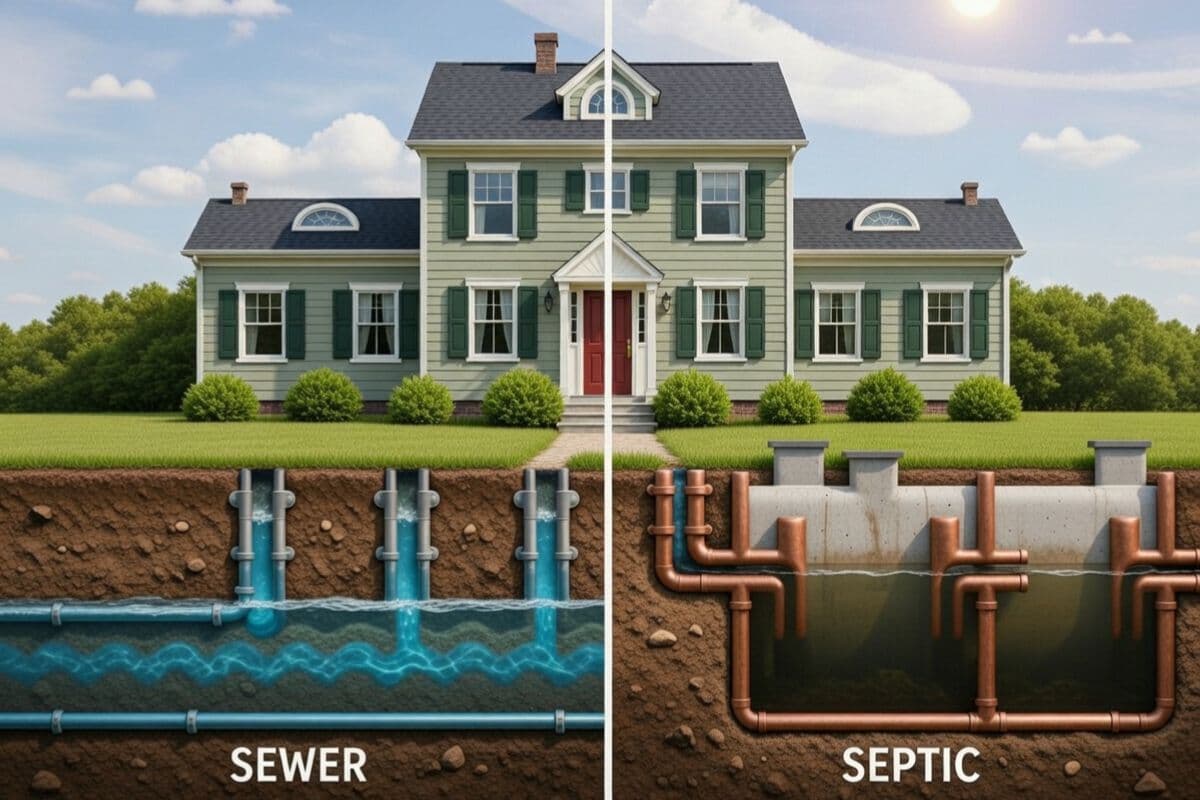
Most homeowners don't get to choose — location determines the answer. Rural properties use septic, urban and suburban properties connect to sewer. But if you're buying a home, building new, or your area is expanding sewer access, this guide gives you every fact you need to decide.
A septic system is a private, on-site wastewater treatment system that the homeowner owns, operates, and maintains entirely at their own expense, with no monthly service fee and no connection to municipal infrastructure. A municipal sewer is a publicly owned wastewater collection and treatment network that the homeowner connects to and pays a recurring monthly fee to use, with the municipality responsible for everything beyond the property line. The comparison between the two is not primarily a quality comparison — both systems treat wastewater adequately when functioning correctly — but a cost, responsibility, and risk comparison that plays out differently depending on local sewer rates, property location, household water usage, and how consistently the septic system is maintained. For homeowners who have a genuine choice between the two, the decision comes down to one question: would you rather pay a predictable monthly bill with minimal maintenance responsibility, or pay nothing monthly while accepting full ownership of a system that requires periodic maintenance and carries the risk of a large unexpected repair?
How Each System Works
Septic System
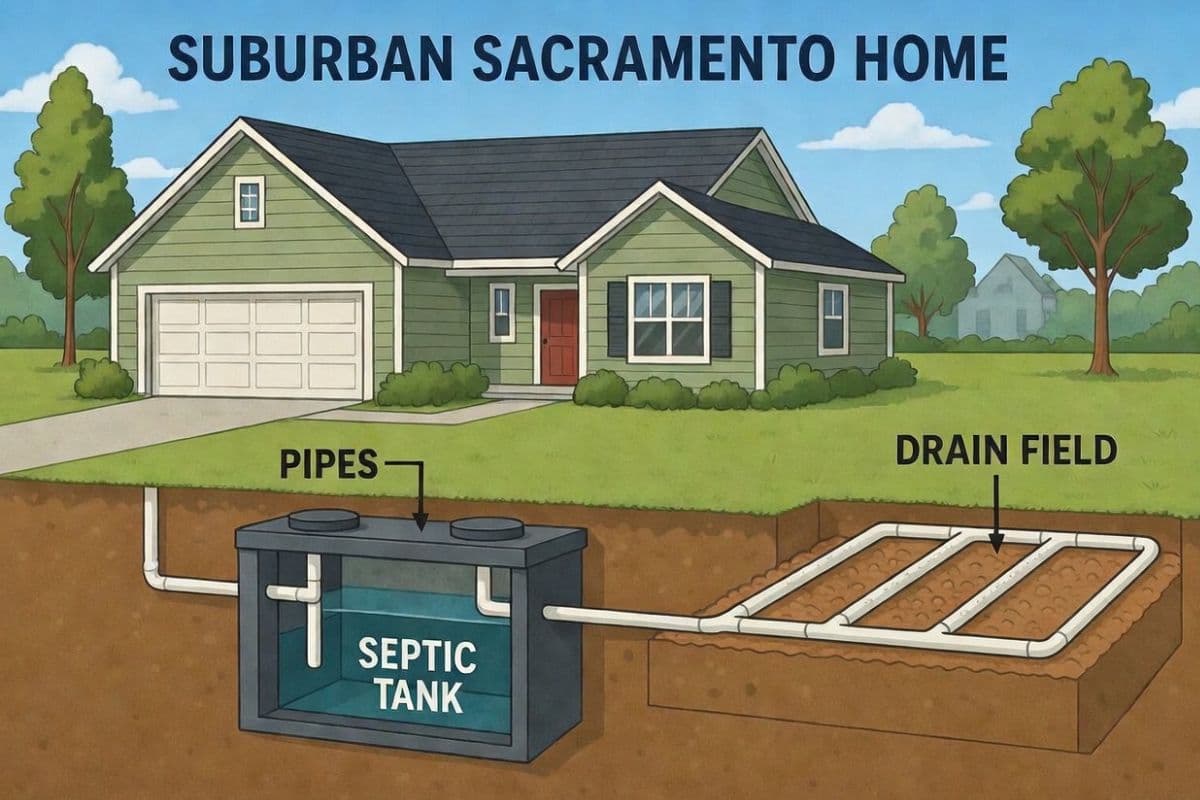
All your household wastewater — toilets, showers, sinks, laundry — flows through one pipe to a septic tank buried in your yard. Inside the tank, solids settle as sludge, grease floats as scum, and bacteria break down organic material. The partially treated liquid (effluent) flows to a drainfield where it percolates through gravel and soil. Microorganisms in the soil complete the treatment, removing remaining bacteria and nutrients before the water returns to the groundwater.
Everything happens on your property. You own it, you maintain it, and you pay for repairs.
Municipal Sewer
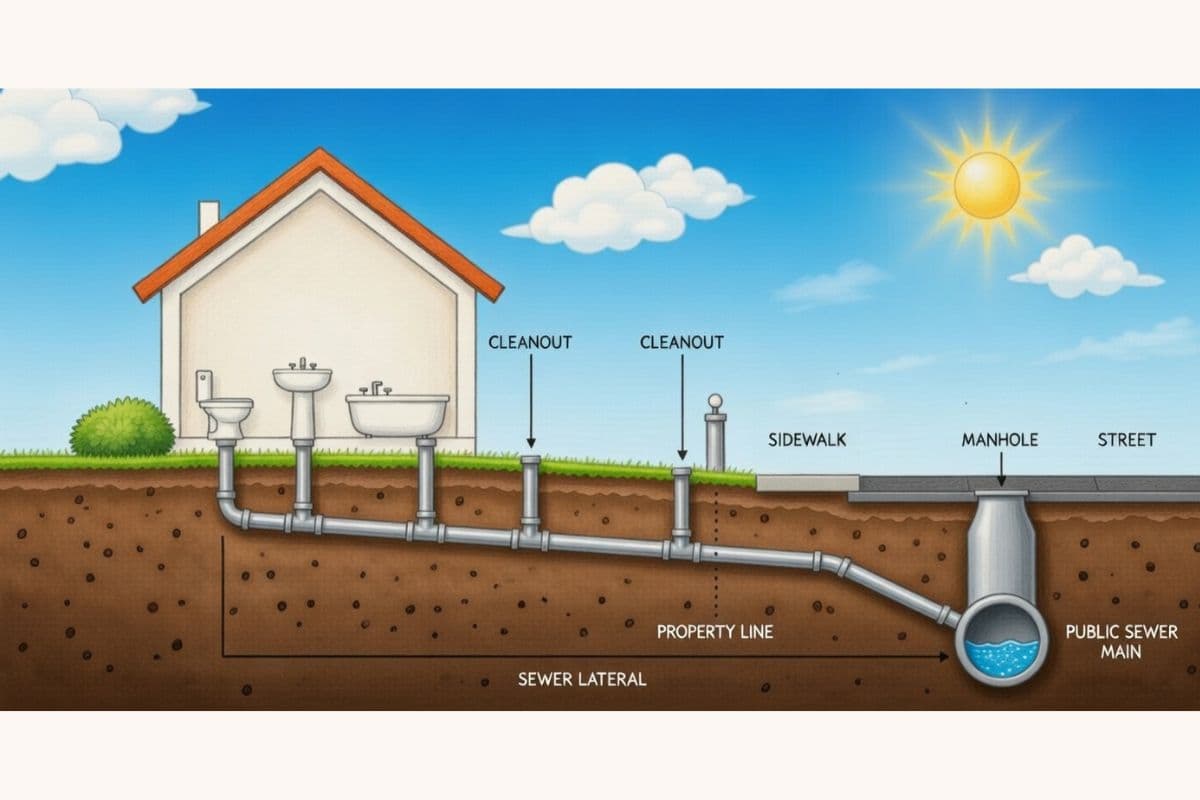
Your household wastewater flows through a pipe to a larger pipe under the street (the sewer main), which carries it to a centralized wastewater treatment plant operated by your local government. The plant uses advanced mechanical, chemical, and biological processes to treat millions of gallons daily. Treated water is discharged into local waterways.
The city owns and maintains the main sewer lines and treatment plant. You own and maintain the lateral line from your house to the sewer main. You pay a monthly bill for the service.
Side-by-Side Comparison
| Factor | Septic System | Municipal Sewer |
|---|---|---|
| Installation cost | $3,500 to $12,000 | $1,500 to $6,000 (connection + tap fees) |
| Monthly cost | $0 (no bill) | $15 to $150/month |
| Annual maintenance cost | $200 to $500 (annualized) | $0 to minimal |
| 20-year total cost | $16,000 to $25,000 | $5,000 to $42,000 |
| Homeowner responsibility | Everything — tank, drainfield, pipes | Lateral line only (house to street) |
| Maintenance required | Pumping every 3–5 years, annual inspection, filter cleaning | Minimal — avoid clogs, occasional lateral cleaning |
| Space required | Large (tank + drainfield area) | Minimal (pipe to street) |
| Treatment quality | 40–95% depending on system type | 95–99% (advanced treatment plant) |
| Lifespan | 20 to 30 years | 50 to 100 years (infrastructure) |
| Independence from city | Complete | None — tied to municipal system |
| Water usage sensitivity | High — system can overload | Low — treatment plant handles volume |
| Property value impact | Neutral to slightly lower | Neutral to slightly higher |
| Environmental control | You control it directly | City manages it |
| Power outage impact | None (gravity-fed conventional) | Depends on lift stations |
| Risk of major expense | Drainfield replacement $5,000–$15,000 | Lateral repair $1,500–$5,000 |
Septic System Pros and Cons
Pros
- ✓No monthly sewer bill. This is the biggest ongoing financial advantage. Sewer customers pay $15 to $150 per month ($180 to $1,800 per year) indefinitely. Septic owners pay nothing between maintenance visits. Over 20 years, this saves thousands of dollars for homeowners with well-maintained systems.
- ✓Independence from municipal infrastructure. Your system operates entirely on your property. City sewer main breaks, treatment plant overflows, and municipal rate increases don't affect you. If you value self-sufficiency, septic delivers it.
- ✓Environmental benefits when properly maintained. Septic systems return treated water to your local groundwater naturally. There's no energy-intensive treatment plant involved for conventional systems. The process uses gravity and natural biology.
- ✓Lower long-term cost for disciplined owners. If you maintain your system on schedule, the total cost of ownership over 20 years is often lower than 20 years of sewer bills, especially in areas with high sewer rates.
- ✓Required for rural living. If you want to live on acreage outside city limits, septic is often the only option. It makes rural homeownership possible.
Cons
- ✗You are responsible for everything. Repairs, maintenance, pumping, inspections, and emergencies are all on you. If the system fails at 2 AM, you're calling a septic company and paying the bill. There's no city department to handle it.
- ✗Risk of major expense. A drainfield replacement costs $5,000 to $15,000. A full system replacement costs $8,000 to $20,000. These costs come all at once, not spread across monthly bills. Insurance rarely covers these expenses.
- ✗Usage restrictions. You must be careful about what you flush and pour down drains. Garbage disposals, antibacterial products, chemical drain cleaners, and excessive water use can all damage the system.
- ✗Space requirements. The tank and drainfield occupy a significant footprint on your property. You can't build, drive, or plant deep-rooted trees on the drainfield area. This limits how you use your yard.
- ✗Maintenance is non-negotiable. Skip pumping and you'll pay for it with drainfield failure. Septic systems reward diligent owners and severely punish neglectful ones.
Municipal Sewer Pros and Cons
Pros
- ✓Minimal maintenance responsibility. Flush and forget. The city handles treatment, main line maintenance, and infrastructure upgrades. Your only responsibility is the lateral line from your house to the street, and problems with that line are rare.
- ✓No risk of drainfield failure. There is no drainfield to replace. The most expensive sewer-side repair for a homeowner is lateral line replacement ($1,500 to $5,000), which is significantly less than septic system failures.
- ✓Handles high volume easily. Large families, frequent guests, and heavy water use days (back-to-back laundry, multiple showers, dishwasher running) are non-issues for sewer systems. Septic systems can be overwhelmed by concentrated heavy use.
- ✓Higher treatment quality. Municipal treatment plants remove 95 to 99% of contaminants using advanced processes. Conventional septic systems remove 40 to 60%. Aerobic septic systems close the gap at 90 to 95%, but they're more expensive.
- ✓Potentially higher property value. Homes on sewer may appraise slightly higher than comparable homes on septic, particularly in suburban markets where buyers perceive sewer as more convenient and less risky.
- ✓No space restrictions. Without a drainfield, you have full use of your entire yard for landscaping, structures, and vehicles.
Cons
- ✗Monthly bill that never stops. $15 to $150 per month, every month, forever. Over 20 years at $66/month (the national average), that's $15,840 in sewer fees alone. Rates increase over time and you have no control over them.
- ✗Connection costs can be high. If sewer becomes available in your area, the connection fee (tap fee) plus installation of the lateral line can cost $3,000 to $10,000. Some municipalities assess the cost per foot of sewer main that runs past your property, which can add thousands more.
- ✗No independence. You're tied to municipal infrastructure. Rate increases, treatment plant issues, and main line breaks can affect your service. During major sewer main failures, backups can affect entire neighborhoods simultaneously.
- ✗You still own the lateral. If the pipe from your house to the sewer main breaks, cracks, or gets invaded by tree roots, that's your repair ($1,500 to $5,000). Many homeowners don't realize this until they get the bill.
20-Year Cost Comparison
This is the comparison that matters most. Installation cost is a one-time event. The real question is what each system costs over its useful life.
| Cost Category | Septic (20 years) | Sewer (20 years) |
|---|---|---|
| Installation | $7,000 (avg) | $4,000 (avg connection) |
| Monthly fees | $0 | $15,840 (at $66/mo avg) |
| Pumping (every 3–4 yrs) | $3,000 | $0 |
| Annual inspections | $4,000 | $0 |
| Effluent filter maintenance | $500 | $0 |
| One major repair (avg) | $2,500 | $1,000 |
| 20-year total | $17,000 | $20,840 |
At the national average sewer rate of $66/month, the costs are roughly comparable over 20 years. But rates vary enormously.
If your sewer rate is $30/month, sewer wins easily on total cost. If your sewer rate is $100/month, septic becomes significantly cheaper over time.
The catch with septic: If you need a drainfield replacement during that 20-year window — add $5,000 to $15,000 — septic becomes much more expensive. This is why maintenance matters so much. The homeowners who maintain their systems avoid the catastrophic expense. The homeowners who don't face bills that dwarf what they would have paid in sewer fees.
Converting from Septic to Sewer
If sewer becomes available in your area, you may have the option — or requirement — to connect. Conversion costs include:
| Item | Cost |
|---|---|
| Sewer tap/connection fee | $1,500 – $5,000 |
| Lateral line installation (house to street) | $2,000 – $6,000 |
| Septic tank decommissioning | $1,000 – $3,000 |
| Permits | $200 – $500 |
| Total conversion cost | $5,000 – $15,000 |
Some municipalities offer incentive programs, grants, or low-interest loans to help homeowners convert. Check with your local government before paying full price.
When conversion makes sense
- •Your septic system is failing and needs expensive replacement anyway
- •The conversion cost is comparable to a new septic system
- •Your sewer rates are reasonable relative to septic maintenance costs
When staying on septic makes sense
- •Your system is well-maintained and has years of life remaining
- •The conversion cost is high relative to your remaining septic maintenance needs
- •You value independence from municipal utilities and rate increases
Which Is Right for Your Situation?
| Your Situation | Recommendation | Reason |
|---|---|---|
| Rural property, no sewer available | Septic — only option | Municipal sewer does not reach your property |
| Urban or suburban property, sewer available | Sewer — likely required | Most jurisdictions require connection when sewer is at the property line |
| Building new, both options available | Compare 20-year costs using local sewer rate | At rates above $80/month, septic is usually cheaper over 20 years |
| Existing septic functioning, 10+ years of life remaining | Stay on septic | No financial justification to convert a healthy system |
| Existing septic at end of life, sewer available | Strong convert candidate | Avoid full replacement cost by converting instead |
| Existing septic failed, drainfield needs replacement | Evaluate conversion vs replacement | Conversion costs similar to drainfield replacement and eliminates future risk |
| Local sewer rate under $30/month | Sewer is cheaper over 20 years | Low monthly rate means sewer wins the 20-year cost comparison |
| Local sewer rate over $100/month | Septic is cheaper over 20 years | High monthly rate means well-maintained septic costs less long-term |
| Sewer newly extended to area, connection voluntary | Run 20-year cost comparison before deciding | Factor in conversion cost plus monthly rate vs remaining septic lifespan |
| Sewer mandatory connection notice received | Convert and apply for assistance programs | Check for grants or low-interest loans before paying full conversion cost |
| Selling home, sewer available but not connected | Evaluate whether connection increases sale price enough to justify cost | In sewer-preferred markets, connection can add $5,000 to $15,000 to sale price |
| Buying home with septic in sewer-available area | Check whether connection is mandatory and on what timeline | Mandatory future connection is a disclosed expense that affects your offer |
| High household water usage, large family | Sewer handles volume better | Septic systems can be overwhelmed by concentrated heavy use events |
| Environmentally sensitive area with tightening regulations | Sewer or aerobic septic likely required | Conventional septic may not meet future effluent standards in sensitive watersheds |
Frequently Asked Questions
Is septic or sewer better?
Neither is universally better — the right answer depends on your property location, local sewer rates, household water usage, and how consistently you maintain a septic system. Septic is better for rural properties, homeowners who want independence from municipal utilities, and disciplined owners who maintain their systems on schedule and want to avoid monthly bills. Sewer is better for urban and suburban properties, homeowners who want minimal maintenance responsibility, and households with high or unpredictable water usage that would stress a septic system. The financial comparison is close at average sewer rates — the 20-year total cost of a well-maintained septic system and average-rate sewer service are roughly equivalent — but septic becomes significantly more expensive if a drainfield replacement is needed. If you have a genuine choice between the two, the deciding factor is usually whether you are willing to accept the maintenance obligation and occasional large repair risk that comes with private system ownership.
Is a septic system cheaper than sewer?
It depends on your local sewer rate and how well you maintain the septic system. At the national average sewer rate of approximately $66 per month, the 20-year total cost of a well-maintained septic system and sewer service are roughly comparable at $17,000 to $21,000. If sewer rates in your area exceed $100 per month, a well-maintained septic system is significantly cheaper over 20 years. If sewer rates are under $30 per month, sewer is the cheaper option over the same period. The critical caveat is drainfield replacement: a septic system that requires drainfield work during the 20-year window adds $5,000 to $15,000 to the total, making it substantially more expensive than sewer in that scenario. Consistent pumping and maintenance is the single most important factor in keeping septic lifetime costs below sewer lifetime costs. See our septic system maintenance checklist for the full schedule.
Does a septic system lower property value?
In most markets, a well-maintained septic system with documented maintenance records has minimal impact on property value compared to a sewer-connected home. In suburban areas where municipal sewer is the norm, some buyers discount septic properties slightly due to the perceived maintenance burden and failure risk, typically by $5,000 to $15,000 depending on system age and condition. In rural areas where septic is the universal standard, there is no measurable impact because buyers expect it and price accordingly. The documentation package matters significantly: a home with a recent clean inspection report, multiple years of pumping receipts, and a properly sized system sells with less buyer resistance than one with no records. A failing or undocumented system can reduce value by $10,000 to $25,000 regardless of location. See our selling a home with a septic system guide for how to maximize value before listing.
How much does it cost to connect to city sewer?
Connecting to municipal sewer costs $5,000 to $15,000 total for a typical residential conversion, including the tap fee ($1,500 to $5,000), lateral line installation from the house to the street ($2,000 to $6,000), septic tank decommissioning ($1,000 to $3,000), and permits ($200 to $500). The single most variable cost component is the municipal tap fee, which ranges from $500 in some smaller cities to $10,000 or more in areas where the municipality recently built new sewer infrastructure and is recovering those costs from new users. Distance from the house to the sewer main is the second biggest variable, with lateral installation running $50 to $250 per linear foot depending on depth, soil conditions, and whether open trenching or trenchless boring is used. Some municipalities offer grants, rebates, or low-interest loans for conversion, particularly in environmentally sensitive areas. See our septic to sewer conversion cost guide for the full breakdown and available assistance programs.
Can I choose between septic and sewer?
In most cases, no — the choice is determined by geography and local ordinance rather than homeowner preference. If municipal sewer is available at your property line, most jurisdictions require connection and do not permit new septic systems to be installed. If sewer is not available, septic is the only option regardless of preference. A genuine choice exists only in limited situations: when sewer is newly extended to your area and a voluntary connection window applies, when building new construction in an area where the municipality offers both options, or when your existing septic system needs full replacement and sewer connection is available but not yet mandatory. If you are in one of these situations, the decision framework in this guide and our septic to sewer conversion cost guide gives you the financial comparison you need to make the call.
What happens if sewer becomes available in my area?
Your municipality may require you to connect within a set timeframe, typically one to three years after sewer becomes available within a specified distance of your property, commonly 200 to 300 feet. Some areas make connection voluntary, leaving the decision to the homeowner, while others make it mandatory and assess fines for non-compliance after the deadline. If connection is mandatory, ask your water and sewer authority about the exact timeline, the tap fee, and whether any financial assistance programs are available — in some areas grants or low-interest loans cover 50 to 85 percent of eligible conversion costs. If sewer is voluntary, run the 20-year cost comparison using your local sewer rate to determine whether the monthly bill plus conversion cost is justified by your remaining septic system lifespan. Disclose sewer availability and any mandatory connection timeline to buyers if you are selling, as it represents a material future expense. See our septic to sewer conversion cost guide for full pricing and assistance program details.
Glossary
Municipal sewer
A network of underground pipes, pump stations, and treatment facilities owned and operated by local government that collects household wastewater from connected properties and transports it to a centralized treatment plant for processing. Homeowners pay a monthly fee for the service and are responsible only for maintaining the lateral line on their own property from the house to the sewer main at the street. Monthly rates range from $15 to $150 depending on location and are typically based on metered water consumption.
Lateral line
The pipe that connects a home's internal drain system to the municipal sewer main under the street, typically 4-inch PVC running from the foundation to the property line or sewer main connection point. The lateral is owned and maintained by the homeowner rather than the municipality, meaning root intrusion, pipe collapse, or corrosion in the lateral is the homeowner's repair responsibility at a cost of $1,500 to $5,000. Many homeowners are unaware of this ownership boundary until they receive a repair bill. See our septic to sewer conversion cost guide for how lateral installation is priced during a conversion.
Tap fee (connection fee)
A one-time charge paid to the municipality for the right to connect a property to the public sewer system, covering the cost of the physical connection to the sewer main and the property's allocated share of treatment plant capacity. Tap fees range from $500 in smaller municipalities to $10,000 or more in areas where the sewer infrastructure was recently built and the municipality is recovering construction costs from new users. Always request the current tap fee schedule in writing from your water and sewer authority before budgeting a conversion, as this single component has the widest variance of any conversion cost. See our septic to sewer conversion cost guide for how tap fees fit into the total conversion budget.
Sewer main
The large underground pipe owned and maintained by the municipality that collects wastewater from individual lateral lines and carries it to the regional treatment plant, typically running beneath streets and public rights-of-way. Sewer mains range from 8 to 24 inches in diameter for residential collection lines and are installed at depths of 4 to 12 feet depending on local frost depth and terrain. The depth and distance of the sewer main from your property are the two primary factors that determine lateral installation cost when connecting.
Decommissioning
The required process of permanently disabling a septic system after connecting to municipal sewer, involving pumping all remaining waste from the tank, collapsing the tank top or filling it with sand or gravel, capping all inlet and outlet pipes, and obtaining a final municipal inspection sign-off. Decommissioning costs $1,000 to $3,000 for in-place tank filling and $2,000 to $6,000 if full tank excavation and removal is required or mandated by the municipality. Never leave a septic tank empty and buried after conversion as an unfilled tank creates a void that can collapse and form a sinkhole. See our septic to sewer conversion cost guide for full decommissioning pricing.
Sewer rate
The monthly fee charged by a municipality for sewer service, typically calculated based on metered water consumption so that households using more water pay proportionally higher sewer bills. The national average is approximately $66 per month but ranges from $15 to $150 or more depending on location, with rates increasing annually in most municipalities as infrastructure ages and treatment requirements tighten. Your local sewer rate is the single most important input in the 20-year cost comparison between staying on septic and converting to sewer.
Effluent
The liquid wastewater that exits a septic tank or treatment plant after solids have been removed or treated, representing the partially or fully processed output of the treatment process. Septic system effluent exiting the tank is partially treated and relies on soil percolation in the drainfield for final contaminant removal before reaching groundwater. Municipal treatment plant effluent is processed to 95 to 99 percent contaminant removal using mechanical, chemical, and biological processes before being discharged to local waterways. See our signs your drainfield is failing guide for what happens when septic effluent reaches the drainfield in an inadequately treated state.
Treatment plant
A municipal facility that uses a multi-stage combination of mechanical screening, biological treatment, chemical disinfection, and solids processing to treat wastewater from thousands of connected homes before discharging treated water into the environment. Treatment plants achieve 95 to 99 percent contaminant removal, significantly higher than the 40 to 60 percent achieved by conventional anaerobic septic systems and comparable to the 90 to 95 percent achieved by aerobic treatment units. The monthly sewer bill covers the homeowner's proportional share of operating, maintaining, and eventually replacing this centralized infrastructure. See our aerobic vs anaerobic septic systems guide for how septic treatment quality compares by system type.
Related Guides
On theseptic.guide
The complete cost breakdown for converting from septic to municipal sewer, including tap fees, lateral installation, septic decommissioning, and every grant and assistance program available to reduce your out-of-pocket cost.
Septic System Installation Cost 2026Full price breakdown for new septic system installation by type and region, relevant when comparing the cost of a new septic system against sewer connection as alternatives for a failed or end-of-life system.
Drainfield Replacement Cost 2026The $5,000 to $15,000 risk that makes the septic vs sewer cost comparison swing toward sewer for homeowners with aging or stressed systems.
Septic System Repair Cost 2026Every septic repair type priced out, useful for understanding the full range of costs a septic owner may face and how they compare to sewer service over time.
How Long Does a Septic System Last?Expected lifespan by system type and maintenance history, and the end-of-life window when sewer conversion becomes the most financially rational alternative to full system replacement.
Septic System Maintenance ChecklistThe maintenance schedule that keeps a septic system on the cheap side of the 20-year cost comparison by preventing the drainfield failures that make septic more expensive than sewer.
How Often Should You Pump Your Septic Tank?Pumping intervals by tank size and household size, and why consistent pumping is the single most important factor in keeping septic lifetime costs below sewer lifetime costs.
Septic Inspection Cost 2026What each type of inspection costs and what it covers, relevant when evaluating the condition of an existing system before deciding whether to maintain, repair, or convert.
Signs Your Drainfield Is FailingThe warning signs that indicate a septic system is approaching the expensive failure event that most commonly tips the 20-year cost comparison toward sewer conversion.
Aerobic vs Anaerobic Septic SystemsHow aerobic treatment units close the treatment quality gap between septic and municipal sewer, and when an aerobic upgrade is required in areas with tightening effluent standards.
Buying a Home with a Septic SystemHow to evaluate a septic-served property before closing, including how to check whether sewer is available, whether connection is mandatory, and what the system's condition means for your offer.
Selling a Home with a Septic SystemHow sewer availability, mandatory connection timelines, and septic system condition affect your disclosure obligations, buyer pool, and sale price.
Does Insurance Cover Septic Repair?What homeowners insurance covers for septic failures, relevant when assessing the true financial risk of staying on septic versus converting to sewer.
Complete Septic System GuideThe foundational reference covering how septic systems work, what each component does, and what every homeowner needs to know before making any septic vs sewer decision.
From Our Network
Septic system failures and basement water damage are the two most common large unexpected expenses for rural homeowners. This guide covers how insurance treats basement flooding the same way our insurance guide covers septic repair.
Best Sump Pumps 2026For homes converting from septic to sewer where a basement ejector or grinder pump is needed to handle below-grade wastewater, this guide covers pump selection and sizing for below-grade applications.
External Resource
Get Expert Septic Help
Connect with qualified septic professionals in your area. Free quotes, no obligation.