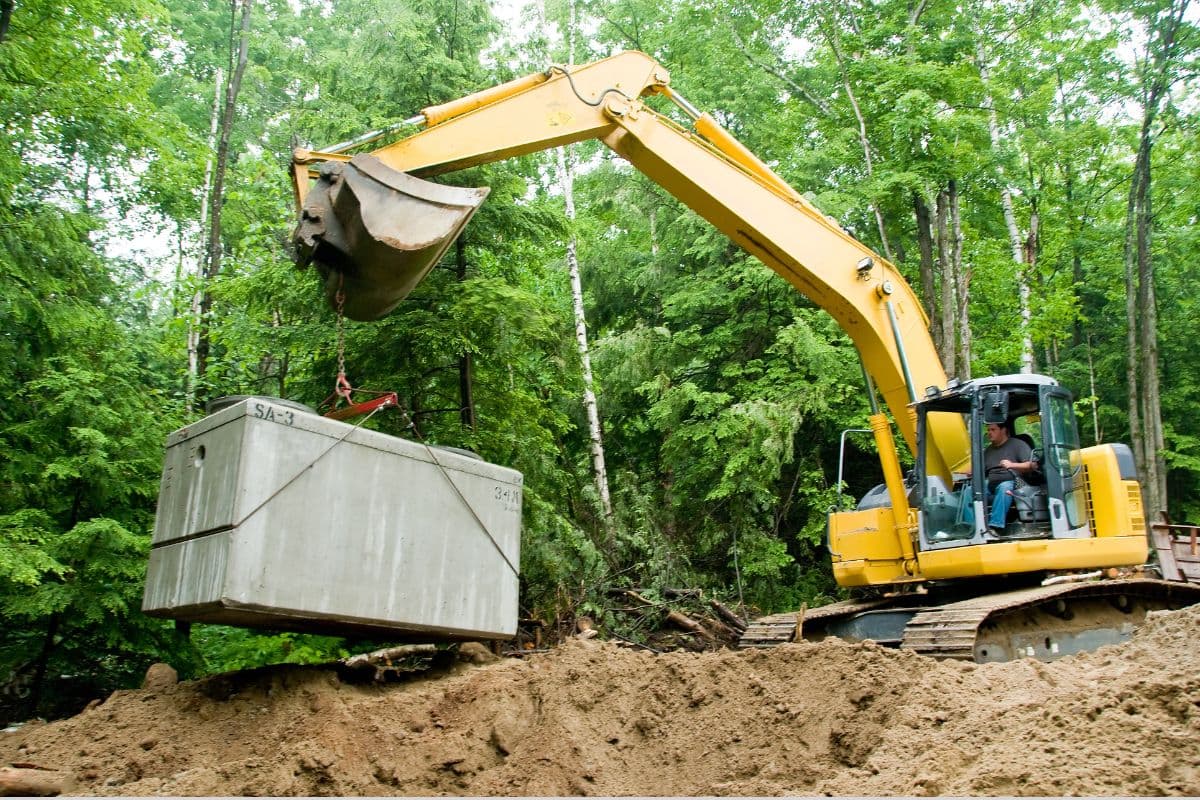
Septic system installation cost is the total expense of designing, permitting, excavating, and constructing a new on-site wastewater treatment system on a residential property, encompassing the septic tank, drainfield, connecting pipes, distribution box, and all associated labor, permitting, and site restoration. The installed cost ranges from $3,000 to $8,000 for a conventional gravity-fed system on a property with suitable soil to $10,000 to $20,000 or more for engineered alternatives such as aerobic treatment units and mound systems required when soil conditions, water table depth, or lot size prevent a conventional installation. The type of system required is determined entirely by a soil evaluation and percolation test conducted before permitting, meaning the homeowner's budget does not determine the system type the property's physical conditions do. Understanding what drives cost from the low end to the high end of the range, what hidden costs most contractor estimates omit, and what assistance programs exist is essential before requesting quotes or committing to a contractor.
The tables and sections below break down exactly what each system type costs, where your money goes component by component, what hidden costs most contractor estimates leave out, and how to avoid overpaying. For a quick budget target before you dig in, run your scenario through our free septic installation cost calculator. If you're new to septic systems entirely, start with our complete guide to how septic systems work.
Quick estimate
Use our septic tank cost calculator to get an instant project estimate based on your system type, home size, soil conditions, and region. The calculator pulls from the same cost ranges discussed in this guide.
Septic System Cost by Type
The type of system you need is the single biggest cost variable. Your soil conditions, lot size, water table depth, and local health department regulations determine which type is required. You don't always get to choose the cheapest option.
| System Type | Installed Cost | Best For | Drainfield Size |
|---|---|---|---|
| Conventional (gravity-fed) | $3,000 – $8,000 | Suitable soil, adequate space, low water table | Large |
| Chamber system | $5,000 – $12,000 | High water table, sites where gravel is expensive | Medium |
| Aerobic treatment unit (ATU) | $10,000 – $20,000 | Small lots, poor soil, strict treatment requirements | Small |
| Mound system | $10,000 – $20,000 | Shallow soil, high water table, high bedrock | Large (elevated) |
| Sand filter system | $7,000 – $18,000 | Challenging soil, environmental sensitivity | Medium |
| Drip distribution | $8,000 – $18,000 | Shallow soil, irregular lots, limited space | Distributed |
| Evapotranspiration | $10,000 – $15,000 | Dry/arid climates only | Open-air |
| Engineered/complex | $15,000 – $50,000 | Sites that fail perc tests, multiple challenges | Varies |
Which System Do I Need? Property Conditions to System Type
Your property's physical conditions determine which system type will be permitted. Use this table to match your site conditions to the most likely system requirement and budget range.
| Property Condition | System Type Required | Estimated Installed Cost | Key Driver of Extra Cost |
|---|---|---|---|
| Good soil drainage, low water table, adequate space | Conventional (gravity-fed) | $3,000 – $8,000 | Baseline — no additional requirements |
| Good soil but gravel is expensive or unavailable locally | Chamber system | $5,000 – $12,000 | Plastic chambers replace gravel trenches |
| High water table, shallow soil depth | Mound system | $10,000 – $20,000 | Imported sand and gravel, pump equipment, engineering |
| Small lot, poor soil, strict treatment requirements | Aerobic treatment unit | $10,000 – $20,000 | Aerator, electrical connection, ongoing maintenance |
| Challenging soil, environmentally sensitive site | Sand filter system | $7,000 – $18,000 | Lined filter box, pump, additional piping |
| Shallow soil, irregular lot shape, limited space | Drip distribution system | $8,000 – $18,000 | Pressure-dosed drip emitters, pump, controls |
| Arid or semi-arid climate with low rainfall | Evapotranspiration system | $10,000 – $15,000 | Open-air bed design, climate-dependent viability |
| Multiple site challenges, fails standard perc test | Engineered/complex system | $15,000 – $50,000 | Custom engineering, specialized components |
| Replacing failed drainfield, tank still usable | Drainfield replacement only | $5,000 – $15,000 | New trenches, gravel, pipes, D-box |
| Replacing failed tank, drainfield still functional | Tank replacement only | $3,000 – $7,000 | New tank, connections, decommissioning old tank |
| Buying land with no existing system | New first-time installation | $5,000 – $25,000 | Perc test result determines system type and total cost |
The perc test result is the decision point. Until a licensed soil evaluator tests your property, any cost estimate is speculative. Budget for a conventional system as a baseline and treat the perc test result as the variable that either confirms that budget or expands it.
System Type Details
Conventional System — $3,000 to $8,000
A conventional gravity-fed system is the simplest and least expensive to install. Wastewater flows by gravity from the house to the tank, then from the tank to the drainfield. No pumps, no mechanical components, no electricity required.
It works well on properties with suitable soil (passes a perc test), adequate space for the drainfield, and a low water table. Roughly 70% of residential septic installations are conventional systems.
Aerobic Treatment Unit — $10,000 to $20,000
Aerobic systems inject oxygen into the treatment tank, supporting bacteria that break down waste far more efficiently than the anaerobic bacteria in conventional tanks. The result is cleaner effluent that requires less drainfield area.
ATUs are common on smaller lots or sites with poor soil. They cost more because they include an aerator, electrical connections, and often a pump chamber. They also require ongoing maintenance (annual inspections, sometimes quarterly) and electricity to run, adding $100 to $200 per year in operating costs.
Mound System — $10,000 to $20,000
When natural soil is too shallow, the water table is too high, or bedrock is too close to the surface, a mound system is the solution. Effluent is pumped up to an engineered sand mound built above the natural ground surface. The sand provides additional filtration before water reaches the native soil.
Mound systems are expensive because of the imported sand and gravel, the pump equipment, and the engineering required. They also create a visible raised area in the yard.
Chamber System — $5,000 to $12,000
Chamber systems use connected plastic chambers instead of gravel-filled trenches. They're easier to install (no gravel hauling), work well in high water table areas, and are increasingly popular for residential installations. Cost falls between conventional and aerobic systems.
Sand Filter System — $7,000 to $18,000
Effluent is pumped through a lined box filled with sand before reaching the drainfield. The sand provides an extra treatment layer. These systems work on sites with challenging soil but add complexity and cost due to the pump, filter box, and additional piping.
Cost Breakdown: Where Your Money Goes
Labor accounts for 50% to 70% of the total installation cost. Here's how the budget typically breaks down for a conventional system:
| Component | Cost Range | Notes |
|---|---|---|
| Septic tank (1,000 gal concrete) | $800 – $1,500 | Concrete most common; plastic $500–$1,200; fiberglass $1,200–$2,000 |
| Drainfield installation | $2,000 – $5,000 | Includes trenching, gravel, perforated pipe, and distribution box |
| Excavation and site prep | $1,000 – $4,000 | Depends on soil conditions, slope, and access |
| Piping (house to tank to field) | $500 – $1,500 | PVC pipe, fittings, connections |
| Permits and inspections | $400 – $2,000 | Varies significantly by county and state |
| Perc test and soil evaluation | $250 – $1,500 | Required before installation |
| Land survey | $300 – $900 | Required in most jurisdictions |
| Distribution box | $150 – $500 | Divides effluent among drainfield lines |
| Effluent filter | $50 – $200 | Recommended at tank outlet |
| Risers and lids | $200 – $400 | Brings access lids to ground level |
| Final grading and restoration | $500 – $2,000 | Backfill, topsoil, seeding, landscape restoration |
For a conventional system serving a three-bedroom home, a realistic all-in budget is $5,000 to $8,000 including permits, testing, and restoration. For an aerobic or mound system, budget $12,000 to $20,000.
Tank size is determined by bedroom count, not bathroom count — see our septic tank size guide to confirm what size your home requires before accepting a quote.
Tank Material: Concrete vs. Plastic vs. Fiberglass
The tank itself is a relatively small portion of total cost, but material choice affects longevity and performance.
| Material | Cost (1,000 gal) | Lifespan | Pros | Cons |
|---|---|---|---|---|
| Concrete | $800 – $1,500 | 40+ years | Most durable, heavy (won't float), proven track record | Can crack over time, requires heavy equipment |
| Plastic (polyethylene) | $500 – $1,200 | 30–40 years | Lightweight, easy to install, crack-resistant | Can shift in saturated soil, potential floating |
| Fiberglass | $1,200 – $2,000 | 30–40 years | Lightweight, rust-proof, crack-resistant | Most expensive, can shift in wet soil |
Concrete is the most common choice for permanent residential installations. It's the heaviest, which means it won't float in saturated soil, and it has the longest proven track record. Plastic is popular for smaller installations and sites with difficult access.
The Installation Process Step by Step
Understanding the process helps you evaluate contractor quotes and timelines.
Site evaluation and perc test (1–4 weeks before installation)
A licensed soil evaluator tests the soil's absorption rate and depth. This determines which system type your property can support and where the drainfield can be located. Required before a permit is issued.
System design and permitting (1–6 weeks)
Based on perc test results, a designer or engineer creates the system plan. Your local health department reviews and approves the design before issuing a permit.
Excavation and site preparation (day 1–2)
The contractor excavates the tank hole, drainfield trenches, and pipe routes. This is the most labor-intensive phase and requires heavy equipment.
Tank installation (day 2–3)
The septic tank is set in the excavated hole, leveled, and connected to the inlet pipe from the house and the outlet pipe to the distribution box. Risers and lids are installed if included.
Drainfield construction (day 3–5)
Gravel is laid in the trenches, perforated pipes are set, the distribution box is connected, and the trenches are covered. For mound systems, the sand bed is built and the pump system is installed.
Connections and testing (day 5–6)
All plumbing connections are completed and the system is tested for proper flow. The effluent filter is installed at the tank outlet.
Final inspection, backfill, and restoration (day 6–7)
The health department inspects before it's covered. Once approved, the contractor backfills, grades the site, adds topsoil, and seeds or sods the disturbed areas.
Total timeline for a conventional system is typically one to two weeks from excavation to completion. Complex systems (mound, ATU) can take two to four weeks.
Hidden Costs Most Estimates Miss
Failed perc test — $5,000 to $15,000 extra
If your soil fails the initial perc test, you can't install a conventional system. You'll need an engineered alternative (mound, ATU, sand filter), which costs $5,000 to $15,000 more than a conventional system.
Tree and stump removal — $500 to $3,000
If the designated drainfield area has trees, they must be removed along with their root systems. Budget $500 to $3,000, depending on the number and size of trees.
Rock removal — $1,000 to $5,000
If excavation encounters bedrock or large boulders, the contractor may need specialized equipment. This can add $1,000 to $5,000 to the project.
Existing system decommissioning — $500 to $2,000
If you're replacing an old system, the existing tank must be properly decommissioned (pumped, crushed or filled with sand, and covered). See our septic tank removal cost guide for the full breakdown.
Electrical connection (ATU only) — $500 to $1,500
Aerobic systems require a dedicated electrical circuit for the aerator and alarm. An electrician typically charges $500 to $1,500 for this work.
Landscaping restoration — $1,000 to $5,000
The basic estimate usually covers rough grading and seeding. If you want sod, retaining walls, or full landscape restoration, add $1,000 to $5,000.
New Installation vs. Replacement Cost Differences
Replacing an existing system is often less expensive than a first-time installation because the site has already been evaluated, the permit history exists, and some infrastructure may be reusable.
| Scenario | Typical Cost |
|---|---|
| New conventional system (first-time) | $5,000 – $10,000 |
| New aerobic/mound system (first-time) | $12,000 – $25,000 |
| Tank replacement only (existing drainfield reused) | $3,000 – $7,000 |
| Drainfield replacement only (existing tank reused) | $5,000 – $15,000 |
| Complete system replacement (tank + drainfield) | $8,000 – $20,000 |
If your tank is still structurally sound but your drainfield has failed, you may only need to replace the drainfield. If the tank has cracked or deteriorated but the drainfield is healthy, replacing just the tank saves thousands. See our guide on drainfield failure signs.
How to Save Money on Installation
Get multiple quotes
Three to five quotes from licensed installers in your area give you a realistic picture of local pricing and help you identify outliers.
Schedule in the off-season
Late fall and winter (outside of frozen-ground climates) are slower periods for septic installers. You may get better pricing and faster scheduling.
Prepare the site yourself
If you can clear brush, remove small trees, and ensure equipment access before the contractor arrives, you save on labor hours. Confirm with your contractor what site prep you can handle.
Choose conventional if your soil allows it
A conventional gravity-fed system is $5,000 to $12,000 cheaper than an engineered alternative. Don't pay for an ATU or mound system if your perc test supports conventional.
Include risers in the initial installation
Adding risers to a new tank costs $200 to $400 during installation. Retrofitting them later costs more. Risers save $50 to $200 on every future pumping visit by eliminating digging fees.
Check for financial assistance
The USDA Rural Development program offers low-interest loans for septic installations in rural areas. Some states and counties offer grants or rebates for systems that protect water quality. Your local health department can direct you to available programs.
Glossary
Frequently Asked Questions
How much does it cost to install a septic system?
How long does septic system installation take?
What determines which type of septic system I need?
Can I install a septic system myself?
Does a new septic system increase home value?
What happens if my property fails the perc test?
For a personalized cost estimate based on your specific project, use our septic tank cost calculator before requesting installer quotes.
Related Guides
On theseptic.guide
Complete Septic System Guide
How every component of a septic system works, the role of each part in the treatment process, and what a properly functioning system looks like from installation through end of life.
Septic Tank Pumping Cost 2026
What routine pump-outs cost by tank size and region, the ongoing maintenance expense to factor into your total cost of ownership after installation.
How Often Should You Pump Your Septic Tank?
The pumping schedule you will need to follow after installation based on your tank size and household size.
Drainfield Replacement Cost
What it costs to replace the drainfield specifically, the most expensive individual component of the system and the one most likely to require replacement during the system's lifespan.
Septic System Repair Cost
What individual repairs cost after installation, from D-box replacement and effluent filter service to pipe repair and drainfield rehabilitation.
Septic Inspection Cost
What a professional septic inspection costs, required before buying or selling a home with an existing system and useful for verifying a newly installed system is functioning correctly.
Signs Your Drainfield Is Failing
The warning sign progression that indicates the drainfield installed with your system is beginning to fail, and what to do at each stage.
Aerobic vs Anaerobic Septic Systems
A detailed comparison of conventional anaerobic systems and aerobic treatment units covering cost, maintenance, drainfield requirements, and which is right for different property conditions.
Concrete vs Plastic vs Fiberglass Septic Tanks
A full comparison of the three tank materials covered in this guide, including longevity, installation conditions, and cost differences.
Buying a Home with a Septic System
What to inspect, what questions to ask, and how to evaluate the condition and remaining lifespan of an existing system before purchasing a home.
Selling a Home with a Septic System
How a new or recently serviced system affects home value, what disclosures are required, and how to handle septic inspections in a real estate transaction.
Septic System Maintenance Checklist
The complete ongoing maintenance schedule to follow after installation to maximize system lifespan and protect your investment.
From Our Network
Sump Pump Design Ideas for 2026
For new construction projects installing both a septic system and a finished basement, this guide covers how to integrate basement water management equipment including sump pumps into the finished space.
Best Sump Pumps 2026
Homes with new septic installations on properties with high water tables often require sump pump systems to manage groundwater alongside the septic drainfield. Reviewed and ranked options for every budget.
Ready to Get Installation Quotes?
Connect with licensed septic installers in your area. Get free, no-obligation quotes and compare prices before you commit.
Get Free QuotesGet Expert Septic Help
Connect with qualified septic professionals in your area. Free quotes, no obligation.