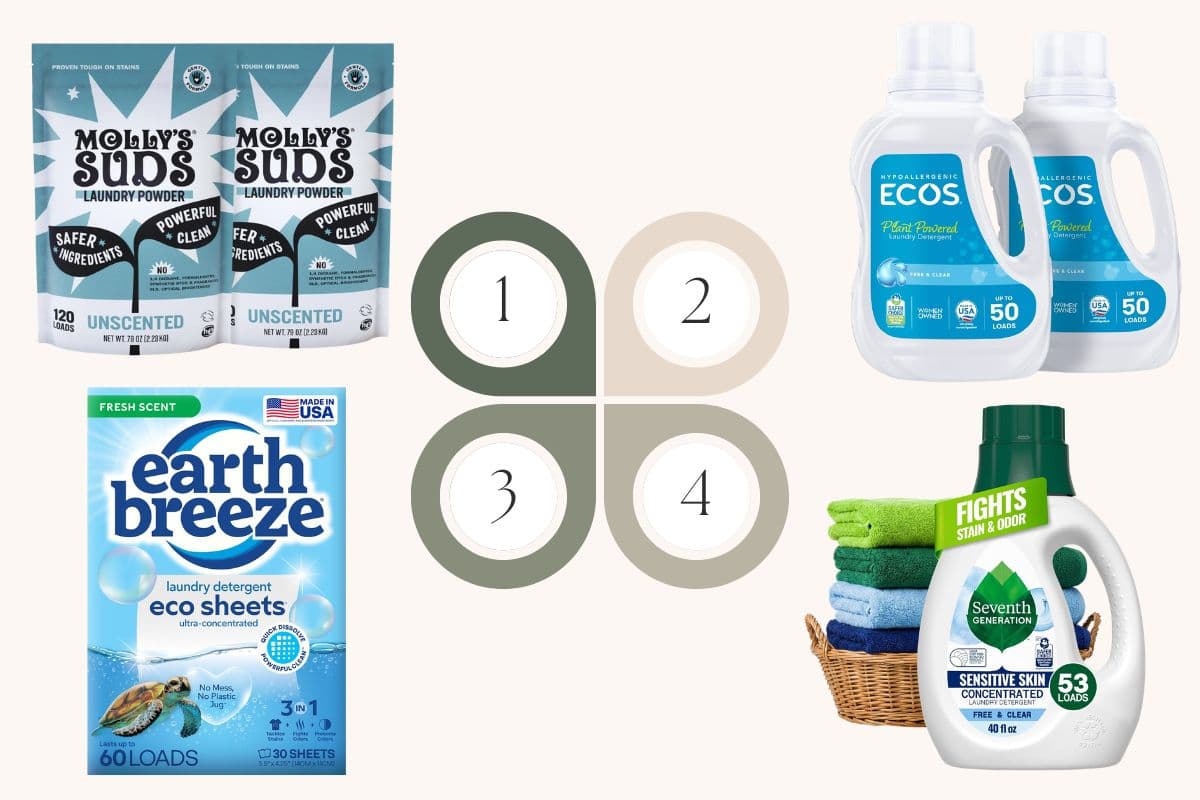
The best laundry detergent for septic systems is plant-based, free of phosphates and chlorine bleach, biodegradable, and contains no synthetic fragrances or optical brighteners. These ingredients are not just environmental concerns — they are the specific chemicals that kill the anaerobic bacteria in your septic tank that break down waste. Kill those bacteria and your system stops functioning.
Most conventional laundry detergents contain at least some of these problem ingredients. The brands that do not are concentrated in the natural and eco-friendly product segment. After reviewing the ingredient lists, certifications, and customer feedback for dozens of products, six detergents stand out as genuinely septic-safe while still cleaning effectively.
What Makes a Laundry Detergent Septic-Safe?
The septic-safe label on detergent packaging is not regulated. Any manufacturer can use it. What actually determines septic compatibility is the ingredient list. Here are the five characteristics that define a genuinely septic-safe laundry detergent.
No Phosphates
Phosphates were the primary cleaning agent in conventional detergents. They are now banned from laundry detergents in most US states because they cause algae blooms in waterways. They also alter the pH in your septic tank, disrupting bacterial activity. All reputable detergents are now phosphate-free, but always verify.
No Chlorine Bleach
Chlorine bleach (sodium hypochlorite) is directly lethal to the bacteria in your septic tank. Even small, regular doses can reduce bacterial populations enough to impair waste breakdown. Oxygen bleach (hydrogen peroxide or sodium percarbonate) breaks down into water and oxygen and is safe for septic use.
No Optical Brighteners
Optical brighteners are synthetic UV-fluorescent chemicals that coat fabric to make whites appear brighter. They do not biodegrade easily and accumulate in your tank and drainfield. They can pass through to groundwater and are toxic to aquatic organisms. Most eco-certified detergents specifically exclude them.
Biodegradable Surfactants
Surfactants are what actually lift dirt from fabric. Plant-derived surfactants (from coconut or corn) biodegrade in septic systems. Petroleum-derived surfactants biodegrade more slowly and can create a layer of surfactant foam in your drainfield that impairs absorption. Look for plant-based or coconut-derived surfactants.
No Synthetic Fragrances
Synthetic fragrance compounds are complex chemical mixtures that biodegrade slowly and can be toxic to aquatic bacteria at the concentrations that enter a septic drainfield. Fragrance-free or naturally scented with essential oils is the safer choice for long-term septic health.
HE Compatible and Concentrated
High-efficiency (HE) detergents produce less suds. Less suds means less foam entering your septic system. HE detergents are also typically more concentrated, meaning you use less product per load. Fewer chemicals per wash equals less cumulative stress on your tank biology.
Look for these certifications: EPA Safer Choice (verifies ingredients meet safety standards for human and environmental health), USDA BioPreferred (certifies percentage of bio-based content), and Leaping Bunny (cruelty-free, often correlates with cleaner ingredient lists).
At a Glance: Top 6 Septic-Safe Detergents
| Product | Type | EPA Safer Choice | Cost/Load | Septic Rating |
|---|---|---|---|---|
| Seventh Generation Free & Clear | Liquid | Yes | ~$0.18 | Excellent |
| ECOS Free & Clear Liquid | Liquid | Yes | ~$0.13 | Excellent |
| Earth Breeze Sheets | Sheets | No | ~$0.18 | Excellent |
| Charlie's Soap Powder | Powder | No | ~$0.12 | Excellent |
| Molly's Suds Original Powder | Powder | No | ~$0.17 | Excellent |
| Arm & Hammer Sensitive Skin | Liquid | No | ~$0.09 | Good |
Best Septic-Safe Laundry Detergents Reviewed
1. Seventh Generation Free and Clear
Liquid · 97% plant-based · EPA Safer Choice · USDA BioPreferred · ~$0.18/load
Seventh Generation Free and Clear is the gold standard for septic-safe laundry detergent. It carries EPA Safer Choice certification, USDA BioPreferred certification, and is made with 97% plant-based ingredients. The formula contains no optical brighteners, no synthetic fragrances, no dyes, no chlorine bleach, and no phosphates. Every ingredient has been reviewed by the EPA for safety to human health and the environment.
The surfactant system is plant-derived and biodegrades readily in septic environments. The cleaning performance is genuinely strong for everyday laundry. For tough stains, a short pre-soak is recommended, but for normal household wash loads it cleans comparably to mainstream brands.
The 100 oz bottle handles approximately 66 loads at the standard dose. The formula is concentrated, HE compatible, and works in both hot and cold water. Cold water performance is particularly good, which benefits septic owners who want to reduce hot water usage.
Specs: Liquid, 97% plant-based, EPA Safer Choice certified, USDA BioPreferred certified, no fragrances/dyes/optical brighteners, HE compatible, biodegradable. 100 oz bottle (~66 loads).
Pros
- Best balance of cleaning power and septic safety
- 97% plant-based with USDA BioPreferred certification
- EPA Safer Choice certified
- No fragrances, dyes, or optical brighteners
- Widely available at major retailers
- HE compatible and concentrated formula
Cons
- Less effective on heavy stains without pre-treatment
- Unscented (no fresh laundry smell)
- Larger bottle is heavy to carry
Best for: Households with septic systems who want the most thoroughly verified, EPA-certified option with strong everyday cleaning performance.
Check Price on Amazon2. ECOS Free and Clear Liquid
Liquid · Plant-based · EPA Safer Choice · Carbon neutral · ~$0.13/load
ECOS is the best value among septic-safe detergents. At approximately $0.13 per load, it costs less than Seventh Generation while still carrying EPA Safer Choice certification and a genuinely plant-based formula. The Free and Clear version is fragrance-free, dye-free, and contains no optical brighteners or phosphates.
ECOS is manufactured in a zero-waste, carbon-neutral facility and the company has been making plant-based cleaning products since 1967. The surfactant system uses coconut-derived ingredients that biodegrade effectively. The formula also contains a small amount of citric acid for pH balancing, which is safe for septic use.
Cleaning performance is strong across a wide range of soil levels. The 100 oz bottle provides approximately 100 loads at the standard dose, making it one of the most cost-effective options in this roundup.
Specs: Liquid, plant-based, EPA Safer Choice certified, no fragrances/dyes/optical brighteners, HE compatible, biodegradable, carbon neutral manufacturing. 100 oz bottle (~100 loads).
Pros
- Best cost per load (~$0.13) among EPA-certified options
- EPA Safer Choice certified
- 100 loads per bottle (more concentrated than competitors)
- Carbon neutral manufacturing
- Plant-based formula since 1967
- Widely available at Walmart, Target, Amazon
Cons
- Slightly less stain-fighting power than Seventh Generation on heavy soil
- Not USDA BioPreferred certified
- Bottle design can drip during pouring
Best for: Budget-conscious septic owners, large families, and households where cost per load is the primary concern.
Check Price on Amazon3. Earth Breeze Laundry Detergent Sheets
Sheets · Plant-based · Zero plastic packaging · ~$0.18/load
Earth Breeze sheets are the most innovative product in this roundup. Instead of a liquid or powder, each load uses a single paper-thin sheet that dissolves completely in water within seconds. There is nothing left to accumulate in your septic tank — no undissolved powder, no residue, no filler. For septic safety, complete dissolution is the ideal scenario.
The sheets are pre-measured (one sheet per load, two for heavily soiled), eliminating the common problem of using too much detergent. Overusing detergent is one of the most common septic mistakes homeowners make because excess detergent that does not rinse out of clothes ends up in the tank as unnecessary chemical load.
The compact packaging (a cardboard envelope instead of a plastic jug) means no plastic waste and easy storage. Cleaning performance is good for everyday laundry.
Specs: Dissolvable sheets, plant-based, HE compatible, no plastic packaging, phosphate-free, biodegradable, paraben-free, no dyes or bleach. 60 sheets per package.
Pros
- Dissolves completely with zero residue in septic tank
- Pre-measured eliminates overuse
- No plastic packaging (cardboard envelope)
- Lightweight and easy to store
- Available in scented and unscented
Cons
- Higher cost per load ($0.18) than liquid options
- Less effective on heavy stains without pre-treatment
- 60 loads per package (smaller quantity)
Best for: Septic owners who want the simplest, zero-residue option. Great for households that tend to overuse liquid detergent.
Check Price on Amazon4. Charlie's Soap Laundry Powder
Powder · 3 ingredients · Septic professional recommended · ~$0.12/load
Charlie's Soap is the minimalist's choice. The ingredient list is remarkably short: sodium carbonate (washing soda), sodium metasilicate, and a small amount of coconut-based surfactant. That is it. No fragrances, no dyes, no enzymes, no optical brighteners, no fillers.
This simplicity is its strength for septic systems. The fewer ingredients entering your tank, the less risk of disrupting the bacterial balance. Septic professionals frequently recommend Charlie's Soap specifically because there is almost nothing in it that can cause harm. The powder dissolves well in warm water and does not contain the clay fillers that make cheap powdered detergents problematic.
Cleaning performance is functional rather than impressive. It handles everyday soil and odors well but lacks the stain-fighting enzymes that premium detergents use.
Important note on powder vs. liquid for septic: For conventional gravity-fed septic systems, liquid detergent is generally preferred because it dissolves immediately. For aerobic treatment units (ATUs), powder detergent is actually preferred because it produces less foam in the aeration chamber. Charlie's Soap powder works well in both system types. See our aerobic vs anaerobic comparison for more.
Specs: Powder, 3 ingredients, plant-based surfactant, no fragrances/dyes/enzymes/optical brighteners, HE compatible, biodegradable. 100 loads per bag.
Pros
- Fewest ingredients of any detergent in this roundup
- Septic professionals frequently recommend it by name
- No fillers, no clay, no risk of tank buildup
- Low cost per load ($0.12)
- Works in both conventional and aerobic systems
Cons
- Weak stain-fighting performance on heavy soil
- No scent (clothes smell like nothing)
- Powder requires warm water to dissolve fully
- Not widely available in stores (online recommended)
Best for: Septic system purists who want the absolute safest, simplest formula with minimal ingredients. Recommended by septic professionals.
Check Price on Amazon5. Molly's Suds Original Laundry Powder
Powder · 5 ingredients · EWG Verified · Dermatologist tested · ~$0.17/load
Molly's Suds is a small-batch laundry powder made with just five ingredients: sodium carbonate, sodium bicarbonate (baking soda), magnesium sulfate (Epsom salt), coconut-oil-based surfactant, and peppermint essential oil. Every ingredient is pronounceable and recognizable. For septic systems, this short ingredient list means minimal risk to bacterial health.
The powder is free of fillers, dyes, optical brighteners, synthetic fragrances, parabens, and preservatives. It is EWG Verified (Environmental Working Group), which means it has passed one of the most rigorous ingredient safety screening processes available for consumer cleaning products.
Cleaning performance is solid for everyday laundry. The peppermint essential oil provides a light natural scent that many users appreciate as an alternative to completely unscented products. The powder dissolves best in warm water.
Specs: Powder, 5 ingredients, EWG Verified, coconut-based surfactant, peppermint essential oil scent, HE compatible, no synthetic fragrances/dyes/optical brighteners/parabens. 120 loads per bag.
Pros
- Only 5 recognizable ingredients
- EWG Verified for ingredient safety
- Dermatologist tested for sensitive skin
- Natural peppermint scent (not synthetic)
- 120 loads per bag (excellent value)
- No fillers or clay additives
Cons
- Peppermint scent may not appeal to everyone
- Powder can clump in humid storage conditions
- Less effective on grease and oil stains
- Not available at most brick-and-mortar stores
Best for: Households with sensitive skin concerns and septic systems. The EWG verification and dermatologist testing make it a top choice for families with allergies or skin sensitivities.
Check Price on Amazon6. Arm & Hammer Sensitive Skin Free & Clear
Liquid · Baking soda based · Dermatologist recommended · ~$0.09/load
Arm & Hammer Sensitive Skin Free & Clear is the most affordable option on this list and the most widely available. At approximately $0.09 per load, it costs a fraction of the premium eco brands. The formula is free of dyes, perfumes, and preservatives, and uses Arm & Hammer's signature baking soda as a cleaning and deodorizing agent.
This is not a fully plant-based product like Seventh Generation or ECOS. It contains some petroleum-derived surfactants. However, the Free & Clear version eliminates the most problematic septic-harmful ingredients: synthetic fragrances, dyes, and optical brighteners. The baking soda component is actually beneficial for septic systems as it helps maintain neutral pH.
Cleaning performance is strong — among the best in this roundup for actual stain removal. Arm & Hammer's formula is more aggressive at fighting stains than most plant-based alternatives, which is a genuine trade-off to consider.
Specs: Liquid, baking soda formula, no dyes/perfumes/preservatives, HE compatible, dermatologist recommended. 100 oz bottle (~67 loads).
Pros
- Lowest cost per load ($0.09) on this list
- Strongest stain-fighting performance
- Available at every major retailer
- Baking soda helps maintain septic pH
- Dermatologist recommended for sensitive skin
- No dyes, perfumes, or preservatives
Cons
- Not fully plant-based (contains petroleum-derived surfactants)
- No EPA Safer Choice or USDA BioPreferred certification
- Not as biodegradable as plant-based alternatives
- Large corporation product (less transparent ingredient sourcing)
Best for: Budget-conscious households that need strong stain-fighting power and want a widely available septic-safer alternative to conventional detergents like Tide or Gain.
Check Price on AmazonLaundry Tips for Septic System Owners
Choosing the right detergent is the most important step. These additional practices will further protect your system and extend the life of your drainfield.
Use the minimum recommended amount
More detergent does not mean cleaner clothes. Excess detergent does not rinse out completely, leaves residue on clothes, and sends unnecessary chemicals into your septic tank. Use the smallest measuring line for most loads.
Spread laundry loads throughout the week
Running multiple loads back-to-back floods your septic tank with water faster than it can process. This pushes solids toward the drainfield. Spread loads across different days when possible.
Wash full loads only
Full loads use water more efficiently than partial loads. Fewer total loads means less total water and detergent entering your system per week.
Never use liquid fabric softener
Liquid fabric softeners contain quaternary ammonium compounds (quats) that are directly antimicrobial. They are designed to kill bacteria on fabric. They will also kill bacteria in your septic tank. Use dryer balls or wool dryer sheets instead.
Use cold water when possible
Cold water reduces energy costs and most septic-safe detergents perform well in cold water. Hot water can also push grease and fats into your system in a more liquid state, allowing them to travel further into your drainfield before solidifying.
Clean your lint trap every load
If your washing machine drains to your septic system, lint and microfibers from your clothes enter the tank. A clean lint trap on your dryer reduces the amount of microfiber debris that comes off clothes. Consider an inline lint filter for your washing machine discharge line.
Frequently Asked Questions
What laundry detergent is safe for septic systems?
Can laundry detergent hurt a septic system?
Is powder or liquid laundry detergent better for septic systems?
How much laundry detergent should I use with a septic system?
Are laundry pods safe for septic systems?
Is Arm and Hammer detergent safe for septic systems?
Related Guides
What You Can and Cannot Flush
The complete list of what's safe and what damages your system.
Best Toilet Paper for Septic Systems
Tested and ranked. The right TP dissolves fast and protects your tank.
Best Septic Tank Treatments
Which bacteria-based products actually work and which to skip.
Complete Septic System Guide
How your system works, types, maintenance, and warning signs.
Need Professional Septic Service?
Connect with licensed septic professionals in your area for pumping, inspection, or repair.
Get Free QuotesThis article contains affiliate links. If you purchase a product through our links, we may earn a small commission at no additional cost to you. This helps support our site and allows us to continue providing honest, independent reviews. See our affiliate disclosure for details.
Get Expert Septic Help
Connect with qualified septic professionals in your area. Free quotes, no obligation.