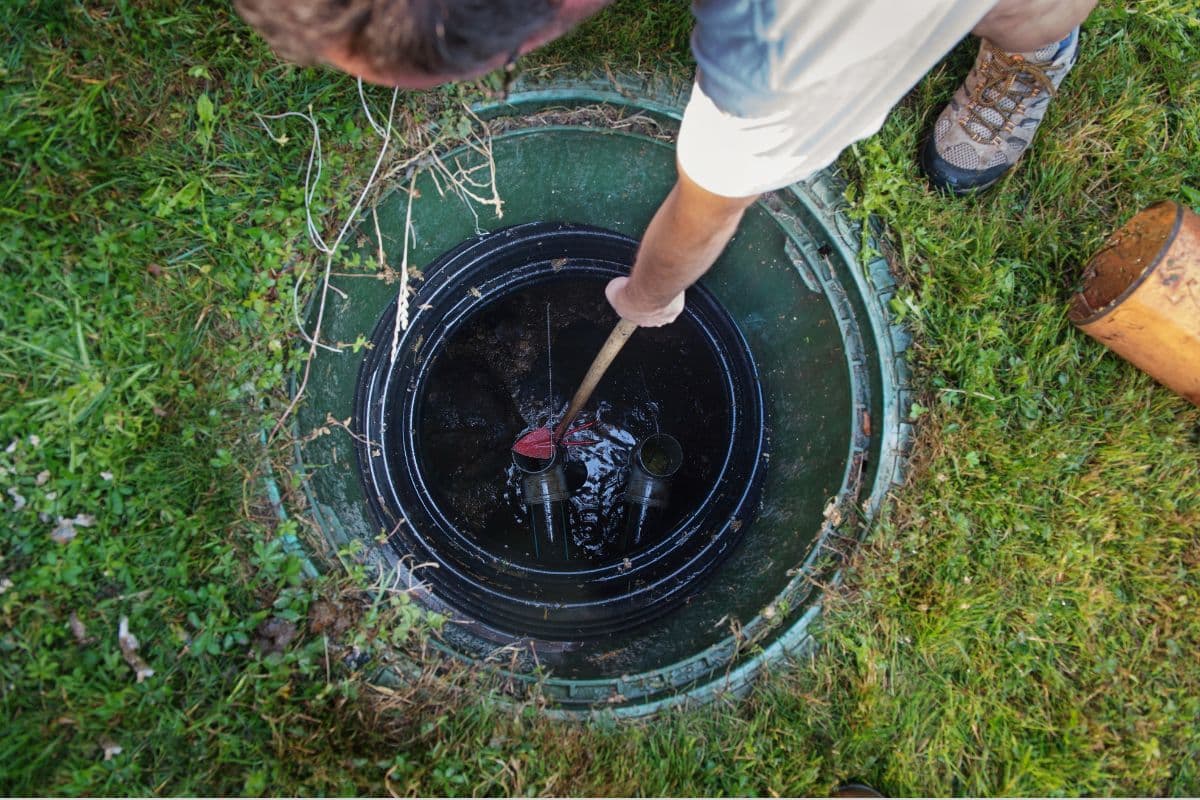
A septic inspection is a professional evaluation of an on-site wastewater treatment system that includes opening the tank, measuring what is inside, testing each component for proper function, and producing a written report documenting the findings. Understanding what actually happens during an inspection helps you prepare your property, follow along as the work is done, and interpret the results accurately once the report arrives.
For pricing information by inspection type, see our septic inspection cost guide. For how inspections factor into buying or selling a home, see our buying a home with a septic system guide.
What a Septic Inspection Is (and What It Is Not)
A septic inspection is a functional evaluation, not a guarantee. The inspector assesses the system’s condition on the day of the visit based on what is visible, measurable, and testable. They cannot see inside pipes that are not camera-scoped, cannot assess drainfield soil conditions below the surface without probing, and cannot predict how the system will perform under conditions different from those present during the inspection.
A septic inspection is distinct from a septic pump-out in that pumping removes waste from the tank while inspection evaluates the condition of components. A thorough inspection almost always includes pumping because the tank interior cannot be assessed without first removing its contents, but the two services are not synonymous. See our septic tank cleaning vs pumping guide for how the two relate.
How to Prepare for a Septic Inspection
Preparation directly affects how quickly and thoroughly the inspection goes. An inspector who spends 45 minutes digging to find a buried tank lid has 45 fewer minutes to evaluate the system itself.
Locate the system before the inspector arrives
Find the tank and drainfield before inspection day. Your county health department has the original installation permit on file, which includes a site plan showing component locations. If no records exist, see our how to find your septic tank guide for the methods that work.
Expose the tank lid if possible
If your tank has septic tank risers bringing access to ground level, the inspector can open the lid immediately. If the lid is buried, exposing it yourself before the inspector arrives saves time and may save you a digging fee ($50 to $250 at many companies).
Do not use the system heavily the day before
Running large amounts of water through the system shortly before inspection makes it harder to accurately assess normal operating conditions. Avoid running multiple laundry loads, long showers, or dishwasher cycles the evening before and the morning of the inspection.
Do normal water use the morning of inspection
While avoiding heavy use, do run water normally during the morning. The inspector will want to observe water entering the system and confirm flow, which requires the system to be in active use rather than completely dormant.
Gather any available documentation
Pull together whatever you have: pumping receipts, previous inspection reports, the original installation permit, any repair records. This history helps the inspector assess whether findings represent a new problem or a long-standing condition.
Clear the drainfield area
Remove vehicles, stored equipment, lawn furniture, or anything that obscures the drainfield surface. The inspector needs to walk the entire drainfield area and observe surface conditions, which requires an unobstructed view.
The Inspection Process, Step by Step
A full comprehensive inspection follows a consistent sequence. Here is what happens at each stage and what the inspector is specifically evaluating.
Property Walk and Visual Assessment
Before opening anything, the inspector walks the entire property looking for visible surface indicators that the system is failing or under stress.
What they are looking for:
- Unusually green or lush grass over the drainfield, which indicates effluent is surfacing and fertilizing rather than percolating normally
- Standing water or soggy soil over the drainfield or tank area, indicating saturation
- Odors in the drainfield area, particularly sulfur or sewage smell indicating effluent at the surface
- Any structures, vehicles, trees, or landscaping over or within setback distances of the tank or drainfield
- General condition of risers, lids, and cleanout access points visible at grade
What a finding here means: Surface evidence of drainfield failure is the most serious finding in any inspection. A drainfield that is surfacing effluent has failed and cannot recover. This is a $5,000 to $15,000 replacement in most cases. See our signs your drainfield is failing guide.
Sewer Line Inspection (Camera Scope, If Included)
Before opening the tank, inspectors who include a camera scope run a camera from the cleanout at the house through the pipe to the tank inlet.
What they are looking for:
- Root intrusion through pipe joints, which narrows the pipe interior and causes blockages
- Pipe belly or sag, where a section has settled below minimum slope, creating a low point where solids accumulate
- Offset joints where a pipe section has shifted and is partially blocked
- Cracks or breaks in the pipe wall
- Flow rate and consistency as water is run from inside the house
What a finding here means: Root intrusion and pipe sags are relatively common in systems 15 or more years old. Minor root intrusion can be cleared for $300 to $600. A broken pipe requires excavation and replacement at $500 to $2,000 depending on length. A pipe belly may require re-grading at $800 to $3,000.
Locating and Exposing the Tank
If the tank lid is buried, the inspector locates it using the site plan or a probe rod and exposes it. If risers are present, this step takes under a minute.
Most residential tanks have two access points: the inlet side and the outlet side. A thorough inspection opens both. Inspectors who open only one lid are performing an incomplete evaluation.
Pre-Pump Measurements
Before pumping, the inspector measures sludge depth and scum layer thickness using a sludge judge, a clear plastic tube with a check valve that traps a core sample when lowered to the tank bottom.
What they are measuring:
- Sludge depth: The settled solids layer at the bottom. The EPA recommends pumping when sludge reaches one third of total liquid depth or within 12 inches of the outlet tee.
- Scum thickness: The floating grease and oil layer at the top. Excessive scum can block the outlet.
- Liquid level: Whether the tank is operating at normal depth. A tank full to the lid before pumping indicates recent overloading, groundwater infiltration, or a failing drainfield.
Pumping the Tank
The inspector coordinates with or directly performs the pump-out, removing all contents from the tank. This is not optional for a comprehensive inspection. The tank interior, baffles, and walls cannot be assessed while the tank is full.
As the tank empties, the inspector monitors the outlet for backflow from the drainfield — which is assessed in the next step.
Backflow Test
As the tank empties during pumping, the inspector watches the outlet pipe for water flowing back in from the drainfield side.
What they are looking for:
- Clear backflow from the drainfield into the emptying tank indicates saturated drainfield soil
- Rate of backflow: a small amount from residual pipe contents is normal; a large continuous flow indicates significant drainfield saturation
What a finding here means: A large, continuous flow of effluent returning from the drainfield is one of the most diagnostic signs of drainfield failure and requires follow-up drainfield assessment to determine whether saturation is temporary or permanent.
Tank Interior Inspection
With the tank empty, the inspector evaluates all accessible interior surfaces and components.
Inlet baffle: A T-shaped pipe or baffle directing incoming waste downward. Inspector checks whether it is present, intact, and positioned to extend 6 to 12 inches below the liquid surface. A missing or damaged inlet baffle allows raw waste to short-circuit to the outlet without settling.
Outlet baffle: Draws effluent from the middle liquid zone of the tank rather than allowing scum or sludge to exit. Inspector checks presence, condition, and depth below the scum layer. A cracked or missing outlet baffle is one of the most common causes of premature drainfield failure.
Effluent filter: If installed, the inspector removes, assesses, and cleans it. A clogged effluent filter restricts outflow and produces whole-house slow drain symptoms. It is one of the most easily fixed problems in the system, costing nothing to clean and $50 to $200 to replace if damaged. See our septic system maintenance checklist for the cleaning schedule.
Tank walls and floor: Checked for cracks, deterioration, or structural compromise. Minor surface scaling in older concrete tanks is normal. Horizontal cracks, active seeping, or large eroded sections are significant findings.
Inlet and outlet pipe connections: Both pipe penetrations are checked for proper sealing. A gap around the inlet pipe allows surface water or groundwater to enter the tank, reducing effective capacity.
Distribution Box Inspection
The inspector locates and opens the distribution box (D-box), which receives effluent from the tank and divides it among drainfield lateral lines.
What they are looking for:
- Whether the D-box is level: a tilted D-box distributes effluent unevenly, overloading some lateral lines while underusing others
- Whether all outlet ports are clear and at the same elevation
- Whether the D-box is structurally sound: cracks allow groundwater entry or effluent leakage
- Whether effluent is backing up into the D-box from the laterals, indicating drainfield saturation
What a finding here means: A tilted D-box can often be re-leveled or replaced for $200 to $500, which restores even distribution and can significantly extend drainfield life if caught early.
Drainfield Probe and Assessment
The inspector probes the drainfield soil with a probe rod at multiple points across the drainfield area.
What they are looking for:
- Soil saturation: probe holes that immediately fill with water indicate the soil is not absorbing effluent
- Effluent breakout: pulling the probe rod may bring up effluent-contaminated soil, confirming drainfield failure
- Lateral line locations relative to the permit drawing
- Soil condition above the laterals: excessive compaction, root mass, or disturbed soil
What a finding here means: A drainfield where probe holes fill with effluent-saturated water has failed. Whether temporary or permanent requires judgment from an experienced inspector. Temporary saturation in an otherwise healthy system can resolve within days with reduced water use.
Flow Test
After the system has been pumped and components inspected, the inspector runs a flow test by sending a measured volume of water through the household plumbing.
What they are doing: Flushing all toilets multiple times, running all faucets simultaneously for several minutes, and monitoring that water flows freely into the tank without backing up in the house.
What they are looking for:
- No backup at fixtures, confirming the sewer line is clear
- Appropriate flow rate at the tank inlet
- No immediate overflow at the distribution box under household-level flow
What a finding here means: A flow test that causes backup at fixtures indicates a blockage between house and tank. A flow test that overwhelms the D-box or causes immediate effluent surfacing indicates compromised hydraulic capacity.
What the Written Report Should Include
A quality inspection report is the documentation that lenders, attorneys, and health departments require and the record you need if problems emerge later.
System identification: Tank size, material, number of compartments, estimated age, system type, and location on the property.
Measured findings: Actual sludge depth in inches, scum thickness in inches, liquid level at time of inspection, and comparison to pump-out thresholds.
Component-by-component assessment: A pass, conditional pass, or fail for each component evaluated: sewer line, inlet baffle, outlet baffle, effluent filter, tank walls, D-box, drainfield. Findings should be specific (“outlet baffle cracked at the pipe joint, approximately 4 inches from the top”) rather than general (“baffles in fair condition”).
Photographs: Every finding should have a photograph. A report without photos is incomplete and difficult to use as documentation.
Recommended actions: Each non-passing finding should have a specific recommended action with a cost range.
Overall system status: A clear pass, conditional pass, or fail designation with the basis stated explicitly.
Red Flags That Indicate an Inadequate Inspection
The inspector did not pump the tank. A tank that is not pumped cannot be properly assessed. Baffle condition, tank wall integrity, and liquid level readings from a full tank are all less reliable than readings from an empty one.
Only one access point was opened. A two-compartment tank requires opening both the inlet and outlet sides. An inspector who opens only one side has not seen the inlet baffle.
No sludge measurements were taken. If the report describes the system as “appearing healthy” without sludge depth in inches, the inspector used a visual assessment where a measurement was required.
The D-box was not opened. The distribution box is a common failure point. An inspector who does not open and assess it has left a significant gap in the evaluation.
No flow test was conducted. A static inspection without confirming the system can accept a household water load does not reflect how the system performs under actual use.
The report contains no photographs. Photographs document findings at the time of inspection and protect both inspector and client.
The whole inspection took under 45 minutes. A comprehensive inspection for a conventional residential system takes at minimum 2 to 3 hours including pumping.
What Inspectors Cannot See
Pipe interiors without camera scope. The sewer line and the laterals within the drainfield are invisible without a camera. A camera scope is an add-on strongly recommended for systems 15 or more years old.
Drainfield soil conditions below the surface. Probe testing gives surface-level soil moisture readings but cannot assess how far biomat clogging has penetrated. A drainfield that passes on a dry day may fail during a wet season.
Intermittent problems. A system that backs up only during heavy water use, rainy weather, or full-household occupancy may pass an inspection conducted under normal conditions. Inspectors rely on homeowner descriptions to flag potential intermittent issues.
Future performance. A system that passes today may fail next year if water use increases, a major rain event saturates the drainfield, or a component reaches end of life between inspections.
Frequently Asked Questions
What does a septic inspector actually do?
What are inspectors looking for in the drainfield?
How do I prepare my property for a septic inspection?
Can I watch my own septic inspection?
What does it mean if the inspector finds backflow from the drainfield?
What should a septic inspection report contain?
How long after a septic inspection is the report valid?
What is the difference between a septic inspection and a home inspection?
Glossary of Septic Inspection Terms
Sludge judge
A clear plastic tube with a check valve at the bottom used to measure sludge depth in a septic tank by lowering it to the tank floor, allowing it to fill with material, and pulling it up to measure the depth and character of the contents. The reading tells the inspector how close the sludge layer is to the outlet pipe and whether the tank is due for pumping, with the EPA recommending pump-out when sludge reaches one third of total tank depth or comes within 12 inches of the outlet tee. A sludge judge reading is one of the two most important measurements taken during any inspection, alongside scum layer thickness.
Biomat
A layer of microbial growth and organic material that forms on the soil surface within drainfield trenches as effluent percolates through, which in moderate amounts is a normal part of the treatment process but in excess reduces the soil’s ability to absorb effluent until it eventually seals the trench. Biomat accumulation is the most common mechanism of drainfield failure in older systems, developing faster when solids escape the septic tank due to missed pump-outs, damaged baffles, or heavy disposal use. A drainfield failure caused by biomat cannot be reversed by resting the system and typically requires replacement of the affected sections.
Backflow
The return flow of effluent or groundwater from the drainfield into the septic tank, observed during pumping when the tank level drops and any liquid in the distribution system flows back toward the now-lower tank. A small amount of backflow from residual effluent in the distribution lines is normal, while a large continuous flow indicates that the drainfield trenches contain effluent that cannot percolate into the soil. See our septic overflow after rain guide for the conditions that cause temporary versus permanent drainfield saturation.
Probe rod
A solid metal rod used by inspectors to probe drainfield soil by pushing it to various depths at multiple points across the drainfield, assessing soil moisture, confirming lateral line locations, and detecting effluent saturation near the surface. A probe hole that immediately fills with liquid effluent indicates the soil at that location is saturated and no longer accepting flow. Multiple saturated probe points across the drainfield indicate system-wide failure rather than a localized wet area.
Septage
The combined contents of a septic tank at the time of pump-out, consisting of the settled sludge layer, the floating scum layer, and the liquid effluent between them, removed as a unit by the vacuum pump on the service truck and transported to a licensed septage receiving facility. The volume and character of septage removed during a pump-out gives the inspector information about how well the tank has been maintained and how quickly solids are accumulating relative to the pumping schedule.
Flow test
A procedure conducted during a comprehensive septic inspection in which a known volume of water is run through the household plumbing into the septic system to verify it can accept a realistic household water load without backing up, overflowing at the distribution box, or causing effluent to surface at the drainfield. A system that passes a static visual inspection but fails a flow test reveals a functional limitation that would only become apparent under actual occupancy conditions, making the flow test a critical component of any real estate transaction inspection.
Related Guides
On theseptic.guide
Septic Inspection Cost 2026
What each inspection type costs, what should be included at every price point, and the add-on fees that most companies do not quote upfront.
How Often Should You Pump Your Septic Tank?
The EPA-based pumping and inspection schedule by tank size and household size, and why combining the two services saves money on service call fees.
Signs Your Drainfield Is Failing
The surface indicators and symptom progression that a thorough inspection is designed to catch before full failure, and what each finding means for system lifespan.
Septic System Maintenance Checklist
The full ongoing maintenance schedule that keeps a system in passing condition between professional inspections, including filter cleaning intervals and tank access maintenance.
How to Find Your Septic Tank
The methods that reliably locate a tank before inspection day, eliminating the digging fees that add $50 to $250 to the bill when the inspector arrives to an unmarked property.
Best Septic Tank Risers
The single upgrade that eliminates digging at every inspection and pump-out, paying for itself in two to three service visits.
Buying a Home with a Septic System
How to use inspection findings in a real estate transaction, including pre-purchase questions, negotiation strategies, and what to do when the inspection reveals problems.
Selling a Home with a Septic System
How a pre-listing inspection protects your asking price and builds buyer confidence, and what to do when the inspection reveals issues before you list.
Septic System Repair Cost 2026
What every common repair costs after an inspection reveals a deficiency, from a cracked baffle to full drainfield replacement.
What You Can and Cannot Flush on a Septic System
The household practices that affect what inspectors find in the tank, particularly regarding effluent filter condition and sludge accumulation rate.
Septic Tank Cleaning vs Pumping
How pumping relates to the full inspection process and when additional cleaning beyond a standard pump-out is warranted.
Complete Septic System Guide
How every component the inspector evaluates actually functions, and why each matters to overall system health.
From Our Network
Homebuyer's Basement Inspection Checklist · thebasement.guide
For buyers scheduling both a septic inspection and a basement evaluation before closing, this checklist covers what inspectors look for below grade in the home itself alongside the wastewater system.
How to Hire a Basement Waterproofing Contractor · thebasement.guide
The same vetting principles that apply to finding a qualified septic inspector: how to verify credentials, compare quotes, and identify red flags before hiring.
External Resource
Need Professional Septic Service?
Connect with licensed septic professionals in your area for inspection, pumping, or repair.
Get Free QuotesGet Expert Septic Help
Connect with qualified septic professionals in your area. Free quotes, no obligation.