TL;DR
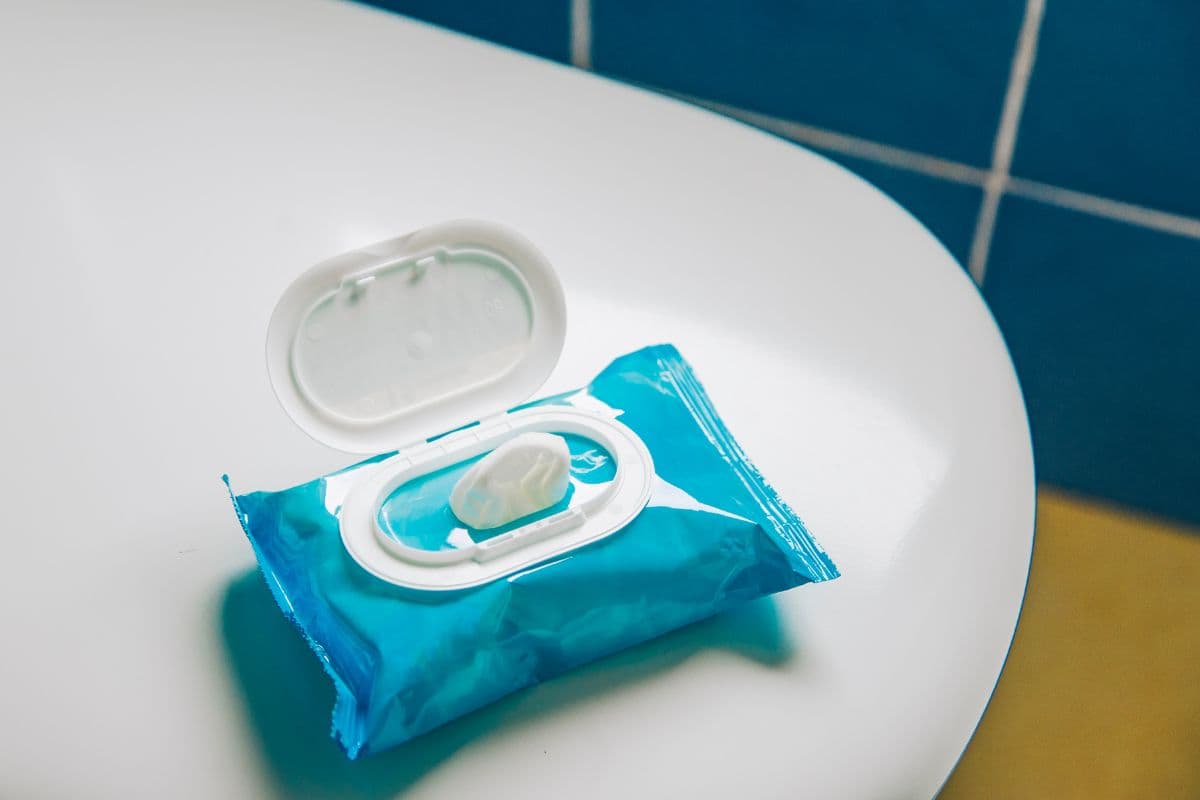
Flushable wipes are not safe for septic systems despite what the packaging claims. Unlike toilet paper, which disintegrates within seconds, flushable wipes are made with synthetic fibers that take hours to decades to break down in water. They accumulate in septic tanks and cause clogs, early pumping, and expensive drainfield damage. Kimberly-Clark paid a $20 million class action settlement in 2022 for mislabeling Cottonelle, Scott, and Huggies wipes as flushable. In 2024, the UK retired its “Fine to Flush” certification entirely and now tells residents to throw all wipes in the trash. The single safe rule for septic systems is to flush only toilet paper. If you want the cleaning feel of wipes without the septic damage, install a bidet attachment.
The TP-Only Rule
For septic systems, only toilet paper belongs in the toilet. Everything else, including anything labeled “flushable,” “septic-safe,” or “biodegradable,” either fails to break down fast enough in anaerobic septic conditions or accumulates in the tank regardless of the label.
The word “flushable” on a wipe package describes how the product is marketed, not how it behaves in a real septic tank. There is no federal regulatory definition of “flushable” in the United States, only voluntary industry standards that wipe manufacturers write for themselves. If it is not toilet paper, put it in the trash, not the toilet.
Why “Flushable” Labels Are Misleading
The word “flushable” on a wipe package is one of the most successful acts of consumer misdirection in modern retail. Walk down the personal care aisle of any major store and you will see entire sections of wipes marketed with “flushable” and “septic-safe” claims, sold next to baby wipes that make no such claims. The two products are chemically nearly identical. The only difference is what the label says.
The US Federal Trade Commission has no legal definition of “flushable” for wipe products. The only flushability standards that exist are voluntary, written by the wipe industry itself through a trade group called the International Water Services Flushability Group (IWSFG) or by INDA, the Association of the Nonwoven Fabrics Industry. Manufacturers decide whether their products meet those voluntary standards and can label accordingly.
Municipal wastewater utilities, which deal with actual consequences of flushed wipes every day, have a very different view. The National Association of Clean Water Agencies runs a consumer education campaign called “Toilets Are Not Trashcans” and explicitly warns that products labeled flushable cause major blockages in sewer systems and septic tanks.
The FTC and Kimberly-Clark Lawsuits
The gap between marketing claims and reality has resulted in significant litigation:
- In April 2022, Kimberly-Clark agreed to a $20 million class action settlement over false advertising claims for its Cottonelle, Scott, Huggies Pull-Ups, Poise, and Kotex-branded flushable wipes. Consumers who purchased these wipes between 2008 and 2022 were eligible for payments up to $50.60 with proof of purchase.
- Costco paid up to $5 million to settle claims that its Kirkland Signature brand flushable wipes caused pipe and septic damage.
- Kimberly-Clark also reached a separate settlement with Charleston Water System in 2021 to fund ongoing monitoring and improved labeling for Cottonelle wipes after the utility documented sewer damage.
- Similar class actions against Procter and Gamble, CVS, Walmart, Target, and other retailers remain active or pending.
The UK Retired Its “Flushable” Certification
The United Kingdom operated a “Fine to Flush” certification from 2019 to 2024, which was the world’s only independent third-party standard for truly flushable wipes. Only products that broke down in real sewer conditions received certification. In March 2024, Water UK retired the entire Fine to Flush program and launched a new campaign called “Bin the Wipe,” with the message that all wipes should be thrown in the trash regardless of labeling. The retirement of the only rigorous flushability standard is perhaps the clearest signal that even industry experts cannot reliably define or produce a wipe that is safe to flush.
What Actually Happens When Wipes Enter a Septic System
When a flushable wipe is flushed, it physically makes it through the toilet and into the drain line. Past that point, things degrade fast.
In the drain line between the toilet and the septic tank.
Wipes snag on small imperfections in pipes (rough joints, slight offsets, pipe bends, root intrusions). Once the first wipe catches on an imperfection, subsequent wipes and debris accumulate around it. The pipe narrows. Eventually, the pipe blocks entirely, causing toilet backups or slow drains inside the house. See our slow drains problem page for diagnosis.
At the septic tank inlet baffle.
Even if wipes make it past the drain line, they often catch at the inlet baffle of the septic tank (the fitting where the drain pipe enters the tank). Accumulated wipes at the inlet create a barrier that slows incoming wastewater, which backs up into the house and causes tank backing up symptoms.
Inside the septic tank.
Wipes that make it past the inlet baffle join the sludge and scum layers inside the tank. Toilet paper breaks down in hours to days in the tank’s anaerobic environment; wipes remain intact for months to years. This accelerates tank filling and shortens the interval between septic tank pumpings. Homeowners who consistently flush wipes typically pump 2 to 3 years earlier than homeowners who do not.
At the drainfield.
If wipes make it out of the tank through the outlet baffle (rare but possible with a failing baffle), they can reach the drainfield and clog perforated distribution pipes. Drainfield clogs are among the most expensive septic repairs, often requiring drainfield replacement at $5,000 to $20,000.
Fatbergs: The Sewer-Side Problem
On municipal sewer systems, wipes combine with grease, cooking oil, and other debris to form “fatbergs,” rock-like masses that grow inside sewer pipes until they cause complete blockages. London famously pulled a 15-ton fatberg out of its sewers in 2013. New York City spent $18 million on wipe-related maintenance in a five-year period. Sydney, Australia, removes 500 tons of wipes from its sewers annually at a cost of $8 million.
For septic owners, fatbergs are less of a direct concern because septic tanks do not generate the same scale of grease accumulation as a large sewer system. But the underlying physics is the same: wipes do not break down, and they bind with other debris to form masses that block flow.
Toilet Paper vs Flushable Wipes: How Fast They Actually Break Down
The single most important difference between toilet paper and flushable wipes is disintegration time in water. This matters because a septic tank is designed around the assumption that solid waste and paper break down over hours to days, giving bacteria time to digest the material before the next flush arrives.
| Product | Time to Disintegrate in Water | Safe for Septic |
|---|---|---|
| Standard toilet paper | 30 seconds to 2 minutes | Yes |
| Septic-safe toilet paper (2-ply or less) | 30 seconds to 1 minute | Yes |
| “Flushable” wipes (major brands) | 1 to 6 hours (partial), hours to decades (complete) | No |
| Baby wipes (not labeled flushable) | Weeks to years | No |
| Paper towels | 30 minutes to days | No |
| Facial tissue (Kleenex) | 5 minutes to 30 minutes | No (too slow for septic) |
Toilet paper is engineered specifically to break apart on contact with water. The fibers are short, loosely bonded cellulose, and the paper is designed to lose its structural integrity within seconds of being flushed. By the time toilet paper reaches the septic tank, it is already a slurry that septic bacteria can digest within 24 to 72 hours.
Flushable wipes are engineered for the opposite property: they must remain strong and wet during use. The manufacturing fibers are longer, synthetically bonded, and often include plastic additives (polyester, polypropylene, or similar). These properties that make the wipe useful in the bathroom are the same properties that prevent it from disintegrating afterward.
For context on the authoritative water industry view, the National Association of Clean Water Agencies maintains public guidance confirming that wipes, including those labeled flushable, are a primary cause of wastewater system damage nationwide.
If You Have Been Flushing Wipes: Damage Assessment
If you have been flushing wipes for years and just learned this is a problem, you are not alone and this is not a catastrophe. It is also not nothing. Here is how to assess whether damage has already occurred.
Signs of Wipe-Related Septic Damage
Signs to watch for:
- Slower drains than usual. Sinks, tubs, and toilets that drain sluggishly, especially multiple fixtures simultaneously. This often indicates partial blockage in the drain line or at the septic tank inlet.
- Toilet backups or gurgling. Toilets that occasionally back up or produce gurgling sounds during flushes suggest buildup in the drain line.
- More frequent pumping required. If your septic pumper tells you the tank is filling faster than normal for your household size, accumulated wipes may be the cause. Your pumper can often see wipes visible in the tank during pumping.
- Septic smell in yard or house. See our problem pages on septic smell in yard and septic smell inside house for diagnosis.
- Wet spots or standing water over drainfield. Soggy ground or standing water above the drainfield indicates possible drainfield failure, which can be caused or accelerated by wipes.
What to Do Now
- Stop flushing wipes immediately. The most important action is stopping the source of the problem. Every wipe flushed from this day forward adds to the accumulation.
- Schedule a septic tank pumping within the next 3 to 6 months if you have not pumped in the past 2 years. Tell the pump operator you have been flushing wipes so they can inspect the tank and inlet baffle specifically for accumulated wipes.
- Ask your pumper to inspect the inlet baffle. A damaged or blocked inlet baffle from wipe accumulation often requires replacement but is far cheaper than a drainfield failure.
- Monitor for the symptoms above for the next 6 to 12 months. Slow drains, gurgling, or backups indicate wipes-related drain line problems that need professional cleaning.
- Replace wipes with a bidet attachment and regular toilet paper. See the alternatives section below.
Cost of Wipe-Related Septic Damage
| Damage Type | Typical Cost | Frequency |
|---|---|---|
| Premature septic tank pumping (2 to 3 years early) | $300 to $600 per early pumping cycle | Every pumping cycle |
| Drain line clearing (snake or jet) | $200 to $500 | One-time when clog occurs |
| Inlet baffle repair or replacement | $400 to $1,000 | Rare but possible |
| Drainfield damage from wipe-laden effluent | $5,000 to $20,000 | Rare but catastrophic |
| Complete septic system replacement | $15,000 to $40,000 | Rare but possible |
For homeowners on public sewer systems, the municipal cost is spread across all ratepayers. For homeowners on septic, the cost lands squarely on the individual. Over a 20-year period of consistent wipe flushing, the typical septic homeowner pays $1,500 to $4,000 in early pumping costs alone, before any drainfield or inlet baffle damage.
For detailed pumping pricing, see our septic tank pumping cost guide. For drainfield replacement cost, see our drainfield replacement cost guide.
Alternatives to Flushable Wipes
If you use flushable wipes for hygiene reasons (wipe cleanliness feels better than dry toilet paper), the clean solution is a bidet, not a different brand of wipe. A bidet attachment sprays water for cleansing, eliminating the need for wipes entirely. Many users report using 50 to 75 percent less toilet paper after installing a bidet.
Option 1: Bidet Attachment (DIY Install, Under $200)
A bidet attachment mounts between your existing toilet bowl and the toilet seat. It connects to your toilet’s cold water supply line (no electricity, no additional plumbing) and sprays a controlled stream of water for cleansing. Most models install in under 15 minutes with a screwdriver.
The TUSHY Classic 3.0 is the most popular bidet attachment on Amazon, priced at $79 to $129. The TUSHY installs on most two-piece standard toilets in 8 to 10 minutes, has no electrical requirements, and uses the same cold water line that fills your toilet tank. Other reputable brands include LUXE Bidet NEO 185 ($40 to $60), Brondell Swash EcoSeat, and BioBidet Duo.
Best for: Most homes. Bidet attachments work on standard two-piece toilets without any plumbing modifications. The $79 to $150 one-time cost typically pays for itself in 6 to 12 months of reduced toilet paper purchases, plus the ongoing septic protection benefit.
Limitations: Will not fit one-piece skirted toilets or toilets with unusual mounting configurations. Cold water only on the most affordable models; warm water requires a longer hose connecting to a sink hot water supply and a more expensive attachment.
Option 2: Septic-Safe Toilet Paper
If a bidet is not an option, standard 2-ply septic-safe toilet paper with a bidet spray bottle or a handheld sprayer attachment handles most hygiene needs. Septic-safe toilet paper breaks down in 30 to 60 seconds in water, compared to 5 to 30 minutes for quilted “ultra-soft” premium toilet papers that can still be a problem in older septic systems.
For product recommendations, see our best toilet paper for septic review.
Option 3: Trash the Wipes
If you absolutely prefer wipes for hygiene and cannot use a bidet, buy wipes that are NOT marketed as flushable (plain baby wipes, for example, are honest about needing to be thrown away) and put them in a lidded trash can in the bathroom. This is the approach the UK’s Water UK campaign explicitly recommends. It is less convenient than flushing, but it fully protects your septic system.
What About “Septic-Safe” Flushable Wipes?
Some wipe brands specifically market to septic owners with labels like “septic-safe” or “breaks down like toilet paper.” These claims are not regulated in the US and are not meaningfully different from standard flushable wipe marketing.
The 2022 Kimberly-Clark settlement explicitly covered Cottonelle wipes marketed as flushable and “sewer and septic safe.” The settlement required Kimberly-Clark to improve labeling and testing, but it did not establish a legal definition of septic-safe. Any wipe marketed this way is making a claim without a third-party certification to back it.
DUDE Wipes is one brand that has specifically pursued INDA certification for flushability testing. Their wipes do perform better than standard flushable wipes in industry-testing conditions. However, INDA testing is conducted by the wipe industry trade group itself and does not replicate real-world septic tank conditions, which are anaerobic and have very different biological dynamics than the sewer conditions INDA tests simulate. The retired UK Fine to Flush standard was the only independent third-party certification for flushability, and it no longer exists.
For a conservative septic owner, the safest rule is still The TP-Only Rule: regardless of what the wipe package says, put wipes in the trash.
Common Mistakes
Trusting the “flushable” or “septic-safe” label.
There is no federal regulatory definition of either term. The label reflects marketing claims, not independent testing results.
Assuming premium wipe brands are safer.
Brand premium does not correlate with disintegration speed. Cottonelle, Scott, Charmin flushable wipes all faced class action litigation regardless of brand positioning.
Flushing “just a few” wipes.
Wipe damage is cumulative. One wipe causes no noticeable problem; 20,000 wipes over a decade of household use causes drain line buildup, early pumping, and potential inlet baffle damage.
Confusing “septic-safe” toilet paper with “flushable” wipes.
Septic-safe toilet paper is real and works; septic-safe flushable wipes are a marketing claim. The two are not equivalent.
Replacing wipes with paper towels or facial tissues.
Paper towels and facial tissues are worse for septic systems than flushable wipes because they are specifically engineered to stay strong when wet. Do not substitute.
Waiting for visible problems before changing habits.
By the time a toilet backs up or the drainfield fails, the accumulated damage is already expensive to fix. Stop flushing wipes before problems appear, not after.
Relying on enzyme additives to break down wipes.
No septic additive breaks down synthetic wipe fibers. Enzymes help with organic waste; wipes are not primarily organic material.
Related Guides
What Can and Cannot Flush in a Septic System
The complete categorized list of every item that is safe, risky, or harmful to a septic system.
Best Toilet Paper for Septic
The septic-safe toilet papers that break down fastest and protect your tank and drainfield.
How Often to Pump a Septic Tank
The exact pumping schedule by tank size and household size, and how wipes shorten your pumping interval.
Septic Tank Backing Up
The emergency that often results when wipes accumulate at the inlet baffle, with immediate steps and causes.
Slow Drains in Septic System
Diagnose whether slow drains are caused by wipes in the drain line, a full tank, or a drainfield problem.
Septic Tank Pumping Cost
Real pricing for the maintenance task that wipe flushing makes 2 to 3 years more frequent.
Frequently Asked Questions
Are flushable wipes really safe for septic systems?+
What is the difference between toilet paper and flushable wipes for septic?+
Can flushable wipes really clog a septic tank?+
Why do flushable wipe packages say septic-safe if they are not?+
How much damage can flushable wipes cause to my septic system?+
What should I use instead of flushable wipes?+
If I have been flushing wipes for years, how do I know if my septic is damaged?+
Are DUDE Wipes or other premium brands actually safer for septic?+
Glossary
Flushable wipes
Flushable wipes are pre-moistened cloths marketed for personal hygiene use after toileting, labeled by manufacturers as safe to flush down toilets and dispose of through sewer or septic systems. Unlike standard toilet paper, flushable wipes are manufactured with synthetic fibers (often including polyester, polypropylene, or other plastic-derived materials) that resist breaking down in water. In real-world septic and sewer conditions, flushable wipes take hours to decades to fully disintegrate, accumulate in drain lines and septic tanks, and contribute to expensive clog and damage repairs. The word “flushable” on US wipe packaging is not regulated by a federal standard; manufacturers can apply the label if their products meet voluntary industry-written standards from INDA or the International Water Services Flushability Group. The UK retired its independent “Fine to Flush” certification in March 2024 and now instructs residents to throw all wipes in the trash regardless of labeling.
Disintegration time
Disintegration time is the number of seconds, minutes, or hours required for a paper product to lose its structural integrity when submerged in water. Disintegration time is the single most important property for determining whether a product is safe to flush into a septic system. Standard toilet paper disintegrates in 30 seconds to 2 minutes. Septic-safe 2-ply toilet paper disintegrates in 30 to 60 seconds. Flushable wipes take 1 to 6 hours for partial disintegration and often remain partially intact for months to years. Paper towels and facial tissues take 30 minutes to days. Products with disintegration times longer than 5 minutes are not appropriate for septic systems because they accumulate in the tank faster than bacteria can break them down.
Septic tank inlet baffle
The inlet baffle is the internal fitting in a septic tank where the drain line from the house enters the tank. The inlet baffle directs incoming wastewater downward into the tank’s middle liquid layer, preventing fresh incoming waste from disturbing the surface scum layer and forcing it directly into the outlet. Flushable wipes commonly accumulate at the inlet baffle because the wipes do not break apart during the trip from toilet to tank, and they catch on the baffle’s edges. A wipe-accumulated inlet baffle restricts incoming flow and causes wastewater to back up into the house, often with gurgling sounds from drains and slow flushing. Inlet baffle repair or replacement costs $400 to $1,000 and requires a septic professional with tank-access equipment.
Fatberg
A fatberg is a large, solid mass that forms inside sewer pipes when flushed wipes (including “flushable” wipes) combine with household fats, oils, grease (FOG), and other debris. The wipes provide the structural backbone that allows the fat and debris to accumulate into rock-hard blockages, some weighing multiple tons. The largest recorded fatberg was pulled from London’s sewers in 2017 and weighed approximately 130 metric tons. New York City spent $18 million in five years on fatberg-related maintenance. Sydney, Australia removes 500 tons of wipes from its sewers annually at $8 million in cost. Fatbergs are primarily a public sewer concern rather than a septic concern because septic tanks do not generate the continuous grease accumulation that large sewer systems do, but the underlying physics of wipes binding with debris applies to both.
Drainfield
A drainfield, also called a leach field or soil absorption area, is the portion of a septic system where treated wastewater from the septic tank slowly filters through soil for final treatment. The drainfield consists of perforated distribution pipes laid in gravel-filled trenches below ground. Flushable wipes that pass through a septic tank’s outlet baffle (usually because the baffle is damaged or missing) can reach the drainfield and clog the perforated pipes. Drainfield clogs are among the most expensive septic repairs, costing $5,000 to $20,000 for replacement. Protecting the drainfield requires preventing wipes and other non-degradable materials from entering the septic tank in the first place.
INDA
INDA is the Association of the Nonwoven Fabrics Industry, the primary trade organization for US wipe manufacturers. INDA publishes voluntary flushability testing standards and certifies member products that meet these standards. Because INDA is the industry’s own trade organization, its standards are not independent third-party certifications; they reflect what the wipe industry considers acceptable performance rather than what independent wastewater utilities or regulators consider safe. Products that pass INDA testing disintegrate faster in controlled sewer-simulation conditions than standard flushable wipes, but INDA testing does not fully replicate real-world septic conditions (which are anaerobic rather than aerobic) or the wide range of pipe conditions in residential drain lines. The now-retired UK “Fine to Flush” certification was significantly stricter than INDA standards.
Fine to Flush (retired)
Fine to Flush was an independent third-party certification for flushable wipes operated in the United Kingdom from 2019 to March 2024. The certification was run by Water UK, the trade body representing all UK water and wastewater companies, in partnership with the Water Research Centre. Products earned the Fine to Flush designation only after laboratory testing demonstrated that they disintegrated in real sewer conditions comparable to toilet paper. Very few flushable wipe products met the standard. In March 2024, Water UK retired the Fine to Flush program entirely and launched a new public education campaign called “Bin the Wipe,” which instructs UK residents to throw all wipes in the trash rather than flushing any of them. The retirement of the only rigorous third-party flushability certification globally is perhaps the clearest signal that wipes cannot reliably be engineered to be safe for flushing in typical residential conditions.
Bidet attachment
A bidet attachment is a small plumbing device that mounts between a standard two-piece toilet bowl and the toilet seat, connecting to the toilet’s cold water supply line and providing a controlled water spray for hygiene after toileting. Bidet attachments eliminate the need for flushable wipes by cleansing with water rather than paper. Most residential bidet attachments cost $40 to $150 for non-electric models (TUSHY Classic 3.0, LUXE Bidet NEO 185, Brondell Swash EcoSeat) and install in 10 to 15 minutes with a screwdriver and no specialized plumbing skills. Electric bidet attachments with warm water and additional features cost $200 to $500 and require an outlet near the toilet. Bidet attachments typically pay for themselves in 6 to 12 months through reduced toilet paper purchases, while eliminating the septic damage caused by flushable wipes.
Voluntary industry standard
A voluntary industry standard is a performance specification written by a trade organization (such as INDA for wipes) that member companies can choose to meet, without any legal requirement or independent third-party enforcement. Voluntary industry standards allow manufacturers to apply terminology like “flushable” or “septic-safe” to their products based on their own internal testing against standards the industry itself wrote. This is fundamentally different from regulatory standards (like the EPA’s drinking water MCLs) or independent third-party certifications (like NSF/ANSI standards for water treatment). Because flushability standards in the US are voluntary industry standards rather than independent certifications, consumers cannot rely on the “flushable” label to guarantee real-world septic or sewer safety. The 2022 Kimberly-Clark $20 million class action settlement and ongoing litigation against other manufacturers reflect the gap between voluntary industry standards and actual product performance.
Need Help With Your Septic System?
Connect with certified septic professionals in your area for inspections, pumping, and repairs.
Get Free QuotesGet Expert Septic Help
Connect with qualified septic professionals in your area. Free quotes, no obligation.