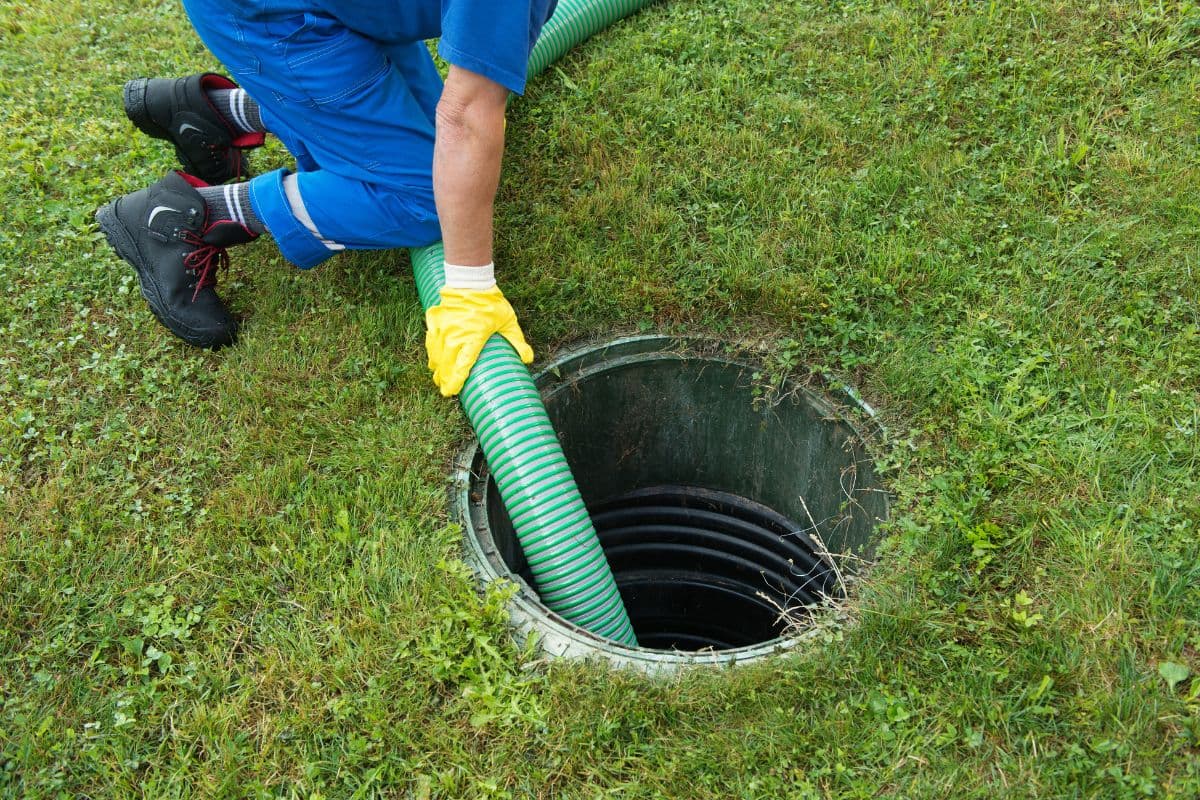
Septic tank pumping frequency is the recommended interval at which a septic tank should be emptied of accumulated sludge and scum to prevent solids from overflowing into the drainfield, where they cause irreversible clogging and system failure. A septic tank functions by holding wastewater long enough for heavy solids to settle to the bottom as sludge and lighter materials to float to the top as scum, with the clarified liquid layer in the middle flowing out to the drainfield for final treatment in the soil. When sludge and scum accumulate beyond one third of the tank's total volume, the clarified zone shrinks, solids begin escaping to the drainfield with the effluent, and the system begins failing in a way that cannot be reversed without drainfield replacement costing 5,000 to 15,000. The correct pumping interval for any household is determined primarily by tank size and the number of people using the system, with adjustments for garbage disposal use, water consumption habits, and whether any factors are accelerating the rate at which solids accumulate.
The general rule is every three to five years. But that range is so wide it's almost useless. A two-person household with a 1,500-gallon tank and a six-person household with a 1,000-gallon tank have completely different needs, and treating them the same is how drainfields fail.
This guide gives you a specific pumping schedule based on your actual tank size and household size, explains the factors that accelerate or slow down the accumulation rate, and shows you how to tell when your tank actually needs pumping rather than guessing based on a calendar.
For industry standards on septic maintenance, the EPA is the authoritative source. For a broader overview of how your system works, see our complete guide to septic systems.
The Pumping Schedule By Tank Size and Household Occupants
This table is based on EPA guidelines and industry data for typical residential use, assuming no garbage disposal. Find your tank size on the left and your household size across the top. The number is the estimated years between pumpings.
| Tank Size | 1 Person | 2 People | 3 People | 4 People | 5 People | 6 People |
|---|---|---|---|---|---|---|
| 750 gal | 9 yrs | 4.5 yrs | 3 yrs | 2 yrs | 1.5 yrs | 1 yr |
| 1,000 gal | 12 yrs | 5.5 yrs | 3.5 yrs | 2.5 yrs | 2 yrs | 1.5 yrs |
| 1,250 gal | 15.5 yrs | 7.5 yrs | 4.5 yrs | 3 yrs | 2.5 yrs | 2 yrs |
| 1,500 gal | 19 yrs | 9 yrs | 5.5 yrs | 3.5 yrs | 3 yrs | 2.5 yrs |
| 2,000 gal | 25 yrs | 12 yrs | 8 yrs | 6 yrs | 4.5 yrs | 3.5 yrs |
How to read this
A family of four with a 1,000-gallon tank should plan to pump approximately every two and a half years. A couple with a 1,500-gallon tank can likely go nine years between pumpings.
These estimates assume moderate water use and no garbage disposal. If you use a garbage disposal regularly, reduce these intervals by 30 to 50 percent. A household of four with a 1,000-gallon tank and a garbage disposal should pump every 12 to 18 months rather than every two and a half years.
Don't know your tank size?
Most three-bedroom homes have a 1,000-gallon tank. Four to five bedrooms typically have a 1,250 to 1,500-gallon tank. Check your property records, the original septic permit with your local health department, or ask the technician to check during your next service. For step-by-step instructions, see our guide on how to find your septic tank.
What Affects How Fast Your Tank Fills Up
The table above is a starting point. These seven factors can push your actual pumping needs earlier or later than the baseline.
Household Size — Biggest Factor
More people means more flushes, showers, and laundry loads. The average person generates about 70 gallons of wastewater per day. A household of two puts roughly 140 gallons into the tank daily. A household of six puts in 420 gallons. That threefold difference is why household size is the dominant variable in pumping frequency.
This includes everyone living in the home full-time. If you have teenagers who take long showers or frequently have overnight guests, your effective household size is higher than just counting permanent residents.
Garbage Disposal Use
This is the factor most homeowners underestimate. A garbage disposal sends food waste into the septic tank that bacteria struggle to break down as quickly as human waste. Ground food particles increase the sludge accumulation rate dramatically.
The Massachusetts Department of Environmental Protection recommends annual pumping for homes with garbage disposals, regardless of tank size or household count.
If you have a garbage disposal, you have two options: pump significantly more often, or stop using it. Most septic professionals recommend the latter. Composting food waste keeps it out of the tank entirely and is better for your system's long-term health.
Water Usage Habits
High water use pushes effluent through the tank faster, giving solids less time to settle. This means more suspended particles escape into the drainfield.
Specific habits that increase your effective water load include: running multiple loads of laundry back-to-back rather than spreading them across the week, long showers or filling large bathtubs daily, leaving toilets running with leaky flappers, and using older high-flow toilets (3.5 to 5 gallons per flush vs. 1.6 gallons for modern low-flow models).
A single running toilet can waste 200 gallons per day. That's nearly tripling the water load for a one-person household. Fixing leaks is one of the cheapest ways to extend your pumping interval.
Tank Size
Larger tanks provide more retention time for solids to settle and bacteria to break down waste. A 1,500-gallon tank serving a four-person household has significantly more buffer capacity than a 750-gallon tank serving the same household.
If your home has been expanded (bedrooms added, a basement apartment, or an ADU) since the original septic system was installed, the tank may now be undersized for the actual number of occupants.
System Age and Condition
Older tanks may have lost some effective volume due to accumulated hardened sludge that doesn't get fully removed during routine pumping. Cracked or deteriorating baffles can allow solids to escape into the drainfield prematurely.
Tanks older than 20 years should be inspected more frequently — annually rather than every three years — to monitor for these issues.
What Goes Down the Drain
Beyond the garbage disposal issue, certain household products affect bacterial health in the tank. Antibacterial soaps, harsh cleaning chemicals, paint, solvents, and excessive bleach can kill the anaerobic bacteria that digest solid waste. When bacteria die off, sludge accumulates faster, and pumping is needed sooner.
Small amounts of normal household cleaners are fine. The problem comes from concentrated doses — pouring a bottle of drain cleaner or bleach directly into a drain, or dumping latex paint rinse water down the utility sink. These habits kill the biological process your tank depends on.
Hot Tubs, Water Softeners, and High-Volume Drains
Draining a hot tub into the septic system sends hundreds of gallons of water into the tank at once, disrupting the settling process and potentially pushing solids into the drainfield. If you have a hot tub, drain it onto your lawn or into a separate dry well rather than into the septic system.
Water softener discharge is another volume concern. The backwash cycle on a water softener can send 50 to 100 gallons of sodium-rich water into the tank per regeneration. Some research suggests the high sodium content can also affect soil absorption in the drainfield. If your softener currently drains into the septic system, consider having it rerouted.
How to Know When Your Tank Actually Needs Pumping
The schedule table gives you a planning estimate. But the most accurate way to know when to pump is to measure the sludge and scum levels inside the tank. A professional can do this during a routine inspection ($100 to $300), and it takes about 15 minutes.
Here's the industry standard rule, also recommended by the EPA: pump when the bottom of the scum layer is within six inches of the bottom of the outlet tee, or when the top of the sludge layer is within 12 inches of the outlet tee.
In simpler terms: when the combined sludge and scum occupy more than about one-third of the tank's total depth, it's time to pump.
If you want to check between professional visits, you can measure yourself using a “sludge judge” (a clear tube that lets you see the layers) or the stick-and-rag method: wrap a white rag around the end of a long stick, lower it to the bottom of the tank through the inspection port, and pull it up slowly to see where the sludge and scum lines fall. It's not the most pleasant task, but it gives you an honest picture.
Why Measuring Matters
The benefit of measuring rather than guessing is that you avoid two costly mistakes: pumping too early (wasting money on a service you don't need yet) and pumping too late (allowing solids to escape into the drainfield and cause damage that costs thousands to repair).
What Happens If You Wait Too Long
Skipping or delaying pumping is the single most common cause of septic system failure. Here's what happens in stages:
Tank fills beyond capacity
Sludge and scum layers grow until they occupy most of the tank's volume. Effluent has less space and less time to settle, meaning more suspended solids exit with the liquid.
Solids escape into the drainfield
Suspended particles that should have stayed in the tank flow through the outlet pipe, past a potentially overwhelmed effluent filter, and into the distribution box and drainfield pipes.
Drainfield begins to clog
The soil pores and gravel in the drainfield trenches slowly fill with solid material. The soil's ability to absorb and treat effluent decreases. You might notice slow drains, gurgling sounds, or the faint smell of sewage.
Drainfield fails
The soil can no longer absorb effluent at the rate it enters. Wastewater surfaces in the yard as standing water, sewage backs up into the house through the lowest drains, or both. The drainfield is now so clogged with biomat and solid material that it cannot be cleaned. It must be replaced.
| Scenario | Cost |
|---|---|
| Routine pumping | $300 – $600 |
| Drainfield replacement | $5,000 – $15,000 |
| Full system replacement | $15,000 – $30,000 |
The Bottom Line
The $300 pumping you skipped to save money leads to a $15,000 repair that wouldn't have been necessary. For a detailed cost breakdown, see our septic tank pumping cost guide.
Can You Pump Too Often?
Yes, and it wastes money. Pumping a tank that's only 15 to 20 percent full does nothing useful. It removes the healthy bacteria colony that's actively digesting waste, and the tank immediately begins refilling the moment you resume using water. You'll spend $300 to $600 on a service that provides no benefit.
Some pumping companies will tell you to pump annually regardless of your tank levels because more frequent pumping means more revenue for them. This is not in your interest. If a technician measures your sludge and scum and the levels are well below the one-third threshold, you can safely wait. Ask for the measurements in writing and use them to calibrate your personal schedule.
Exception
Aerobic treatment units and systems with mechanical components should be inspected (not necessarily pumped) annually because their pumps, aerators, and float switches require regular maintenance checks.
Building Your Personal Pumping Schedule
Here's a practical approach to finding the right interval for your specific household:
Year one
Get your tank pumped and have the technician measure and record the sludge and scum levels. Note your household size, tank size, and any factors that increase accumulation (garbage disposal, high water use, water softener).
Year two
Have an inspection only (no pumping). The technician measures sludge and scum levels again. Compare them to the year-one baseline. The rate of accumulation tells you how fast your tank is filling.
Year three onward
Based on the measured accumulation rate, you now have a data-driven schedule. If the tank was one-third full after two years, pump at year three. If it was only 20 percent full after two years, you can wait until year four or five.
This approach costs a little more in inspections upfront but saves you from overpumping or underpumping for the life of the system. It's the method most septic professionals recommend for homeowners who want to manage their maintenance smartly.
Keep all service records in a folder with your property documents. If you sell the home, these records demonstrate a well-maintained system and strengthen your position in negotiations. Many home sale septic inspections go more smoothly when the seller can produce years of documented service history.
Complete Septic System Maintenance Schedule
Pumping is the most important maintenance task but not the only one. Use this schedule to keep every component of your system healthy year-round.
| Task | Frequency | Cost | Why It Matters |
|---|---|---|---|
| Pump the septic tank | Every 2 to 5 years (see schedule table above) | $300 – $600 | Removes sludge and scum before they escape to the drainfield |
| Clean or replace the effluent filter | Every 1 to 2 years, or at every pump-out | $0 – $200 | Prevents solids from reaching the drainfield between pump-outs |
| Inspect inlet and outlet baffles | At every pump-out | Included in pump-out | Cracked or missing baffles allow solids to exit the tank |
| Check tank lid and riser seals | Annually | $10 – $300 | Damaged seals allow gases to escape and groundwater to enter |
| Inspect distribution box | Every 3 to 5 years | $100 – $500 | An unlevel D-box overloads one drainfield section and causes premature failure |
| Walk the drainfield area | Every spring and fall | Free | Check for soggy soil, standing water, or unusually green grass indicating early failure |
| Divert surface water away from drainfield | Ongoing | $0 – $500 | Excess water hydraulically overloads the drainfield and reduces absorption capacity |
| Fix leaky toilets and faucets | As soon as discovered | $50 – $200 | A single running toilet adds 200 gallons per day, tripling the hydraulic load |
| Avoid chemical drain cleaners | Always | $0 | Caustic chemicals kill anaerobic bacteria and accelerate sludge buildup |
| Keep vehicles off drainfield | Always | $0 | Vehicle traffic permanently compacts soil and crushes drainfield pipes |
| Pump aerobic system and inspect mechanical components | Annually | $150 – $300 | Aerobic units have pumps, aerators, and float switches that require regular checks |
| Full professional system inspection | Every 1 to 3 years | $100 – $300 | Catches developing problems before they become expensive failures |
Glossary
Frequently Asked Questions
How often should a family of 4 pump their septic tank?
How do I know if my septic tank is full?
Does a garbage disposal affect how often I need to pump?
Should I pump my septic tank every year?
What is the best time of year to pump?
Will septic tank additives reduce how often I need to pump?
How much does it cost to pump a septic tank?
Related Guides
Continue learning about septic system care with these in-depth guides.
Septic Tank Pumping Cost 2026
Real pricing by tank size and region, what drives costs up or down, emergency surcharges, and how to avoid being overcharged.
Septic System Maintenance Checklist
The full maintenance schedule for every component of your septic system, not just the tank, to maximize system lifespan.
Signs Your Drainfield Is Failing
What happens when pumping is deferred too long and solids reach the drainfield, with the full warning sign progression from earliest to latest.
Drainfield Replacement Cost
The 5,000 to 15,000 repair that skipped pump-outs make inevitable, with a full cost breakdown by system type.
Septic Tank Backing Up Into House
What happens when a full tank is left too long, including emergency steps, causes, and how to fix and prevent backups.
Slow Drains on a Septic System
Whole-house slow drains are often the first sign a tank is overdue for pumping. How to diagnose the cause and determine the right fix.
Septic Smell in Your Yard
Outdoor sewage odor is a common symptom of a tank that is overdue for service. Eight causes and the specific fix for each.
Complete Septic System Guide
How the entire septic system works, the role of each component, and how pumping frequency fits into the broader maintenance picture.
What You Can and Cannot Flush
Everything that accelerates sludge accumulation and shortens your pumping interval, and what to keep out of the system entirely.
Septic Inspection Cost
What a professional inspection costs and why having sludge and scum levels measured gives you a data-driven pumping schedule instead of guesswork.
Septic Tank Size Guide
How to determine your tanks capacity if you do not know it, which is the first step in finding your correct pumping interval.
How Long Does a Septic System Last?
How pumping frequency directly affects the lifespan of the entire system, including the tank, drainfield, and all components.
From Our Network
Best Sump Pumps 2026
For homeowners managing both a septic system and a basement, a reliable sump pump with battery backup helps prevent the groundwater saturation that stresses drainfields and shortens pumping intervals.
Sump Pump Design Ideas for 2026
How to integrate basement water management equipment into a finished space, relevant for homes where the basement drainage system works alongside a septic system.
Ready to Get Your Tank Pumped?
Connect with licensed septic professionals in your area. Get free, no-obligation quotes and compare prices before you commit.
Get Free QuotesGet Expert Septic Help
Connect with qualified septic professionals in your area. Free quotes, no obligation.
Get Homeowner Tips in Your Inbox
Septic maintenance schedules, pumping reminders, and troubleshooting guides from The Septic Guide — free to your inbox.
By subscribing you agree to receive emails from The Home Guide Network. We respect your privacy. Unsubscribe anytime. Privacy Policy