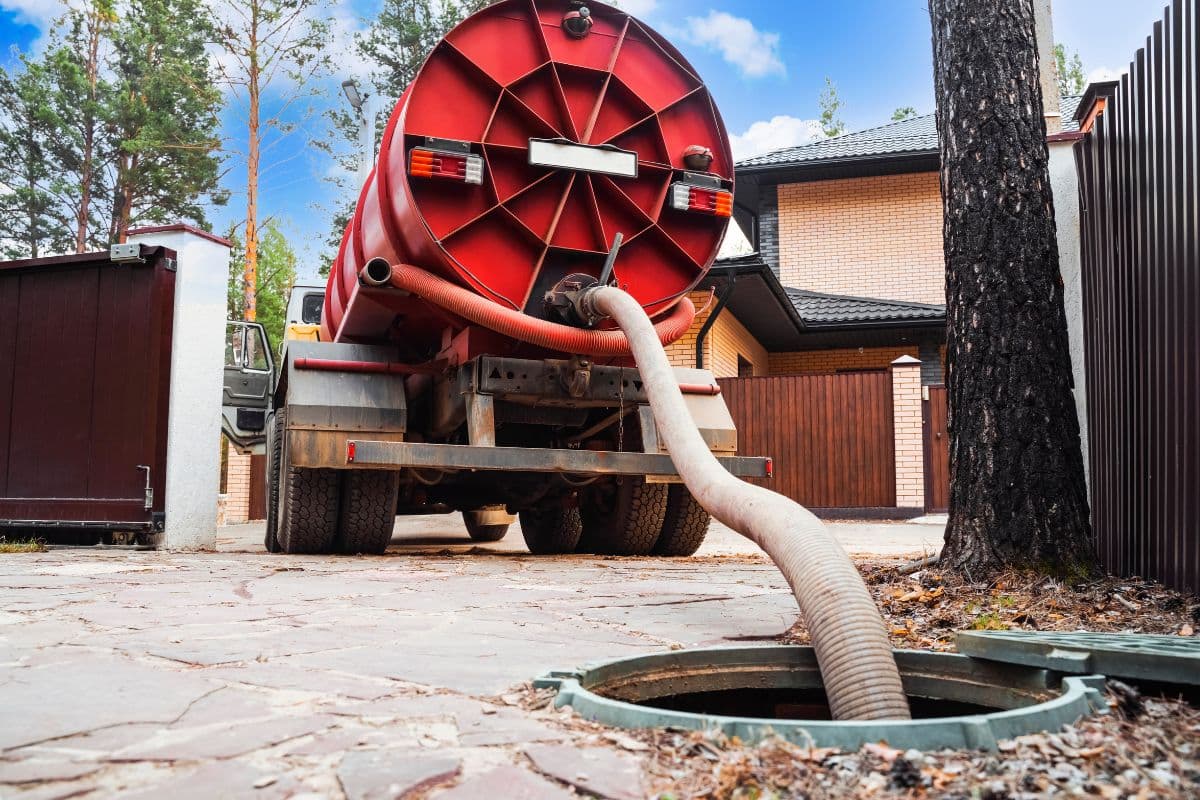
Septic tank pumping is the routine removal of liquid wastewater, floating scum, and suspended solids from a septic tank using a vacuum truck, performed every three to five years to prevent sludge accumulation from overflowing into the drainfield. Septic tank cleaning is a more thorough service that adds high-pressure water jetting or mechanical agitation to remove compacted sludge adhering to the tank walls and bottom that suction alone cannot extract, and is necessary when a tank is significantly overdue for service or when a technician determines that residual buildup warrants the additional step.
The two terms are used interchangeably in the industry but describe different scopes of work at different price points, with a standard pump-out costing $300 to $600 and a full cleaning with hydro-jetting running $500 to $800. For most households that stay on a regular pumping schedule, a thorough pump-out with proper agitation is sufficient at each service visit and a separate cleaning step is not necessary.
The terms are used interchangeably by homeowners and even by some service companies, but septic tank pumping and septic tank cleaning are not the same service. Understanding the difference determines whether you leave a service visit with a tank that has been adequately maintained or one that still has compacted sludge hardening along the bottom and walls, and that distinction directly affects how long your drainfield lasts.
For a complete overview of how septic systems work, see our complete septic system guide.
What Happens Inside Your Septic Tank
Wastewater from every drain in the house enters the tank continuously. Once inside, it naturally separates into three distinct layers based on density.
Sludge Layer (Bottom)
Heavy solid waste settles to the bottom and compacts over time. This is the primary material targeted during both pumping and cleaning.
Effluent Layer (Middle)
The clarified liquid in between is called effluent. This is the only material that should be exiting through the outlet pipe to the drainfield.
Scum Layer (Top)
Oils, grease, and lightweight organic materials float to the surface and form the scum layer.
The anaerobic bacteria living in the tank digest a portion of the organic solids, but they cannot break down everything. Inorganic materials, grease compounds, and certain solids accumulate faster than bacteria can process them, which is why physical removal through pumping is necessary on a regular schedule. The EPA recommends inspecting every one to three years and pumping every three to five years.
Septic Tank Pumping: What It Is and What It Includes
Pumping is the standard maintenance service for a septic tank. A licensed technician arrives with a vacuum truck, locates and opens the tank, and inserts a large-diameter hose through the access opening to remove the tank contents using suction.
A properly performed pump-out includes:
- Removing the scum layer from the surface
- Removing the liquid effluent layer
- Agitating the contents to break up solids and mix them with liquid for easier extraction
- Removing as much sludge from the bottom as possible through suction
- Checking the inlet and outlet baffles for damage or blockage
- Inspecting or cleaning the effluent filter at the outlet pipe
- Recording sludge and scum measurements in the service report
The key phrase is “as much sludge as possible”
Suction alone cannot always remove all compacted sludge from the bottom of the tank, particularly if the tank has not been serviced on schedule and the sludge has hardened or adhered to the walls. This is the gap that cleaning addresses.
What pumping does not include by default:
- High-pressure jetting of the tank walls and bottom
- Removal of compacted or dried sludge that suction cannot extract
- Inspection of the distribution box or drainfield
- Camera inspection of the inlet pipe
Cost
A standard pump-out costs $300 to $600 for a typical residential tank, with the price varying by tank size, region, and site accessibility. Emergency pump-outs add $150 to $300 in after-hours surcharges. See our septic tank pumping cost guide for a full regional breakdown.
Septic Tank Cleaning: What It Is and What It Adds
Cleaning goes further than pumping. After the bulk of the liquid and loose solids have been removed, a cleaning service uses high-pressure water jets, mechanical agitation, or specialized scraping tools to break up compacted sludge adhering to the tank bottom and walls, then suctions out the dislodged material.
The practical difference is completeness. A pumped tank still has some residual sludge and organic material. A properly cleaned tank is as close to empty as possible, with the interior walls, bottom, and baffles free of buildup.
Cleaning is typically performed when:
- A tank has gone significantly longer than recommended between service visits
- The sludge layer has hardened and compacted beyond what suction can remove
- A property has been vacant for an extended period and the tank contents have dried and solidified
- A technician inspects the tank and determines the residual sludge warrants the additional step
- A two-compartment tank has buildup in the second compartment that requires more than standard suction
Cost
Tank cleaning adds $200 to $300 to the base pump-out cost when hydro-jetting is needed. For a 1,000 to 1,250 gallon tank, a full cleaning with jetting typically runs $500 to $800 depending on the condition of the tank and the local market.
The Confusion in the Industry
Part of what makes this topic frustrating for homeowners is that most septic service companies use the terms interchangeably in their marketing materials. A company advertising “septic tank cleaning” may perform a standard pump-out, and a company advertising “septic tank pumping” may include thorough agitation and near-complete sludge removal. The words on the website do not reliably tell you what will happen on your property.
There is also a quality issue with standard pump-outs that most homeowners never discover. Some technicians insert the hose and remove the liquids without adequately agitating the contents first, leaving a significant amount of sludge behind. Others do not pump both compartments of a two-compartment tank, which has been standard in systems installed since the late 1980s.
Watch out for incomplete service
A technician who only accesses the inlet side of a two-compartment tank may be charging for a full service while leaving the second compartment untouched. The solution is to ask specific questions before booking and to be present during the service so you can verify what is being done.
What to Ask Before Booking Any Service
These questions distinguish a thorough provider from one cutting corners.
Will you agitate the tank contents before pumping?
Proper agitation breaks up the sludge layer and mixes it with liquid so it can be extracted through suction. Without agitation, a significant portion of the sludge stays behind.
Do I have a two-compartment tank, and will you pump both sides?
Most homes built after the late 1980s have two-compartment tanks. Both compartments must be pumped. A company that only accesses the inlet side is not completing the job.
Will you clean or inspect the effluent filter?
The effluent filter at the outlet pipe should be checked and cleaned at every service visit. If the company does not include this, the filter may be clogged and restricting outflow from the tank.
Will you check the inlet and outlet baffles?
The baffles direct flow into and out of the tank and prevent solids from escaping. A cracked or missing baffle is one of the most common and most easily preventable causes of drainfield damage.
Will I receive a written service report?
A quality provider records sludge and scum measurements, notes the tank condition, and documents any repairs recommended. This record is valuable for tracking your pumping interval and for real estate transactions.
Is high-pressure jetting available if needed, and what does it cost?
Knowing the additional cost in advance prevents surprise charges on the invoice.
When Does My Tank Actually Need Cleaning vs Just Pumping?
For most households that stay on a regular schedule, a thorough pump-out with proper agitation is sufficient at each service visit and a separate cleaning step is not necessary.
| Situation | Service Needed |
|---|---|
| On schedule, sludge within normal range | Standard pump-out with thorough agitation |
| Overdue by 1 to 2 years, sludge elevated but loose | Thorough pump-out, agitation essential |
| Overdue by 3 or more years, sludge compacted | Pump-out plus hydro-jetting to dislodge hardened material |
| Property vacant for extended period | Full cleaning, walls and bottom may need jetting |
| Two-compartment tank, second side not previously serviced | Both compartments pumped and cleaned |
| Tank showing signs of stress (slow drains, odor) | Full inspection plus thorough pump-out or cleaning |
| Pre-sale inspection requirement | Thorough pump-out so tank interior can be fully assessed |
The practical rule: if a tank has been serviced on schedule with thorough agitation each time, a standard pump-out is what you need. If there is any doubt about whether previous service visits were thorough, or if the tank has gone significantly longer than recommended between visits, request a cleaning that includes jetting.
How to Verify You Got a Complete Job
When the service is finished, ask the technician to walk you through what was done and show you the service report. The report should include the sludge depth measurement before pumping, the scum layer measurement, the condition of the baffles and effluent filter, and the recommended interval before the next service.
If sludge and scum measurements are not in the report, the technician did not measure them, which means they cannot tell you whether the tank was actually ready to be pumped or when it will need service next.
A tank that has been properly pumped will have:
- The inlet and outlet baffles visible and intact
- The effluent filter cleaned or noted for replacement
- A written record of the service that you can keep with your property maintenance files
Ask for a copy of the service report before the truck leaves your property. See our septic system maintenance checklist for a complete record-keeping guide.
Glossary
Frequently Asked Questions
What is the difference between septic tank pumping and cleaning?
How often should a septic tank be pumped vs cleaned?
Is cleaning included in a standard pump-out?
How do I know if my tank needs cleaning or just pumping?
Can I use septic tank additives instead of pumping or cleaning?
What happens if I skip pumping for too long?
Should I be home when the septic tank is pumped?
Related Guides
Continue learning about septic system care with these in-depth guides.
How Often Should You Pump Your Septic Tank?
The exact pumping schedule by tank size and household size, and how to use sludge measurements to build a data-driven interval specific to your system.
Septic Tank Pumping Cost 2026
Real pricing by tank size and region, emergency surcharges, and how to avoid being overcharged for a service that was not performed completely.
Septic System Maintenance Checklist
The full maintenance schedule for every septic system component, not just the tank, to maximize system lifespan.
Signs Your Drainfield Is Failing
What happens when pumping is deferred too long and solids reach the drainfield, with the full warning sign progression from earliest to latest.
Complete Septic System Guide
How the tank, drainfield, and all connecting components work together, and why regular pumping is the single most important maintenance action for the entire system.
What You Can and Cannot Flush
What accelerates sludge accumulation and shortens your pumping interval, and what should never enter the system.
Septic Inspection Cost
What a professional inspection costs and why combining an inspection with your pump-out gives you the most complete picture of your system's health.
Best Septic Tank Treatments
What bacteria-based treatments can and cannot do for tank health, and why they supplement but never replace scheduled pumping.
Best Septic Tank Risers
The upgrade that makes every future pump-out and cleaning faster and cheaper by eliminating excavation fees and giving the technician direct access to both compartments.
Drainfield Replacement Cost
The $5,000 to $15,000 repair that skipped or incomplete pump-outs make inevitable, with a full cost breakdown by system type.
Ready to Schedule a Pump-Out?
Connect with licensed septic professionals in your area. Get free, no-obligation quotes and compare prices before you commit.
Get Free QuotesGet Expert Septic Help
Connect with qualified septic professionals in your area. Free quotes, no obligation.