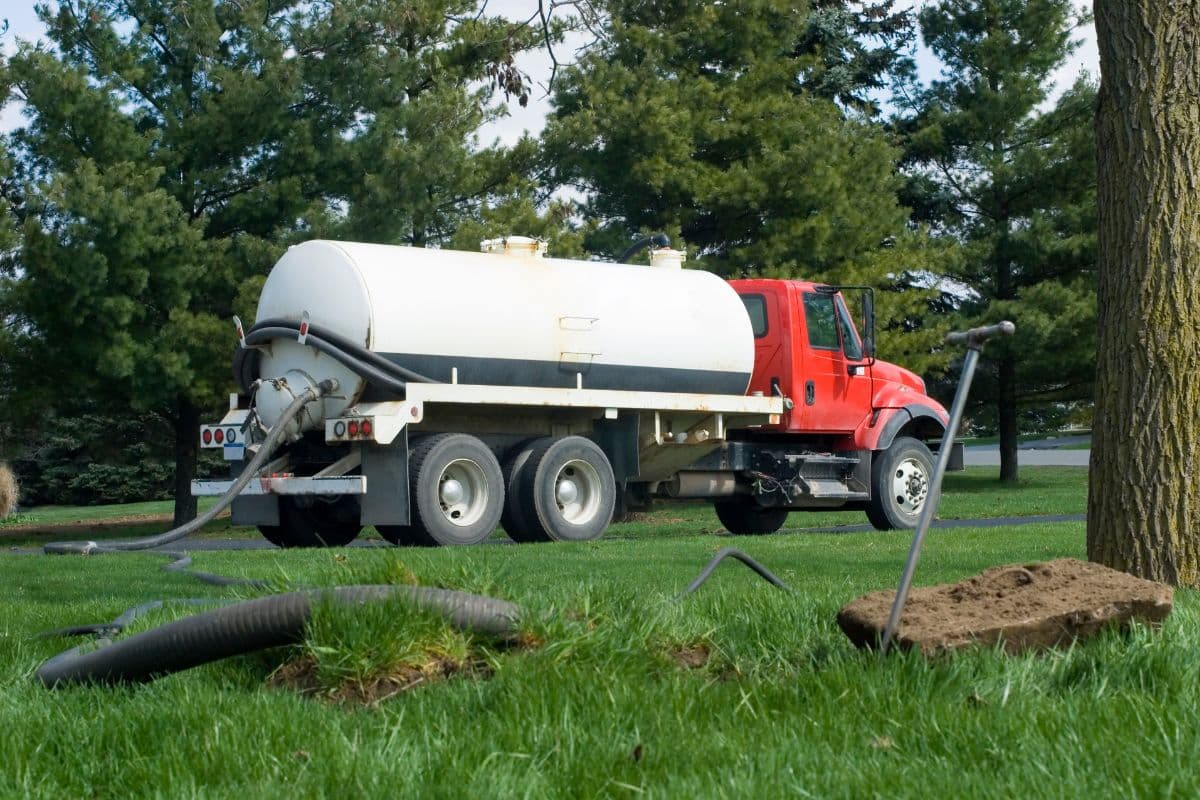
Septic tank pumping is the process of removing accumulated sludge, scum, and liquid waste from a residential septic tank using a vacuum truck, and it is the single most important maintenance task for any home on a septic system. The average cost to pump a septic tank in 2026 is $300 to $600 for a standard 1,000 to 1,500 gallon tank, with most homeowners paying around $400. Cost varies by tank size, region, accessibility, and whether the company charges separately for disposal, inspection, and effluent filter cleaning. This guide breaks down real 2026 pricing by tank size and region, covers every hidden fee to watch for, explains what a quality pumping service should include, and tells you exactly what to ask before hiring.
The average septic tank pumping costs $300 to $600 for a standard residential tank. Most homeowners pay around $400 to $450. But that national average hides a lot of variation, and the final number on your invoice depends on factors that most cost guides skip over entirely.
This guide breaks down real pricing by tank size, region, and situation. More importantly, it covers the hidden costs, the add-on fees nobody warns you about, and the specific questions you should ask before hiring a pumping company so you don't overpay.
If you're new to septic ownership and want to understand the full system first, start with our complete guide to septic systems. For industry standards on septic maintenance, the EPA and the National Onsite Wastewater Recycling Association (NOWRA) are the authoritative sources.
Septic Pumping Cost by Tank Size
Tank size is the single biggest factor in what you'll pay. Larger tanks hold more waste, take longer to pump, and generate higher disposal fees at the treatment facility. Here's what to expect in 2026:
| Tank Size | Typical Cost | Common For |
|---|---|---|
| 500–750 gallons | $200 – $350 | Small homes, cabins, 1–2 bedrooms |
| 1,000 gallons | $300 – $450 | Most 3-bedroom homes — most common size |
| 1,250 gallons | $350 – $500 | 3–4 bedroom homes |
| 1,500 gallons | $400 – $550 | 4–5 bedroom homes |
| 2,000 gallons | $500 – $700 | Large homes, 5+ bedrooms |
| 2,500 gallons | $700 – $1,000 | Multi-family or commercial |
If you don't know your tank size, check your property records, the original septic permit on file with your local health department, or ask the pumping technician to read the stamp on the tank lid during the first service.
Septic Pumping Cost by Region
Where you live affects pricing significantly because labor rates, disposal fees, and the number of available septic companies all vary by area.
| Region | Typical Range | Why |
|---|---|---|
| Northeast (NY, NJ, CT, MA, PA) | $350 – $650 | Higher labor costs, stricter environmental regulations, higher disposal fees |
| Southeast (FL, GA, NC, SC, TN) | $275 – $450 | More septic companies competing, lower labor costs |
| Midwest (OH, MI, IN, IL, WI, MN) | $300 – $500 | Mid-range labor, rural areas often cheaper |
| West Coast (CA, WA, OR) | $400 – $700 | Highest overall service costs, strict regulations |
| Mountain/Plains (CO, UT, ID, MT) | $275 – $500 | Varies widely based on travel distance to rural properties |
| South Central (TX, OK, AR, LA) | $250 – $450 | Competitive market, lower cost of living |
Rural properties sometimes cost more than suburban ones despite lower regional averages because the pumping truck has to travel farther. If you're 30+ miles from the nearest provider, expect a travel surcharge of $50 to $150.
Hidden Costs and Add-On Fees Most Guides Don't Mention
The base pumping fee is just the starting point. These additional charges are common, often undisclosed until the invoice arrives, and completely avoidable if you know to ask upfront.
Digging and Access Fees — $50 to $200
If your tank lids are buried under soil, grass, gravel, or a deck, the crew has to dig to find them. This adds time and labor. Most companies charge $50 to $200 depending on depth and difficulty.
The fix: Install septic tank risers ($200–$400 one-time). Risers bring the access lids to ground level permanently, eliminating this fee for every future pumping. They pay for themselves in two to three pump-outs.
Tank Locating Fee — $50 to $150
If nobody knows where the tank is buried and there are no records, the technician has to locate it using a probe, electronic locator, or camera. Some companies include this in their base rate. Many don't.
The fix: Locate your tank once, mark it permanently, and keep a diagram. See our guide on how to find your septic tank.
Disposal Fees — Sometimes Separate
Some companies include waste disposal in their flat rate. Others charge the pumping labor separately from the disposal fee ($25 to $75 per load). Always ask: “Does your quoted price include disposal, or is that billed separately?”
Pumping vs. Cleaning — $200 to $300 Extra
Standard pumping removes liquid and floating solids. But in a neglected tank, hardened sludge can crust along the bottom and walls that the vacuum alone can't remove. Cleaning involves hydro-jetting the tank interior. If your tank hasn't been pumped in 7+ years, expect the technician to recommend cleaning.
Emergency and After-Hours Surcharges — $150 to $300 Extra
If sewage is backing up into your house on a Saturday night, you'll pay a premium. Emergency service typically adds $150 to $300, bringing the total to $500 to $1,000. The best way to avoid this is to never let it reach the emergency stage.
Effluent Filter Cleaning or Replacement — $50 to $200
Many modern septic tanks have an effluent filter at the outlet pipe that catches solids before they reach the drainfield. This filter needs to be cleaned or replaced during pumping. Some companies include this; others charge separately. If your tank has a filter and it's not being cleaned during pumping, ask why.
Baffle Inspection and Repair — $150 to $500
A good pumping company inspects the baffles (inlet and outlet T-fittings) while the tank is empty. Cracked or missing baffles allow scum and sludge to escape into the drainfield — the fastest path to drainfield failure. If found, repair costs $150 to $500. Far cheaper than a $5,000–$15,000 drainfield replacement.
What Pumping Actually Includes — And What It Should Include
Not all pumping services are equal. A quality pumping visit should include all of the following:
Full pump-out of all liquids, sludge, and scum from the tank.
A visual inspection of the tank interior checking for cracks, baffle condition, and structural integrity.
Measurement of the tank's sludge and scum levels before pumping to help calibrate your pumping schedule.
Cleaning or inspection of the effluent filter if one is present.
A written service report noting the date, volume pumped, tank condition, and any recommended repairs.
Proper disposal of septage at a licensed treatment facility.
Important
If the company shows up, pumps the tank in 20 minutes, and leaves without telling you anything about the tank's condition, you didn't get a full service. The inspection portion is arguably more valuable than the pumping itself — it catches developing problems before they become expensive failures.
Questions to Ask Before Hiring a Pumping Company
Getting three quotes before choosing is standard practice. The cheapest quote is not always the best value if it skips the inspection. Ask every company:
How much do you charge for a [tank size] pump-out?
Does that price include disposal, or is that billed separately?
Do you charge extra for digging if the lids are buried?
Do you inspect the baffles and effluent filter during pumping?
Will I receive a written service report?
Are you licensed and insured?
Can you provide references or reviews?
Is there a travel surcharge for my address?
Pumping vs. Not Pumping: The Real Cost Comparison
Homeowners who skip or delay pumping because it seems expensive are making one of the costliest mistakes in home maintenance. Here's what the numbers actually look like:
| Scenario | Cost |
|---|---|
| Routine pumping every 3–5 years | $300 – $600 |
| Emergency pumping (backup into house) | $500 – $1,000 |
| Septic tank repair (cracked baffle, damaged pipe) | $200 – $1,500 |
| Drainfield rejuvenation (clogged from skipped pumping) | $1,000 – $5,000 |
| Full drainfield replacement | $5,000 – $15,000 |
| Complete septic system replacement | $15,000 – $30,000 |
The Bottom Line
A homeowner who pumps every four years for 20 years spends roughly $2,000 to $3,000 total. A homeowner who skips pumping and suffers a drainfield failure at year 12 spends $10,000 to $15,000 in a single event, plus landscaping restoration and potential health department fines. Routine pumping is not an expense — it's insurance against a five-figure repair bill.
When Should You Pump Your Septic Tank?
| Situation | Recommended Action | Why |
|---|---|---|
| Last pumped 3 to 5 years ago, average household | Schedule pumping now | Standard EPA-recommended interval for a typical 3 to 4 person household |
| Last pumped over 7 years ago | Schedule pumping immediately | Sludge overflow into drainfield is likely -- inspection needed at same visit |
| Household of 5 or more people | Pump every 2 to 3 years | Higher daily water usage accelerates sludge accumulation significantly |
| Home with a garbage disposal | Pump every 2 to 3 years | Disposals increase solid load by 50 percent compared to households without one |
| Slow drains throughout the house | Schedule pumping and inspection | May indicate a full tank or early drainfield stress -- do not wait |
| Buying or selling a home | Pump before listing or closing | Over 30 states require septic inspection for real estate transactions |
| Sewage smell in yard or backing up inside | Emergency pump-out immediately | Active system failure -- call a pro same day |
| Tank pumped recently but drains still slow | Inspection only -- no pumping needed | Problem is likely a baffle, filter, or drainfield issue rather than a full tank |
| Vacation home or seasonal property | Pump before winterizing | Prevents solids from compacting over the off-season and reduces spring startup issues |
How to Save Money on Septic Pumping
Install risers
The one-time cost of $200 to $400 eliminates the $50 to $200 digging fee at every future pumping. They pay for themselves in two to three visits and save you money for the life of the system.
Know your tank size and location
Having this information ready when you call for quotes avoids the locating fee and helps you compare prices accurately across companies.
Schedule off-peak
Fall and late winter tend to be slower seasons for septic companies in most regions. You may get better availability and sometimes better pricing compared to the busy spring season.
Bundle with a neighbor
Some companies offer a discount when they pump multiple tanks in the same area on the same visit. If your neighbors also have septic systems, coordinate your pumping schedules and ask about a multi-home rate.
Don't over-pump
Pumping too often wastes money. If your tank was last pumped two years ago and the technician tells you sludge is only at 15–20%, you can wait another year or two. A good technician will measure and tell you honestly.
Maintain your system between pumpings
Using septic-safe products, avoiding garbage disposals, fixing leaky fixtures, and spreading laundry loads across the week all reduce the rate of solid accumulation, extending the time between pumpings.
Does Insurance Cover Septic Pumping?
No. Routine septic tank pumping is considered maintenance, and no homeowners insurance policy covers it. It's your responsibility as the system owner — the same way changing your furnace filter or cleaning your gutters is your responsibility.
Insurance can cover damage caused by a septic failure (like sewage backing up into your house) in certain circumstances, but it does not cover the maintenance that would have prevented the failure. Some policies require a water backup endorsement to cover any septic-related damage at all.
Glossary
Frequently Asked Questions
How much does it cost to pump a septic tank?
How often should I pump my septic tank?
What happens if I don't pump my septic tank?
Is septic tank pumping the same as cleaning?
When is the best time of year to pump?
Should I pump before selling my house?
Does homeowners insurance cover septic pumping?
Related Guides
Frozen Septic System
Find the freeze, compare thawing costs, and prevent a repeat next winter.
Complete Septic System Guide
How your system works, the different types, maintenance schedules, and warning signs of failure.
How Often to Pump Your Septic Tank
Exact pumping schedules by tank size and household size with EPA-based intervals.
Signs Your Drainfield Is Failing
The 7 warning signs of drainfield failure and what skipped pumping does to your system over time.
Septic System Repair Cost
Every septic repair priced out from a $50 filter cleaning to a $15,000 drainfield replacement.
Drainfield Replacement Cost
Full cost breakdown for drainfield rejuvenation and full replacement by system type.
Septic Inspection Cost
What each type of inspection costs and what it should include.
Best Septic Tank Risers
The one upgrade that eliminates the digging fee at every future pump-out.
Best Septic Tank Treatments
Monthly bacterial treatments that slow sludge accumulation between pump-outs.
Septic Tank Backing Up
What to do if sewage is backing up into your home right now.
Selling a Home with a Septic System
Pre-sale pumping, inspection requirements, and disclosure rules by state.
Does Insurance Cover Septic Repair?
What homeowners insurance covers and does not cover for septic failures.
From Our Network
Managing a septic system is one part of a larger picture of home maintenance that most guides treat in isolation.
Ready to Get Your Tank Pumped?
Connect with licensed septic professionals in your area. Get free, no-obligation quotes and compare prices before you commit.
Get Free QuotesGet Expert Septic Help
Connect with qualified septic professionals in your area. Free quotes, no obligation.
Get Homeowner Tips in Your Inbox
Septic maintenance schedules, pumping reminders, and troubleshooting guides from The Septic Guide — free to your inbox.
By subscribing you agree to receive emails from The Home Guide Network. We respect your privacy. Unsubscribe anytime. Privacy Policy