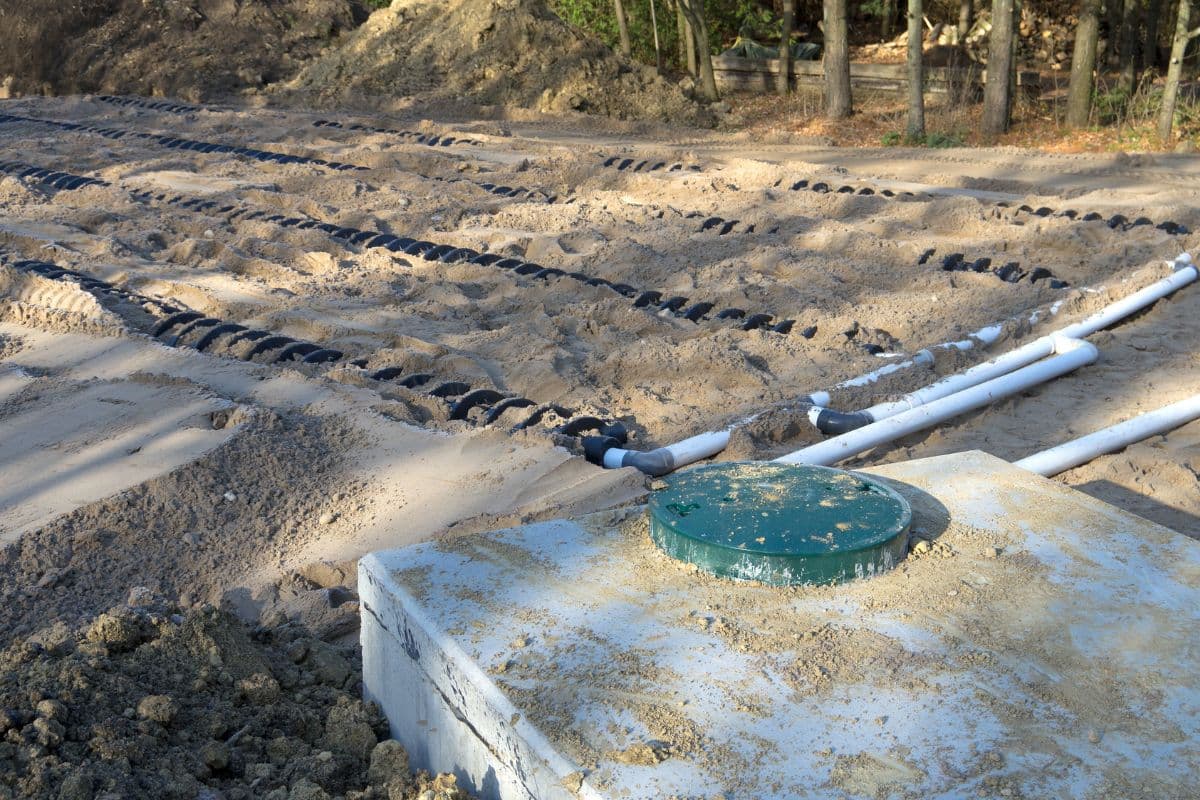
Drainfield replacement is the process of excavating a failed septic leach field and constructing a new network of perforated pipes, gravel trenches, and a distribution box in a designated replacement area on the property, restoring the system's ability to distribute and treat wastewater in the soil. A conventional drainfield replacement costs $5,000 to $15,000 installed, while engineered alternatives such as mound systems required when soil conditions prevent a conventional installation cost $10,000 to $20,000 or more. The type of replacement system required is determined by a new perc test conducted on the replacement area, meaning soil conditions at the replacement site, not homeowner preference or budget, determine the final cost. Drainfield replacement is almost never covered by standard homeowners insurance and is nearly always an out-of-pocket expense, making it the single most financially consequential outcome of deferred septic tank maintenance.
Drainfield replacement is the most expensive septic repair a homeowner can face. This guide breaks down every cost component, explains what determines whether you need a full replacement or can get by with rejuvenation, and shows you how to avoid overpaying. To estimate your specific scenario in under a minute, use our septic system cost calculator.
Drainfield replacement is one of the four project types our septic cost calculator estimates. The tool factors in system type, home size, soil difficulty, and regional pricing to give you a planning estimate before you request installer quotes.
Quick Cost Summary
Conventional
$5k–$15k
Mound System
$10k–$20k
Rejuvenation
$1k–$5k
Tank + Field
$8k–$20k
Complete Cost Breakdown
This table covers every line item you'll see on a contractor's estimate. If a quote is missing any of these components, ask whether they're included or billed separately.
| Item | Cost Range |
|---|---|
| Perc test and site evaluation | $500 – $2,000 |
| Engineering/design (if required) | $500 – $1,500 |
| Permits | $250 – $650 |
| Excavation and site prep | $1,500 – $5,000 |
| Conventional drainfield installation | $3,000 – $10,000 |
| Chamber system drainfield | $4,000 – $12,000 |
| Mound system construction | $10,000 – $20,000 |
| Distribution box replacement | $500 – $1,500 |
| New septic line (tank to field) | $40 – $180 per linear foot |
| Old drainfield abandonment permit | $100 – $250 |
| Old field excavation and fill | $1 – $5 per square foot |
| Landscaping restoration | $500 – $3,000 |
| Tree removal (if needed) | $400 – $1,200 per tree |
| Total — Conventional replacement | $5,000 – $15,000 |
| Total — Mound system replacement | $10,000 – $20,000 |
What Determines Your Cost
Drainfield Type
The type of replacement drainfield required is the biggest cost driver, and it's determined by your soil conditions, not your preference.
| Drainfield Type | Cost | When Required |
|---|---|---|
| Conventional gravel trench | $3,000 – $10,000 | Good soil, adequate space, passing perc test |
| Chamber system | $4,000 – $12,000 | High water table, areas where gravel is expensive |
| Mound system | $10,000 – $20,000 | Shallow soil, high water table, high bedrock |
| Sand filter | $7,000 – $15,000 | Challenging soil, environmentally sensitive areas |
| Drip distribution | $8,000 – $18,000 | Shallow soil, irregular lot shapes |
If your original drainfield was conventional and the replacement area has similar soil, you'll likely get another conventional field at the lower end of the cost range. If soil conditions have changed — higher water table, original reserve area has different soil than expected — you may need a more expensive alternative system.
Field Size
Larger homes generate more wastewater and require larger drainfields. Field size is calculated based on bedroom count — not bathrooms — and soil percolation rate. A three-bedroom home with good soil might need 300 to 400 square feet of drainfield. A five-bedroom home with slower-draining soil might need 600 square feet. More square footage means more trenching, more gravel, more pipe, and more labor.
Soil Conditions
Soil is the second-biggest cost factor. A perc test ($500 to $2,000) determines how quickly your soil absorbs water. Good percolation (sandy loam) means a smaller, cheaper conventional field. Poor percolation (clay, hardpan) means a larger field or an engineered alternative (mound, sand filter) that costs significantly more.
Accessibility
If the replacement area is easy for equipment to reach (open yard, flat terrain, near a driveway), excavation is straightforward. If the area is behind fences, on a slope, surrounded by trees, or only accessible through narrow passages, labor and equipment costs increase substantially.
Location and Labor Rates
Labor accounts for 60% of the total project cost. Rates vary significantly by region. Septic system costs in some states can be 20 to 40% higher than national averages due to high water tables, strict regulations, and the need for advanced treatment systems in coastal and environmentally sensitive areas. Your local market conditions directly affect what you'll pay.
Rejuvenation vs. Replacement: Can You Avoid a Full Replacement?
Not every failing drainfield needs to be replaced. Rejuvenation techniques can sometimes restore a struggling field for a fraction of the replacement cost.
| Option | Cost | When It Works | When It Doesn't |
|---|---|---|---|
| Soil aeration/fracturing | $1,000 – $3,000 | Early-stage biomat buildup, compacted soil | Long-term solid accumulation, crushed pipes |
| Hydro-jetting field pipes | $500 – $1,500 | Sediment buildup in pipes, partial blockages | Collapsed or broken pipes |
| Bio-remediation | $500 – $2,000 | Biomat-related slowdown, biological clogging | Mechanical damage, severe root intrusion |
| Full rejuvenation package | $2,000 – $5,000 | Combination of above methods | Drainfield has reached end of life |
The honest assessment: Rejuvenation works best when the drainfield is struggling but hasn't completely failed. If you're seeing early warning signs — slightly slow drains, mild odors, marginally wet soil during dry weather — rejuvenation caught early has a reasonable chance of extending the drainfield's life by several years.
If the drainfield has fully failed (standing water in dry weather, sewage surfacing, sewage backing into the house), rejuvenation almost never works. The soil pores are sealed with years of accumulated solids and biomat. At that point, replacement is the only viable option.
Ask your septic professional for an honest assessment before committing to either path.
What Is My Situation? Rejuvenation, Partial Repair, or Full Replacement?
Match your current symptoms and circumstances to the most likely path and realistic cost range.
| What You Are Observing | Likely Diagnosis | Recommended Path | Estimated Cost |
|---|---|---|---|
| Slow drains throughout house, tank overdue for pumping | Full tank, not drainfield failure | Pump tank first, reassess after | $300 – $600 |
| Slow drains persist after recent pump-out | Clogged effluent filter or D-box issue | Inspect filter and D-box before assuming drainfield | $0 – $1,500 |
| Mildly slow drains plus faint yard odor, caught early | Early-stage biomat, drainfield struggling | Rejuvenation (aeration, jetting, bio-remediation) | $1,000 – $5,000 |
| Lush green grass over drainfield in dry weather | Effluent reaching root zone, absorption slowing | Reduce water use, professional assessment, consider rejuvenation | $500 – $5,000 |
| Soggy soil over drainfield in dry weather | Absorption capacity exceeded, moderate failure | Professional inspection, rejuvenation if caught early | $2,000 – $15,000 |
| Standing water or surfacing sewage over drainfield | Complete drainfield failure | Full replacement almost certainly required | $5,000 – $20,000 |
| Sewage backing up into house | Total system failure | Emergency professional service, full replacement likely | $5,000 – $20,000 |
| One section wet, others dry | Failing or unlevel distribution box | Replace D-box before committing to full replacement | $500 – $1,500 |
| Drainfield failed, tank still structurally sound | Isolated drainfield failure | Drainfield replacement only, reuse existing tank | $5,000 – $15,000 |
| Drainfield and tank both failed or deteriorated | Full system failure | Complete system replacement, tank and drainfield | $8,000 – $20,000 |
| Soil fails new perc test at replacement area | Replacement area has poor drainage | Engineered alternative required (mound, sand filter, drip) | $10,000 – $20,000 |
| No reserve area available on property | Replacement area lost to construction or paving | Site engineering required to find viable location | $15,000 – $50,000 |
The Replacement Process Step by Step
Step 1 — Assessment and Perc Test (1 to 4 weeks before work begins)
A septic professional evaluates the failed drainfield and tests the designated replacement area. If your original septic permit identifies a reserve drainfield area, that's where the new field goes. If no reserve area exists, the professional identifies viable locations and conducts perc testing.
Step 2 — Design and Permitting (1 to 6 weeks)
Based on the perc test results, the drainfield is designed for your specific soil conditions and home size. The local health department reviews and approves the design before issuing a permit.
Step 3 — Old Field Decommissioning (Day 1)
The old drainfield is typically abandoned in place. Some jurisdictions require the old trenches to be covered with hydrated lime and topsoil. Others allow the field lines to remain undisturbed. An abandonment permit ($100 to $250) may be required.
Step 4 — Excavation and Construction (Days 2 to 5)
The contractor excavates trenches for the new drainfield, installs gravel bedding, lays perforated pipes, connects the distribution box, and covers the field. For mound systems, this phase includes importing sand and gravel, constructing the mound, and installing the pump system.
Step 5 — Connections and Testing (Days 5 to 6)
The new drainfield is connected to the existing septic tank via the distribution box. The system is tested for proper flow and even distribution across all trench lines.
Step 6 — Inspection and Restoration (Days 6 to 7)
The health department inspects the installation before final cover. Once approved, the contractor backfills, grades the site, adds topsoil, and seeds or sods the disturbed area.
Total timeline: One to three weeks from excavation to completion for a conventional system. Mound systems and engineered alternatives can take longer. Permitting adds one to six weeks before excavation begins.
How to Save Money on Drainfield Replacement
- •Get three to five quotes. Drainfield replacement pricing varies significantly between contractors. Multiple quotes help you identify fair pricing and avoid overpaying. Don't automatically choose the cheapest quote — it may not include all necessary components.
- •Ask about rejuvenation first. If your field is struggling but not completely failed, a $2,000 to $5,000 rejuvenation may buy you several more years before replacement is necessary.
- •Maintain access to the reserve area. If your original septic permit designates a reserve drainfield area, don't build on it. No structures, no driveways, no patios. Losing the reserve area forces you into more expensive alternative systems or creative engineering.
- •Replace only what's failed. If your tank is still structurally sound, you don't need a new tank. Replacing just the drainfield saves $3,000 to $7,000 compared to a full system replacement.
- •Schedule in the off-season. Fall and late winter are typically slower for septic contractors. You may get better pricing and faster scheduling.
- •Check for financial assistance. State, county, and federal programs offer grants and low-interest loans for septic repairs and replacements, particularly in environmentally sensitive areas. See our guide to septic system financial assistance programs before paying full price out of pocket.
- •Prevent the next failure. Once your new drainfield is installed, protect it with proper maintenance — pump on schedule, flush only appropriate materials, keep the effluent filter clean, and never drive or build on the field. The drainfield you're replacing probably failed because of deferred maintenance. Don't repeat the cycle.
Frequently Asked Questions
How much does it cost to replace a drainfield?
A conventional drainfield replacement costs $5,000 to $15,000 installed, which is the most common scenario for properties with suitable soil conditions and an available replacement area. A mound system replacement costs $10,000 to $20,000 because of the imported sand and gravel, pump equipment, and engineering required to build the elevated drainfield above natural soil. Sand filter and drip distribution systems fall in the $7,000 to $18,000 range depending on site complexity. The exact cost for any specific property depends on the drainfield size required based on bedroom count and soil percolation rate, local labor rates, permitting fees, and whether any complications such as rock removal, tree clearing, or old field excavation add to the project. Getting three to five quotes from licensed installers in your area is the most reliable way to establish a realistic budget for your specific situation.
How long does a drainfield last?
A well-maintained drainfield typically lasts 15 to 30 years, though some systems exceed that range when soil conditions are favorable, water use is conservative, and the tank has been pumped consistently on schedule. The single biggest factor in drainfield lifespan is whether solids were kept out of the drainfield through regular tank pumping every three to five years depending on household size and tank capacity. Drainfields that receive solids from a neglected tank can fail in under 10 years as the solids clog the gravel, soil pores, and perforated pipes and build up a thick layer of biomat that permanently seals the trench surfaces. Other factors that affect lifespan include hydraulic overloading from excessive water use or external water sources draining toward the drainfield, soil compaction from vehicles or structures placed over the field, and tree root intrusion into the pipes. The new drainfield installed to replace a failed one will last just as long as the original if the cause of the original failure is identified and corrected before the new system is put in service.
Can a failed drainfield be repaired instead of replaced?
Sometimes, and the answer depends entirely on the cause and severity of the failure. Rejuvenation techniques including soil aeration to fracture compacted soil, hydro-jetting to clear pipe blockages, and bio-remediation to break down early-stage biomat cost $1,000 to $5,000 and can restore a struggling drainfield when caught early before complete failure has occurred. If you are seeing early warning signs such as slightly slow drains, mild yard odor, or marginally wet soil during dry weather, rejuvenation has a reasonable chance of extending the life of the drainfield by several years at a fraction of the replacement cost. However, if the drainfield has completely failed with standing water in dry weather, sewage surfacing in the yard, or sewage backing up into the house, rejuvenation almost never works because the soil pores are sealed with years of compacted solids and biomat that cannot be reversed. A professional assessment is essential before committing to either path, as the cause of failure determines whether any non-excavation intervention is worth attempting.
Does insurance cover drainfield replacement?
Almost never. Standard homeowner policies exclude drainfield failure because it's considered a maintenance issue. Insurance only covers damage from sudden covered perils like fire or fallen trees, which rarely affect drainfields. Drainfield replacement is virtually always an out-of-pocket expense. For a full breakdown of what homeowners insurance does and doesn't cover for septic systems, see our guide to septic repair and replacement insurance coverage.
How long does drainfield replacement take?
A conventional drainfield replacement typically takes one to three weeks from the start of excavation to completed installation and final health department inspection, assuming no unexpected site conditions such as rock, high groundwater, or access difficulties that require additional equipment or time. Mound systems and engineered alternatives take longer because of the additional construction complexity, imported materials, and pump system installation, typically adding one to two weeks to the conventional timeline. Permitting adds significant time before excavation can begin, with the design review and approval process taking one to six weeks depending on the local health department workload and whether the design requires revisions. The perc test on the replacement area must be completed and approved before a permit is issued, so the full timeline from initial assessment to a functioning new drainfield is typically four to twelve weeks for a straightforward conventional replacement and longer for complex sites or engineered systems. If you are dealing with an active failure such as sewage surfacing or backing up into the house, contact a septic professional immediately as emergency permitting processes exist in most jurisdictions for health hazard situations.
What causes drainfield failure?
The most common cause of drainfield failure by a wide margin is solid waste escaping from a septic tank that has not been pumped on schedule, where accumulated sludge overflows into the drainfield and clogs the gravel, soil pores, and perforated pipes with a layer of compacted biomat that seals the trench surfaces and prevents effluent from percolating into the ground. Hydraulic overloading from excessive daily water use, back-to-back laundry loads, leaky toilets, or external water sources such as roof runoff and sump pump discharge draining toward the drainfield sends more water through the system than the soil can absorb, which saturates the drainfield and accelerates failure. Soil compaction from vehicles, heavy equipment, or structures placed over the drainfield permanently compresses the soil and crushes the perforated pipes, and unlike other causes this damage cannot be reversed without excavation and replacement. Tree root intrusion into the pipes and distribution box physically blocks effluent distribution and can crack or collapse pipe sections entirely, and severe root damage typically requires replacing the affected sections along with removing the tree responsible. Some drainfields fail simply because they have reached the end of their natural lifespan after 20 or more years of service, particularly in systems that were undersized for the property or installed in soil that was marginal from the beginning.
Glossary
Drainfield (leach field)
A drainfield is the underground network of perforated pipes buried in gravel-filled trenches where septic tank effluent is distributed into the surrounding soil for final treatment and natural purification by soil microorganisms, and it is the most expensive component of a conventional septic system to replace. When the drainfield fails, the entire septic system stops functioning because there is nowhere for treated effluent to go, which is why protecting the drainfield through regular tank pumping and proper maintenance is the central goal of all septic system care.
Reserve drainfield area
A reserve drainfield area is a section of the property designated in the original septic permit specifically for a future replacement drainfield, set aside at the time of initial installation to ensure a viable location exists when the original field reaches the end of its lifespan. If the reserve area has been built on, paved, or compacted by vehicle traffic over the years, replacement options become severely limited and may require more expensive engineered alternatives or creative site engineering to find a viable location elsewhere on the property.
Perc test (percolation test)
A perc test is a soil evaluation that measures how quickly water drains through the ground at a proposed drainfield location, expressed as the number of minutes it takes for water to drop one inch in a test hole, and is required before any drainfield installation or replacement to determine which system type the soil can support. A new perc test must be conducted on the replacement area before a replacement permit can be issued, and if the replacement area has different soil conditions than the original field, the results may require a more expensive system type than the one being replaced.
Rejuvenation
Drainfield rejuvenation is the use of non-excavation techniques to restore absorption capacity in a struggling or failing drainfield, including soil aeration to fracture compacted soil and restore pore space, hydro-jetting to clear sediment and debris from the perforated pipes, and bio-remediation to introduce bacteria that break down early-stage biomat on the trench surfaces. Rejuvenation costs 1,000 to 5,000 and is most effective when the failure is caught early before complete soil sealing has occurred, but it rarely works on drainfields that have fully failed from years of solid accumulation or physical damage.
Biomat
A biomat is a dense layer of bacteria, organic solids, and biological slime that forms naturally on the bottom and sides of drainfield trenches as effluent percolates through the soil, and a thin biomat is a normal and beneficial part of the wastewater treatment process that aids in pathogen removal. When solids escape a neglected septic tank and enter the drainfield, biomat accumulates far faster than it can be broken down, eventually sealing the trench surfaces completely and preventing effluent from percolating into the ground, which is the primary mechanism of drainfield failure from deferred tank pumping.
Distribution box (D-box)
A distribution box is a small watertight underground chamber that receives effluent from the septic tank outlet pipe and divides it equally among the multiple perforated pipe lines that make up the drainfield, ensuring no single trench section receives a disproportionate volume of effluent that would cause premature failure in that area. The D-box is typically replaced during a drainfield replacement to ensure even distribution across all lines of the new field, and its replacement cost of 500 to 1,500 is usually included in the total project estimate.
Abandonment
Drainfield abandonment is the process of properly decommissioning an old failed drainfield that is being replaced, which typically involves covering the old trenches with hydrated lime to neutralize remaining pathogens and topsoil to restore the surface grade. Most jurisdictions require an abandonment permit costing 100 to 250 and a health department inspection of the abandoned field before the replacement system can be placed in service, and the old field lines are usually left in place rather than excavated unless the replacement system requires the same area.
Mound system
A mound system is an engineered drainfield constructed above the natural ground surface using imported sand and gravel, required when native soil is too shallow, the water table is too high, or bedrock is too close to the surface for a conventional below-grade drainfield. Mound system replacement is the most expensive drainfield option at 10,000 to 20,000 because of the volume of imported materials, the pump equipment required to move effluent uphill to the mound, and the engineering required to design and construct the elevated sand bed to health department specifications.
Related Guides
On theseptic.guide
Septic Tank Pumping Cost 2026
What pump-outs cost by tank size and region, and how to combine pumping with your inspection to save on service call fees.
How Often Should You Pump Your Septic Tank?
The EPA-based pumping and inspection schedule by tank size and household size, so you know how often to book each service.
Septic System Repair Cost
What every common repair costs after a failed inspection, from a cracked baffle to full drainfield replacement.
Septic System Installation Cost 2026
Full cost breakdown for new and replacement systems, relevant when an inspection reveals the system has reached end of life.
Drainfield Replacement Cost
The most expensive outcome of a failed inspection, with full cost breakdown by system type and site condition.
Signs Your Drainfield Is Failing
The warning sign progression that a thorough inspection is designed to catch early, from slow drains to surfacing sewage.
Buying a Home with a Septic System
The complete homebuyer's guide to septic due diligence, what to insist on in the inspection, and how to negotiate repairs.
Selling a Home with a Septic System
How a pre-listing inspection protects your asking price and speeds up the closing process.
Septic System Maintenance Checklist
The full ongoing maintenance schedule that keeps your system in passing condition between professional inspections.
Best Septic Tank Risers
The one upgrade that makes every future inspection faster and cheaper by providing direct access to the tank opening.
Slow Drains on a Septic System
The most common symptom that triggers an inspection call, with diagnostic steps to narrow the cause before the inspector arrives.
Complete Septic System Guide
The full guide to how septic systems work, what each component does, and why regular inspections are the foundation of system longevity.
Does Insurance Cover Septic Repair and Replacement?
What homeowner's insurance actually covers for septic failures, what it excludes, and how a documented inspection history affects claims.
From Our Network
Sump Pump Design Ideas for 2026 — For homes where a basement inspection and a septic inspection are being scheduled together, this guide covers basement water management equipment that protects both systems.
Best Sump Pumps 2026 — Homes on septic systems with high water tables often need sump pumps to manage groundwater that would otherwise saturate the drainfield. Reviewed and ranked for every budget.
Get Expert Septic Help
Connect with qualified septic professionals in your area. Free quotes, no obligation.