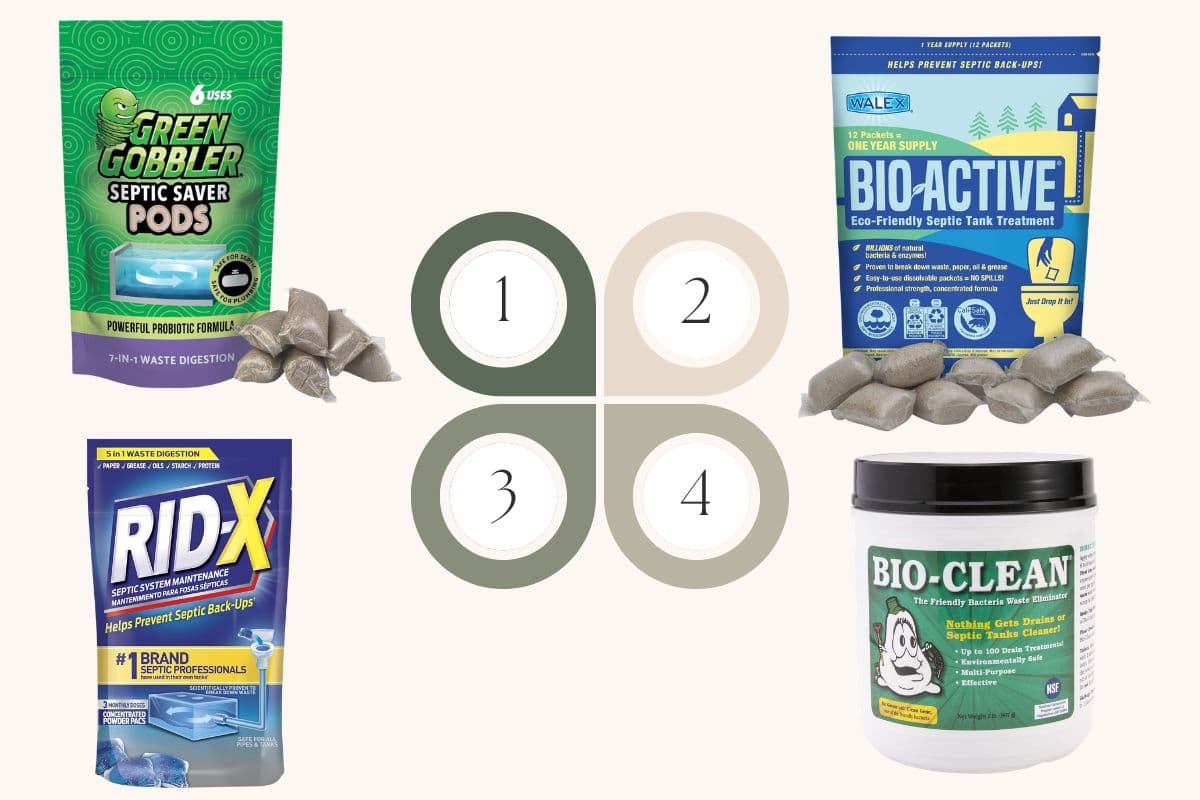
A septic tank treatment is a biological additive containing concentrated live bacteria and enzymes that supplement the naturally occurring microorganisms in a septic tank to help break down solid waste, grease, toilet paper, and organic material. The best septic tank treatments in 2026 cost $8 to $25 per year, use multiple bacteria strains with billions of colony-forming units (CFUs) per dose, and include complementary enzymes like cellulase, lipase, protease, and amylase. This guide reviews the 5 best septic tank treatment products, explains which types of treatments actually work (and which are a waste of money), and tells you exactly when a treatment is worth buying and when it is not.
Let's get the uncomfortable truth out of the way first: a healthy, properly maintained septic system does not need additives to function. The bacteria that digest your waste arrive naturally every time you flush. The EPA has stated that biological additives do not appear to improve the performance of healthy septic tanks. Multiple university extension programs have reached the same conclusion.
So why does this article exist? Because your septic system doesn't always operate under ideal conditions. If you've used bleach or antibacterial cleaners heavily, had guests overload the system, recently had the tank pumped (which removes a large portion of the bacterial colony), or inherited a neglected system, a quality bacteria-based treatment can help restore the biological balance while you get back on track.
The key is knowing which products are worth buying, which are useless, and which are actively harmful. This is not a “top 10 best picks” list where every product gets five stars. We're going to tell you what works, what doesn't, and what the science actually says.
The Three Types of Septic Treatments and Which to Avoid
Bacteria-Based Treatments — Recommended
These products contain concentrated colonies of live bacteria, sometimes combined with enzymes, that supplement the naturally occurring bacteria in your tank. They come as powders, pods, tablets, or liquid formulas.
The bacteria in these products are the same types already working in your tank. You're essentially adding reinforcements. These are the only type of additive worth considering. They won't harm your system and they can provide a measurable benefit in specific situations: post-pumping, after heavy chemical use, or in systems with inconsistent use like vacation homes.
Enzyme-Only Treatments — Limited Use
Enzymes are proteins that break down specific organic materials. Cellulase breaks down toilet paper and plant fibers. Protease breaks down proteins. Lipase breaks down fats and grease.
Unlike bacteria, enzymes are not alive, cannot reproduce, and must be continuously purchased and added. Enzyme-only products can help break down specific problem materials, but they don't address the overall biological health of the tank. They work best when combined with bacteria in a hybrid product rather than used alone.
Chemical Treatments — Avoid Entirely
Chemical additives include strong acids, alkalis (lye), solvents, and hydrogen peroxide-based products. They are marketed as “drain openers” or “septic cleaners.” They are actively destructive.
Chemical treatments kill the beneficial bacteria in your tank, can corrode concrete and metal components, and push improperly treated waste into your drainfield. As we covered in our flushing guide, chemical drain cleaners have no place in a septic system. If a product claims to “dissolve” or “eliminate” waste using chemicals, do not use it.
What to Look for in a Septic Treatment
Not all bacteria-based products are created equal. Here's what separates quality treatments from marketing gimmicks.
Bacteria Count (CFU)
CFU stands for colony-forming units, the measure of viable bacteria in a product. Higher is generally better. Quality products contain billions of CFUs per dose. Products that don't disclose their bacteria count are a red flag.
Multiple Bacteria Strains
Your septic tank handles diverse waste types: proteins, fats, starches, cellulose. A product with multiple bacteria strains, each targeting different organic materials, will outperform a single-strain product.
Enzyme Inclusion
The best products combine bacteria with complementary enzymes: protease, lipase, cellulase, amylase. Enzymes break down large organic molecules into smaller pieces that bacteria can digest more efficiently.
No Chemical Additives
The product should not contain surfactants, fragrances, solvents, acids, or alkalis. These ingredients harm the bacterial colony you're trying to support.
Clear Dosing Instructions
The product should specify initial treatment dose, ongoing maintenance dose, and frequency. Products that say “use as needed” without specifics aren't giving you enough information.
Best Septic Tank Treatments and Enzyme Products 2026
| Product | Type | Supply | Price | Best For |
|---|---|---|---|---|
| Rid-X Septic Treatment | Bacteria + enzyme powder | 3-month supply | $10 to $15 | Best overall monthly maintenance |
| Green Gobbler Septic Saver | Bacteria + enzyme pods | 6-month supply | $15 to $20 | Best value |
| Bio-Clean Drain Septic Bacteria | Concentrated bacteria + enzyme powder | Bulk canister | $20 to $25 | Best for neglected systems |
| Cabin Obsession Septic Treatment | Bacteria + enzyme pods | 12-month supply | $18 to $22 | Best full-year supply |
| Walex Bio-Active Septic Treatment | Bacteria + enzyme pods | 12-month supply | $15 to $20 | Best post-pumping starter |
Rid-X Septic Treatment
Bacteria + enzyme powder · Monthly packets
Why it works: Rid-X is the most widely used septic treatment in the United States for a reason. Each dose contains natural bacteria plus four enzymes: cellulase (breaks down toilet paper), lipase (breaks down fats and grease), protease (breaks down proteins), and amylase (breaks down starches). The pre-measured monthly packets eliminate guesswork on dosing.
Best for: General monthly maintenance for any household with a septic system. It's widely available, affordable, and has decades of consumer track record.
What to know: Rid-X is a supplement, not a replacement for regular pumping. Using it does not eliminate the need to pump your tank on schedule. It can help maintain bacterial health between pumpings, especially if your household uses any antibacterial products.
Check Price on AmazonGreen Gobbler Septic Saver
Bacteria + enzyme pods · 6-month supply
Why it works: Green Gobbler packs bacteria and enzymes into pre-measured pods that you flush monthly. The formula targets grease, fats, oils, paper, and other organic materials. It also includes odor-eliminating properties. At roughly half the per-month cost of Rid-X, it's the best value option for homeowners who want ongoing maintenance without overspending.
Best for: Budget-conscious homeowners who want a set-it-and-forget-it monthly treatment. The pod format makes dosing foolproof.
What to know: The pods have a light scent, which some users notice. If you prefer unscented products, Rid-X or Bio-Clean may be better options.
Check Price on AmazonBio-Clean Drain Septic Bacteria
Concentrated bacteria + enzyme powder · Bulk
Why it works: Bio-Clean is a commercial-grade formula that delivers a higher concentration of bacteria and enzymes per dose than consumer-grade products. The initial treatment uses the full container mixed with warm water, establishing a strong bacterial colony quickly. Monthly maintenance doses follow. It targets grease, fats, oils, paper, and protein-based waste.
Best for: Homeowners who recently purchased a home with a neglected septic system, or anyone restarting bacterial health after heavy chemical use or a complete pump-out. Bio-Clean is also favored by septic professionals for systems that need aggressive biological restoration.
What to know: Bio-Clean costs more upfront than Rid-X or Green Gobbler, but the concentrated formula means you're getting more active bacteria per dollar. The powder must be mixed with warm (not hot) water before application. Hot water kills the bacteria.
Check Price on AmazonFor homeowners specifically researching products to reduce sludge accumulation, see our dedicated guide: Best Septic Tank Sludge Dissolver 2026.
Cabin Obsession Septic Tank Treatment
Bacteria + enzyme pods · 12-month supply
Why it works: Twelve pre-measured packets designed for 1,000-gallon tanks. Each packet contains billions of active bacteria plus a targeted enzyme blend. The full-year supply means you buy once and treat monthly for an entire year. Simple packaging, clear instructions, and strong user reviews for odor reduction and improved drain performance.
Best for: Homeowners who want a full year of treatment in a single purchase. Particularly good for vacation homes or seasonal properties where you want consistent treatment without remembering to reorder every few months.
What to know: Designed for tanks up to 1,000 gallons. For larger tanks (1,500+ gallons), you may need to use two packets per dose. Read the label carefully for your tank size.
Check Price on AmazonWalex Bio-Active Septic Tank Treatment
Bacteria + enzyme pods · 12-month supply
Why it works: Walex Bio-Active contains billions of bacteria specifically formulated to replace the bacterial colony that gets partially removed during pumping. The enzyme blend targets paper, fats, proteins, and other common household waste. Pre-measured pods make dosing consistent.
Best for: Using immediately after a tank pumping to jumpstart the biological process. The first dose after pumping is the most important treatment you can apply, as the tank's bacterial population is at its lowest point.
What to know: Some users report this product is less effective for heavy grease situations compared to Bio-Clean. For grease-heavy households (lots of cooking, frequent food waste down the drain), Bio-Clean may be the better choice.
Check Price on AmazonProducts to Skip
Any product that claims to eliminate the need for pumping. This does not exist. No biological or chemical product can break down the inorganic materials (synthetic fibers, plastic particles, minerals) that accumulate as sludge. Pumping is the only way to remove this material. Any product making this claim is lying.
Chemical-based septic cleaners. Products containing sulfuric acid, lye, or harsh solvents destroy your bacterial colony and can damage your tank and pipes. Never use these.
Homemade treatments (yeast, raw meat, etc.). Adding baker's yeast to your septic tank is a persistent myth. Yeast does ferment sugars, but your septic tank contains very little sugar. The yeast provides no meaningful benefit. Raw meat, sugar, and other folk remedies add waste to the tank without improving bacterial function.
Products with undisclosed ingredients. If the label doesn't tell you what's in it (bacteria strains, enzyme types, CFU counts), don't buy it.
Which Septic Treatment Is Right for Your Situation?
| Your Situation | Our Pick | Why |
|---|---|---|
| General monthly maintenance | Rid-X Septic Treatment | Best all-around formula with 4 enzymes, widely available, proven track record |
| Budget is the priority | Green Gobbler Septic Saver | Lowest annual cost, pod format is foolproof |
| Neglected or struggling system | Bio-Clean Drain Septic Bacteria | Highest bacteria concentration, used by septic professionals for restoration |
| Want a full year supply in one purchase | Cabin Obsession Septic Treatment | 12-month supply, buy once per year |
| Just had the tank pumped | Walex Bio-Active Septic Treatment | Specifically formulated to rebuild bacterial colony after pumping |
| Vacation home or seasonal property | Cabin Obsession Septic Treatment | Full year supply stays on-site, dose before and after idle periods |
| Heavy garbage disposal use | Bio-Clean Drain Septic Bacteria | Strongest formula for breaking down food waste |
When Septic Treatments Actually Help
After pumping. Pumping removes a significant portion of the tank's bacterial colony along with the sludge and scum. Adding a concentrated bacterial dose immediately after pumping helps rebuild the colony faster.
After heavy chemical use. If you've recently used a lot of bleach, antibacterial cleaners, or accidentally poured chemicals down the drain, the bacterial population may be suppressed. A treatment dose can help repopulate.
Vacation or seasonal homes. Systems that sit unused for weeks or months see their bacterial populations decline. Adding treatment before periods of use and after long idle periods keeps the biology active.
Homes with garbage disposals. Food waste is harder for bacteria to process than human waste. If you use a garbage disposal (which we don't recommend for septic homes), supplemental bacteria can help manage the increased organic load.
Older or struggling systems. If your system is showing early signs of stress (mild odors, slightly slow drains, sluggish drainfield) but hasn't failed, biological treatments combined with proper maintenance may help stabilize performance. Pairing treatment with a basic septic system alarm helps catch problems early before they become costly repairs.
When Septic Treatments Won't Help
A full tank that needs pumping. No additive can substitute for mechanical removal of sludge. If your tank is full, pump it. If your tank is already backing up, treatment will not help — see our pumping schedule guide.
A failed drainfield. Biological treatments cannot unclog a drainfield that has been overloaded with solids over years of neglected maintenance. A failed drainfield needs to be replaced.
A structural problem. Cracked tanks, broken baffles, collapsed pipes, and root intrusion are physical problems that bacteria cannot fix. These require professional repair.
An already healthy system with proper maintenance. If you pump on schedule, flush responsibly, and avoid chemicals, your tank's natural bacteria are doing fine. Adding more bacteria provides minimal additional benefit. That money is better saved toward your next pumping appointment.
Frequently Asked Questions
Do septic tank treatments really work?
Is Rid-X good for septic tanks?
How often should I add treatment to my septic tank?
Can I use septic treatment instead of pumping?
What is the best home remedy for a septic tank?
Are enzyme cleaners safe for septic systems?
Glossary
Related Guides
How Often to Pump Your Septic Tank
EPA-based pumping schedule by tank size and household size.
What You Can and Cannot Flush
The complete list of what's safe and what damages your system.
Septic Smell in Your Yard
8 causes and how to fix each one.
Septic Smell Inside the House
Common causes of indoor septic odors and how to eliminate them.
Complete Septic System Guide
How your system works, types, maintenance, and warning signs.
Septic Dos and Donts
Essential rules for protecting your septic system.
Septic Maintenance Checklist
A complete maintenance schedule to keep your system healthy.
Best Drain Cleaners for Septic
Safe drain cleaners that won't harm your septic system.
Best Septic-Safe Laundry Detergent
Top-rated detergents that are safe for septic systems.
Best Septic-Safe Cleaning Products
Cleaning products that protect your bacterial colony.
Best Toilet Paper for Septic
Toilet paper that dissolves quickly and won't clog your system.
Signs Your Drainfield Is Failing
Warning signs of drainfield failure and what to do next.
Septic Tank Pumping Cost
What to expect to pay for septic pumping in 2026.
Septic System Repair Cost
Repair costs by problem type and component.
Our Network
Need Professional Septic Service?
Connect with licensed septic professionals in your area for pumping, inspection, or repair.
Get Free QuotesGet Expert Septic Help
Connect with qualified septic professionals in your area. Free quotes, no obligation.
This article contains affiliate links. If you purchase a product through our links, we may earn a small commission at no additional cost to you. This helps support our site and allows us to continue providing honest, independent reviews. See our affiliate disclosure for details.