TL;DR
Aerobic septic systems require significantly more maintenance than conventional systems. The core schedule is: quarterly professional inspections (required by law in most states), chlorine tablet refills every 1 to 3 months, aerator checks monthly, and tank pumping every 3 to 5 years. Annual maintenance contracts are mandatory in Texas and many other states. Skipping quarterly service is not just neglect — it is a code violation that can result in fines and forced system shutdown. Budget $150 to $300 per quarterly visit and $500 to $1,000 for aerator replacement when it fails.
You have an aerobic septic system. You know this because the home inspector mentioned it, the seller handed you a folder of paperwork, and everyone moved on like that was sufficient information.
It was not.
Somewhere between month three and month six, one of three things happens. The alarm on the control panel starts blinking. The yard around the spray heads starts smelling. Or a certified letter arrives from the county telling you that your required maintenance contract lapsed and you are now out of compliance.
None of these are emergencies. All of them were preventable. And all of them happen to ATU owners who were never told what owning one of these systems actually requires.
Almost every piece of maintenance advice online is written for conventional septic systems. An aerobic treatment unit is a fundamentally different machine. It runs on electricity. It has mechanical components that wear out. It requires quarterly professional service by a licensed provider. And if you treat it like a conventional system by pumping it once every few years and forgetting about it, it will fail, and the repair bill will be substantial.
This guide covers everything you actually need to know to maintain an aerobic septic system correctly, legally, and cost-effectively.
The Four-Times-Per-Year Rule
The single most important thing to understand about aerobic septic system maintenance is this: quarterly professional service is not optional. In Texas, the TCEQ requires aerobic systems to be inspected every four months. Most other states with significant ATU populations including Oklahoma, Florida, and Louisiana have similar requirements. Many counties impose even stricter rules than the state minimum.
This is not a suggestion like the “pump every three to five years” guidance for conventional systems. It is a legal requirement enforced by your local permitting authority. Homeowners who skip quarterly service risk fines, mandatory system upgrades, and in some jurisdictions, having their system shut down and condemned.
What happens at a quarterly service visit:
- Aerator function check (verifying air is reaching the aeration chamber)
- Chlorine residual test (effluent must test at 0.1 mg/L minimum before discharge)
- Chlorine tablet refill as needed
- Sludge depth measurement in all compartments
- Spray head inspection and cleaning
- Control panel and alarm test
- Written report submitted to the county health department
The maintenance provider must be licensed by your state and certified by the manufacturer of your specific ATU brand. A Norweco-certified technician is not automatically qualified to service an Aerobic Systems Inc. or Clearstream unit. Manufacturer certification matters because each brand has proprietary components and specific service procedures.
How an Aerobic Septic System Actually Works
Understanding the maintenance requirements starts with understanding what the system is doing.
A conventional septic system has one job: separate solids from liquid and allow the liquid to slowly drain into the soil. An aerobic treatment unit has a more complex job: actually treat the wastewater to a high standard before it leaves the system, typically achieving 85 to 98 percent contaminant removal compared to 60 to 80 percent for a conventional system.
The treatment process moves through three to four stages:
Stage 1: Trash tank (pre-treatment): Raw sewage from the house enters a pre-treatment chamber where solids settle and grease floats. This functions similarly to a conventional septic tank.
Stage 2: Aeration chamber: An electric aerator pumps air into the wastewater, creating an oxygen-rich environment where aerobic bacteria thrive and aggressively break down organic matter. This is the heart of the system and the component that requires the most maintenance attention.
Stage 3: Clarifier/settling chamber: Treated water separates from remaining solids, which settle back into the aeration chamber.
Stage 4: Disinfection: Treated effluent passes through a chlorine chamber where calcium hypochlorite tablets dissolve into the water, killing remaining pathogens before discharge.
Discharge: Disinfected effluent either drains into a drip irrigation field, sprays onto the surface through spray heads, or drains into a conventional drainfield. Surface spray systems are the most common in Texas and require additional maintenance attention because the spray heads are exposed and can clog.
Monthly Homeowner Checks
Do not ignore your alarm.
Every aerobic system has a visual alarm (usually a red light on the control panel) and often an audible alarm. When it activates, something in the system has malfunctioned. The most common cause is aerator failure, which allows the aeration chamber to go anaerobic within hours. Do not wait for your quarterly service visit. Call your maintenance provider the same day. While you wait, reduce household water use to the absolute minimum.
Between quarterly professional visits, homeowners should perform these monthly checks:
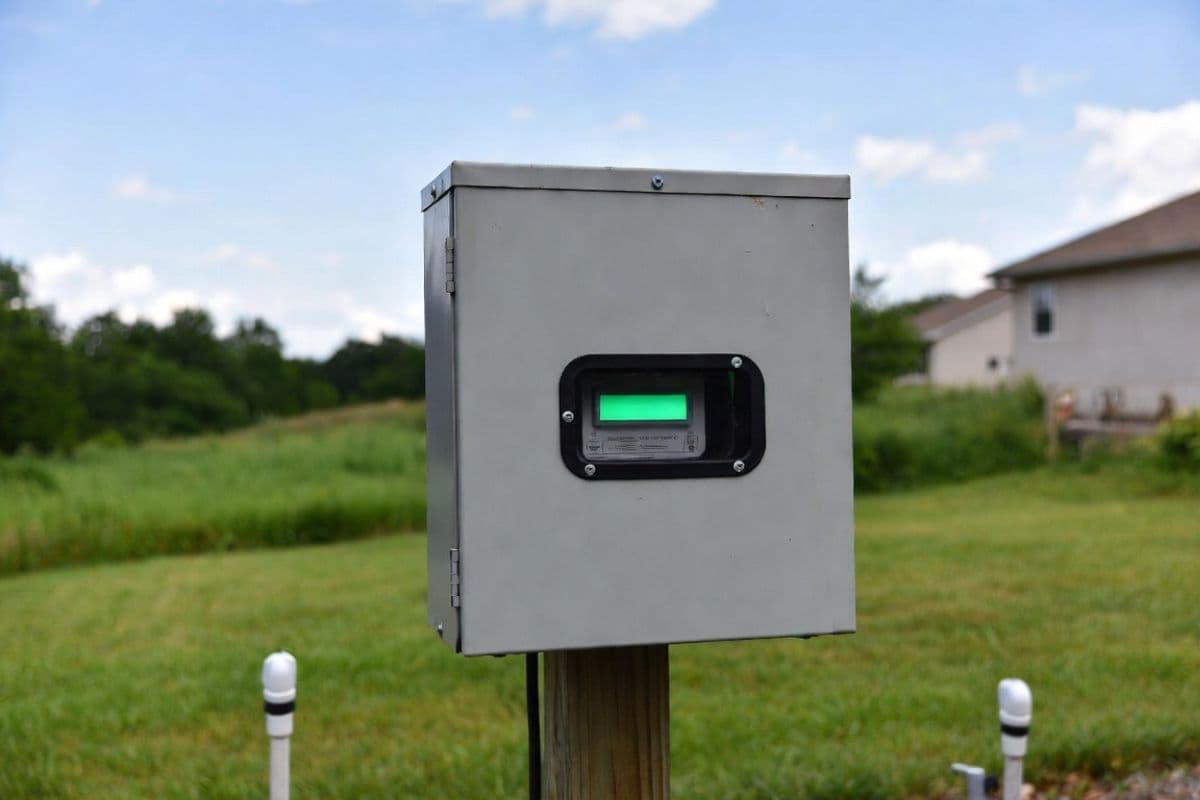
Check the control panel. The green light should be on, indicating the system is running. No alarm lights should be active. If the panel shows no power, check the circuit breaker dedicated to the ATU before calling your provider.
Listen to the aerator. You should be able to hear or feel the aerator running: a low hum or vibration from the aeration chamber. Silence means the aerator has stopped. This is the most critical failure mode in any aerobic system and requires immediate attention.
Check the chlorine chamber. Most ATUs have an accessible chlorine tablet chamber. Look inside. If tablets are depleted, the effluent is leaving your system without disinfection, which is both a health hazard and a code violation. Refill with calcium hypochlorite tablets rated for wastewater treatment. Never use swimming pool chlorine tablets because they contain stabilizers that damage the system's bacterial colony.
Inspect spray heads (if applicable). Walk your yard and look at each spray head. They should rotate freely and spray a full, even pattern. Clogged or broken heads are a compliance violation since they can create ponding of inadequately treated effluent. Clean clogged heads with a thin wire or replace them. They are inexpensive.
Check for alarm history. Many modern ATU control panels log alarm events. Review the log monthly so you can report any intermittent alarms to your service provider even if the alarm has cleared.
Quarterly Professional Maintenance: What to Expect
Your licensed maintenance provider should complete the following tasks at every quarterly visit. Use this as a checklist to verify the service was actually performed:
| Task | What It Involves | Why It Matters |
|---|---|---|
| Aerator inspection | Check motor, diffusers, and air output | Aerator failure kills the bacterial colony within hours |
| Chlorine residual test | Test effluent for minimum 0.1 mg/L chlorine | Below this level, system is not disinfecting (code violation) |
| Chlorine tablet refill | Replenish calcium hypochlorite tablets | Ensures continuous disinfection between visits |
| Sludge depth measurement | Probe all compartments with a sludge judge | Determines if pumping is needed; excessive sludge causes system failure |
| Spray head inspection | Check each head for clogs, breakage, rotation | Ponding treated effluent is a health hazard and compliance violation |
| Control panel test | Test alarm, timer, float switches | Catches electrical failures before they cause system failure |
| County report submission | Written report filed with local health department | Required by law in most jurisdictions with ATU regulations |
If your provider is not completing all of these tasks, you are paying for incomplete service and your system is not in compliance.
Chlorine Tablet Management
Chlorine is what separates a legal, compliant aerobic system from an illegally discharging one. The treated effluent leaving your system must contain a minimum chlorine residual of 0.1 milligrams per liter at the point of discharge.
Use only calcium hypochlorite tablets rated for wastewater treatment. These are sold specifically for ATU systems and are distinct from swimming pool chlorine tablets (trichlor), which contain cyanuric acid stabilizer that harms the ATU bacterial colony and is corrosive to system components, and from sodium hypochlorite (liquid bleach), which degrades too quickly and creates chemical imbalance.
Refill frequency depends on your household water usage and the size of your chlorine chamber. Most systems need refilling every 4 to 8 weeks. Higher water usage means faster tablet consumption. Your quarterly service provider will track this and advise on optimal refill intervals.
Buy tablets in bulk. A 25-pound bucket of calcium hypochlorite tablets costs $40 to $80 and lasts most households 6 to 12 months. Buying individual packages is significantly more expensive over time.
Aerator Maintenance and Replacement
The aerator is the most mechanically demanding component in an aerobic system and the one most likely to fail. It runs continuously, 24 hours a day, 365 days a year, pumping air into the aeration chamber. That continuous operation means it wears out.
Expected aerator lifespan: 2 to 10 years depending on brand, model, and conditions. Economy aerators last 2 to 4 years. Higher-quality units last 7 to 10 years.
Signs of aerator failure or declining performance:
- Alarm light activated on control panel
- No audible hum from the aeration chamber
- Foul odors from the system (aeration chamber going anaerobic)
- Technician reports reduced dissolved oxygen in aeration chamber during quarterly visit
- Increased sludge accumulation between service visits
Aerator replacement cost: $500 to $1,000 for most residential units including parts and labor. This is a normal maintenance expense, not a system failure. Budget for it.
Use brand-specific replacement parts. Each ATU manufacturer uses proprietary aerator designs. Installing a generic replacement aerator in a Norweco, Jet, or Clearstream unit voids the warranty, may not fit correctly, and can cause compliance issues if the system then fails inspection.
Pumping Schedule
Aerobic systems need pumping less frequently than most homeowners expect, but they still need it. The pre-treatment (trash) tank accumulates sludge just like a conventional septic tank. If it is not pumped on schedule, sludge flows into the aeration chamber and overwhelms the system.
Standard pumping interval: Every 3 to 5 years for a household of 3 to 4 people
Sludge-based pumping: Your quarterly service provider measures sludge depth at each visit. Most providers recommend pumping when sludge reaches 50 percent of tank capacity regardless of time elapsed.
What happens during pumping: The licensed pumper removes accumulated sludge from the pre-treatment chamber and, if needed, the aeration and pump chambers. Unlike conventional systems, ATU pumping requires a pumper familiar with your specific brand and model. Some ATU components can be damaged if pumped incorrectly.
Pumping cost: $300 to $600 for a standard residential ATU pumping, similar to conventional system pumping.
Warning Signs That Require Immediate Action
Do not wait for your next quarterly visit if you observe any of the following:
| Warning Sign | Likely Cause | Action |
|---|---|---|
| Alarm light on control panel | Aerator failure, high water level, float switch failure | Call maintenance provider same day, reduce water use |
| Foul odor from spray heads or yard | Aerator failure, chlorine depletion, drainfield issue | Call maintenance provider same day |
| Wet or soggy soil around spray heads | Clogged spray heads, hydraulic overload, drainfield failure | Stop non-essential water use, call provider |
| Spray heads not rotating or spraying | Clogged heads, broken heads, pump failure | Inspect heads, call provider if pump-related |
| Dark or discolored effluent visible | Inadequate treatment, aerator failure | Call provider immediately (health hazard) |
| Green or lush grass over drainfield | Surfacing effluent (system is not treating properly) | Call provider immediately |
| Multiple alarms in short period | System is cycling in and out of failure | Call provider immediately |
What You Can Do vs What Requires a Licensed Provider
Unlike conventional systems where a competent homeowner can handle most maintenance tasks, aerobic systems have a higher threshold for professional involvement due to legal requirements and mechanical complexity.
Homeowners can typically do:
- Monthly visual inspection of control panel
- Listening for aerator operation
- Refilling chlorine tablets
- Cleaning clogged spray heads
- Mowing around the system and keeping vegetation trimmed back
- Keeping records of maintenance visits and alarm events
Always requires a licensed provider:
- Quarterly inspection and county reporting (legally required)
- Sludge depth measurement and pumping determination
- Chlorine residual testing
- Aerator repair or replacement
- Float switch replacement
- Any work that requires opening the main tank compartments
- Any repairs or modifications to system components
Note that in Texas, homeowners may perform their own maintenance after the first two years of system installation, but only if they obtain proper training and certification from TCEQ. Most homeowners are better served by maintaining a professional service contract even after the mandatory two-year initial period.
Annual Maintenance Contract: What to Look For
Most states require ATU owners to maintain a service contract with a licensed provider. Even where not legally required, a contract is strongly recommended because it ensures quarterly inspections happen on schedule, creates a paper trail of compliance for county reporting, provides priority response when the alarm activates, and keeps one provider familiar with your specific system's history.
What a good maintenance contract includes:
- Four quarterly visits per year with full inspection and reporting
- Chlorine tablets included or available at cost
- Priority emergency response
- Written reports after each visit
- County report submission handled by the provider
Annual contract cost: $200 to $500 per year depending on location and what is included. Some providers charge separately for chlorine tablets and parts. Ask before signing.
Red flags in a maintenance provider: Not certified by the manufacturer of your specific ATU brand, does not submit county reports, cannot provide written service reports, or offers annual rather than quarterly visits (below the minimum legal requirement in most jurisdictions).
Frequently Asked Questions
How often does an aerobic septic system need to be serviced?
Quarterly professional service is required by law in most states with significant ATU populations, including Texas (every four months per TCEQ regulations), Oklahoma, and Florida. The service must be performed by a licensed maintenance provider certified for your specific ATU brand. Monthly homeowner checks between professional visits are also recommended. Annual or semi-annual service schedules are not compliant with most state regulations.
How often do aerobic septic systems need to be pumped?
Most aerobic systems need pumping every 3 to 5 years for an average household of 3 to 4 people, similar to conventional septic systems. However, the actual pumping schedule should be determined by sludge depth measurements taken during quarterly service visits, not by a fixed time interval. Your licensed maintenance provider will recommend pumping when sludge reaches approximately 50 percent of tank capacity.
What kind of chlorine tablets do I use in an aerobic septic system?
Use only calcium hypochlorite tablets specifically rated for wastewater treatment in aerobic systems. Never use swimming pool chlorine tablets (trichlor) because they contain cyanuric acid stabilizer that damages the ATU bacterial colony and corrodes system components. Calcium hypochlorite tablets are sold in 25-pound buckets from septic supply stores and online. Most households need one refill every 4 to 8 weeks depending on water usage.
Why is my aerobic septic system alarm going off?
The most common cause is aerator failure. The electric pump that injects air into the aeration chamber has stopped working. Other causes include a malfunctioning float switch, high water level in the tank from excessive household water use or a plumbing leak, or a failed pump in the pump chamber. Do not ignore the alarm. Call your licensed maintenance provider the same day and reduce household water use until the issue is resolved. Most alarms are not catastrophic emergencies but they require prompt attention.
How long do aerobic septic systems last?
A properly maintained aerobic system typically lasts 20 to 30 years for the tank components. Mechanical components have shorter lifespans: aerators last 2 to 10 years ($500 to $1,000 to replace), pumps last 7 to 15 years, and control panels last 10 to 15 years. The key to maximum system lifespan is consistent quarterly maintenance, prompt aerator replacement when needed, and avoiding overloading the system with excessive water use or flushing inappropriate materials.
Can I do my own aerobic septic system maintenance?
Most homeowners cannot legally perform the required quarterly inspections and county reporting. This must be done by a licensed maintenance provider certified for your specific ATU brand. In Texas, homeowners may perform their own maintenance after the first two years of installation, but only after completing required TCEQ training and certification. For most homeowners, maintaining a professional service contract is the practical and legally compliant approach.
What should I not flush with an aerobic septic system?
An aerobic system treats domestic wastewater and toilet paper only. Items that will harm the system include antibacterial soaps and cleaners (kill beneficial bacteria), bleach and chemical drain cleaners (destroy bacterial colony), grease and cooking oils (cause sludge accumulation), wet wipes even if labeled flushable (do not break down), feminine hygiene products, medications, and any non-biodegradable solids. The consequences of flushing harmful materials are more severe in an ATU than in a conventional system because the aerobic bacterial colony is more sensitive to chemical disruption.
How much does aerobic septic system maintenance cost per year?
Annual maintenance costs for an aerobic system run $350 to $800 per year for a typical household, broken down as follows: quarterly service contract $200 to $500 per year, chlorine tablets $40 to $80 per year, and occasional spray head replacements $10 to $30 per head. Aerator replacement ($500 to $1,000) and tank pumping ($300 to $600 every 3 to 5 years) are additional periodic costs. This is significantly more than the $75 to $150 annual cost of maintaining a conventional septic system, which is the tradeoff for the higher treatment quality an ATU provides.
Glossary
Aerobic treatment unit (ATU)
A septic system that injects oxygen into the treatment chamber using a motorized aerator, supporting oxygen-dependent bacteria that break down waste more thoroughly than the anaerobic bacteria in conventional systems. ATUs achieve 85 to 98 percent contaminant removal compared to 60 to 80 percent for conventional systems. Required by code in many areas with poor soil conditions or small lot sizes.
Aerator
The electric motor and diffuser assembly that continuously pumps air into the aeration chamber of an ATU. Runs 24 hours a day, 365 days a year. Expected lifespan of 2 to 10 years depending on brand and conditions. The most frequently replaced mechanical component in an aerobic system. Must be replaced with a brand-specific part. Generic replacements are not compliant.
Calcium hypochlorite
The correct type of chlorine tablet for use in aerobic septic systems. Dissolves in the disinfection chamber to kill pathogens in treated effluent before discharge. Available in granular form or as pre-formed tablets. Not to be confused with trichlor pool tablets, which contain cyanuric acid stabilizer that damages ATU bacterial colonies.
Chlorine residual
The concentration of active chlorine remaining in treated effluent at the point of discharge. Minimum acceptable level is 0.1 milligrams per liter. Below this level the system is not adequately disinfecting effluent and is in violation of operating permit requirements. Tested at every quarterly service visit by the licensed maintenance provider.
Control panel
The electrical enclosure mounted near the ATU that houses the timer, float switches, alarm circuits, and power connections for the aerator and pump. Most modern panels include an alarm light and buzzer that activate when any component malfunctions. Some panels log alarm events for review during service visits.
OSSF (On-Site Sewage Facility)
Texas's official regulatory term for septic systems including aerobic treatment units. Regulated by the Texas Commission on Environmental Quality (TCEQ). ATUs in Texas are required to be inspected every four months by a TCEQ-licensed maintenance provider certified by the ATU manufacturer.
Spray heads
The distribution devices used in surface application aerobic systems that spray disinfected effluent onto the lawn in a fine mist. Must be kept clean, properly rotating, and functioning at all times. Ponding or runoff from non-functioning spray heads is a health hazard and compliance violation. Spray heads are inexpensive and easy to replace.
Trash tank
The pre-treatment chamber in an ATU where raw sewage first enters and solids settle before the partially clarified liquid flows into the aeration chamber. Functions similarly to a conventional septic tank. Requires pumping every 3 to 5 years to prevent sludge from overflowing into the aeration chamber and disrupting the treatment process.
TCEQ (Texas Commission on Environmental Quality)
The Texas state agency that regulates on-site sewage facilities including aerobic treatment units. Sets the requirements for quarterly inspections, licensed maintenance providers, and homeowner training for self-maintenance. The most comprehensive ATU regulatory framework in the United States.
For additional information, see the EPA Septic Systems Overview.
Related Guides
On theseptic.guide
Aerobic vs Anaerobic Septic Systems
A side-by-side comparison of aerobic and anaerobic septic systems including costs, maintenance, and which is right for your property.
Septic System Maintenance Checklist
The complete maintenance schedule for keeping your septic system healthy long-term.
Signs Your Drainfield Is Failing
Warning signs of drainfield failure from earliest to latest, what causes problems, and when you need a full replacement.
What You Can and Cannot Flush with a Septic System
The complete list of what is safe to flush and what should never go into your septic system.
Septic System Repair Cost
What individual repairs cost, from component replacement to full system rehabilitation.
Get Homeowner Tips in Your Inbox
Septic maintenance schedules, pumping reminders, and troubleshooting guides from The Septic Guide — free to your inbox.
By subscribing you agree to receive emails from The Home Guide Network. We respect your privacy. Unsubscribe anytime. Privacy Policy
Get Expert Septic Help
Connect with qualified septic professionals in your area. Free quotes, no obligation.