Most homeowners with a septic system end up with one of two problems. The first is bare soil or gravel over the drainfield because they are afraid to plant anything. The second is the wrong plants, usually trees or shrubs that someone told them were fine, slowly working their roots toward the pipes. Both scenarios cause problems. Bare soil erodes, compacts, and reduces the oxygen exchange the drainfield needs to function. The wrong plants cause root intrusion that can cost thousands to fix.
The reality is that the right plants actually help your septic system work better. Shallow-rooted vegetation absorbs excess moisture and nutrients from the soil, reduces erosion, insulates the system in cold weather, and keeps the drainfield soil from compacting under foot traffic and rain. University extension programs across multiple states, from Clemson to Minnesota to Oklahoma State, consistently recommend planting over the drainfield. The goal is choosing the right plants and understanding what they are doing and why.
This guide covers every zone: what to plant directly over the tank, what works over the drainfield, what to do with a mound system, whether a vegetable garden is ever safe, how to handle invasive plants that are already too close, and exactly what to avoid.
Why Plants Are Good for Your Drainfield (When Chosen Correctly)
A drainfield works by slowly releasing effluent through perforated pipes into the surrounding soil, where bacteria and other microorganisms break down pathogens and nutrients before the water reaches the groundwater table. That process requires three things to function well: adequate oxygen in the soil, proper soil structure that allows percolation, and controlled moisture levels that prevent saturation.
Bare soil over a drainfield does not provide any of these things well. It compacts under rain and foot traffic, reducing the pore space that aerobic microbes need to treat the effluent. It erodes during heavy rain, can shift drainage patterns toward the drainfield rather than away from it, and offers no insulation in cold climates where frozen ground reduces treatment capacity.
Shallow-rooted plants solve all of this. Their fibrous root systems aerate the soil lightly, maintain structure without reaching the pipes, absorb excess effluent moisture that would otherwise saturate the soil, and take up nitrogen and phosphorus that effluent delivers in abundance. The roots also hold the soil surface in place through rain and wind. In cold climates, a layer of living vegetation over the drainfield acts as insulation that extends the treatment season.
The plants that do all of this without causing harm share specific characteristics. They have fibrous, shallow root systems that grow horizontally rather than deeply. They are not thirsty plants that actively seek out moisture sources. And they do not have woody stems or aggressive spreading habits that allow them to reach pipe depth over time.
The Soil Over Your Drainfield Is Different
One thing almost no guide covers is that the soil over a drainfield has different chemistry from the rest of your yard, and those differences affect which plants thrive there.
Elevated pH
Most household cleaning products, detergents, and personal care products that go down the drain are alkaline, with a pH above 7. Over time, effluent raises the soil pH in the drainfield area. Plants that prefer acidic soil, including blueberries, azaleas, rhododendrons, and hydrangeas, will struggle in drainfield soil. Choose plants adapted to neutral to slightly alkaline conditions.
Elevated Nitrogen and Phosphorus
Household effluent carries significant nitrogen and phosphorus loads. Plants over the drainfield receive a constant slow feed of these nutrients from below. This is actually beneficial for the system because the plants absorb nutrients that would otherwise move toward groundwater. Do not fertilize over the drainfield. Let the effluent be the fertilizer.
Moderate Salinity
If your household uses a water softener, the effluent contains elevated sodium as discussed in our water softener and septic system guide. Even without a softener, effluent has higher salinity than ordinary tap water. Plants with some salt tolerance are better choices over the drainfield.
Drier Surface Than You Expect
Despite all the moisture flowing through the system below, the soil surface directly over the drainfield often stays drier than surrounding areas. The gravel layer beneath the soil drains moisture downward rather than wicking it up. Choose drought-tolerant plants that do not require supplemental irrigation rather than water-loving species that will send roots downward.
Zone 1: Over the Septic Tank
The area directly over the septic tank needs to stay accessible for pumping and inspections. The tank is typically pumped every three to five years, and the pumper needs to locate and open the access ports. Whatever you plant here must be expendable, easy to move, or planted completely clear of the access lids.
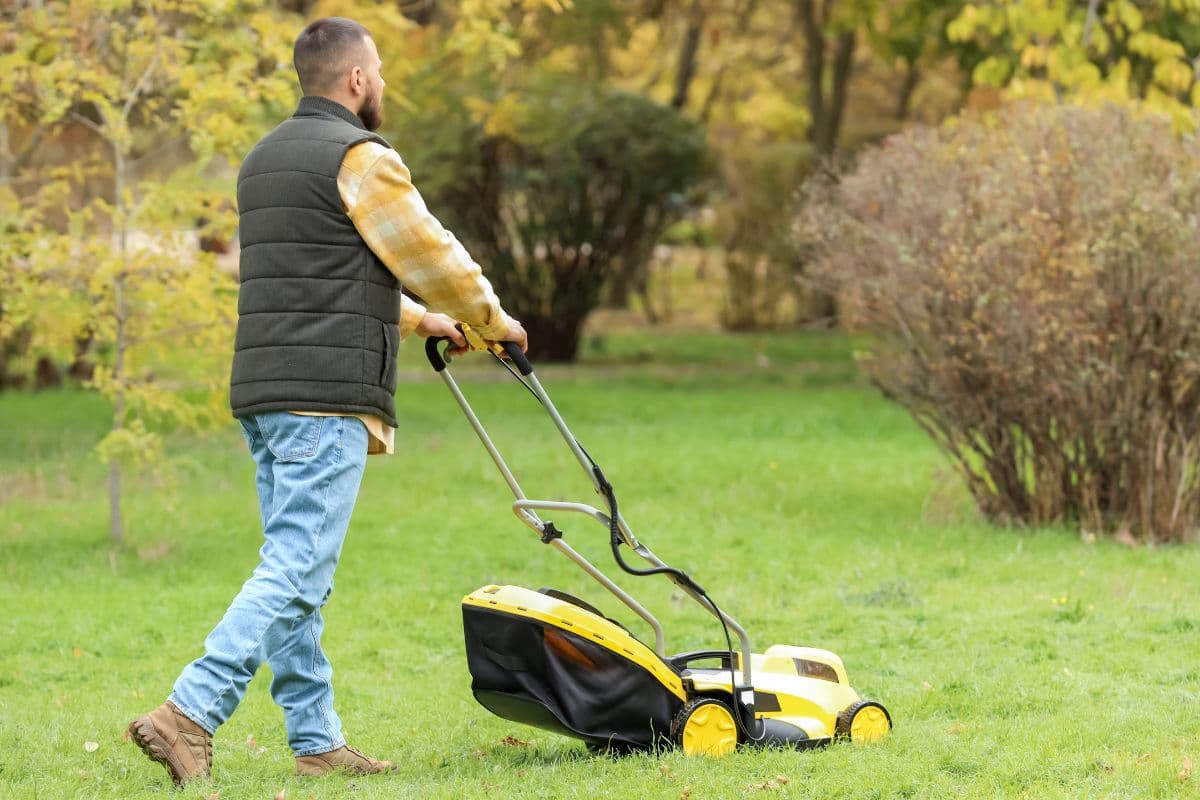
Grass is the best choice over the tank. It keeps the soil stable, stays shallow-rooted, and does not need to be removed for access. The mower tells you where the tank is and keeps the grass from becoming a concealment problem.
Low annual flowers and bulbs work around the access port, not over it. Daffodils, tulips, and iris are commonly planted as markers around the tank lid perimeter because they are easily moved and their roots stay above pipe depth. A cluster of these marks the lid location visually without blocking access.
Do not plant woody perennials, shrubs, or ground covers that spread over the lid area. English ivy, pachysandra, and spreading junipers are common mistakes here. They look tidy until the pumper has to rip them out to find the lid, and then replant or not. Some homeowners use a decorative rock, a birdbath base, or a septic tank riser cover landscaped to look like a planter. These work well as long as they can be moved quickly.
Leave clear access for the pump truck. Septic pump trucks need to get within approximately 50 feet of the tank, and the hose cannot easily navigate over fences, through garden beds, or around decorative features that cross the route. Think about the access path from the street or driveway to the tank when planning any landscaping between the two.
Zone 2: Over the Drainfield
This is where plant selection matters most and where the most damage can be done by choosing the wrong things. The drainfield pipes are typically buried 6 to 36 inches below the surface depending on system design and local conditions. That is surprisingly shallow, which is why almost any woody plant is a potential problem.
The Best Plants for Over the Drainfield
Turf Grass
The universal recommendation from every university extension program. Turfgrass has fibrous roots that stay within the top few inches of soil, excellent moisture absorption, natural tolerance for elevated nutrients, and durability to handle light foot traffic. Fescue, Kentucky bluegrass, Bermuda grass, or buffalo grass all work depending on your climate. Fescue mixes are particularly well-suited because of their drought tolerance.
Meadow Mixes and Native Grasses
A popular alternative to mowed lawn. Prairie dropseed, little bluestem, buffalo grass, and native fescues are all good choices. Avoid tall grasses like switchgrass directly over the pipes because its roots grow more deeply and it requires division every few years which means digging.
White Clover and Microclover
Excellent options that many extension programs now recommend. Clover is low-growing, drought-tolerant, fixes nitrogen from the atmosphere, and requires little to no mowing. The fibrous root system stays shallow. It handles the elevated nutrient environment well and provides habitat for pollinators.
Shallow-Rooted Flowering Perennials
Coneflower (Echinacea) — tolerates drought, spreads gently, fibrous roots stay in the upper soil layer.
Black-eyed Susan (Rudbeckia) — widely adapted, drought-tolerant, spreads by self-seeding rather than invasive root spread.
Yarrow (Achillea) — one of the most drainfield-appropriate perennials: drought-tolerant, shallow-rooted, tolerant of alkaline soils.
Daylilies (Hemerocallis) — tuberous roots stay in upper inches of soil, drought-tolerant, adaptable to higher pH. Do not confuse with true lilies (Lilium).
Coreopsis (tickseed) — compact, drought-tolerant, genuinely shallow fibrous root system.
Sedum (stonecrop) — excellent low-growing groundcover, tolerates drier surface conditions and alkaline soil. Autumn Joy sedum is widely used.
Lavender — works in Zones 5 and warmer, benefits from good drainage and slightly alkaline drainfield conditions.
Annual Flowers
Completely safe because their short root systems die and decompose each season. Zinnias, marigolds, impatiens, petunias, and cosmos are all appropriate. The only consideration is awareness of pipe locations when digging to replant each spring.
Wildflower Mixes
Designed for dry prairie conditions, these work extremely well over drainfields. Clemson Extension and the University of Minnesota both recommend dry-condition native wildflower mixes as one of the best options. They establish dense cover, require no supplemental water, and provide ecological value with minimal maintenance.
Low-Growing Ornamental Grasses
Clumping growth habits are key. Blue fescue (Festuca glauca) and prairie dropseed (Sporobolus heterolepis) add texture without deep root systems. Avoid spreading or running ornamental grasses.
Plants to Avoid Directly Over the Drainfield
Any Woody Plant
Woody plants develop root systems that grow deeper and more aggressively over time than they appear to when young. This includes all shrubs, all trees, and woody ground covers like juniper, creeping juniper, and woody thyme. There is no woody plant that is safe to place directly over a drainfield.
English Ivy and Vinca (Periwinkle)
Both form dense canopies or mats that prevent soil evaporation, one of the mechanisms the drainfield relies on. English ivy also develops woody stems over time and can become invasive. Neither is recommended.
Mint
Spreads aggressively via underground rhizomes, which can reach and fill pipe perforations. It is also a water-seeking plant that will actively grow toward drainfield moisture. Do not plant mint anywhere near the drainfield.
Bamboo
Running bamboo species have rhizomes that can extend 20 or more feet per season in moist, worked soil. Keep all running bamboo species at least 50 feet from any septic component. Clumping bamboo is less aggressive but still not appropriate directly over the drainfield.
Raspberries, Blackberries, and Brambles
Spread by root suckering and tip-rooting in ways that quickly become uncontrollable. Their roots are deeper and woodier than their appearance suggests. Keep them well away from the drainfield.
Water-Loving Perennials
Astilbe, ligularia, cardinal flower, and other moisture-loving species send roots actively seeking water. Over a drainfield they will penetrate deeper than their normal root depth suggests.
Dense Mulch, Plastic Sheeting, and Weed Barrier
Thick bark or wood chip mulch restricts soil evaporation. Keep mulch layers to 2 inches maximum. Never place plastic sheeting or impermeable weed barrier over the drainfield. The same applies to decorative rock beds that cover the entire drainfield surface. These prevent oxygen exchange and evaporation, both critical to system function.
Zone 3: Around the Drainfield Perimeter
The area immediately adjacent to the drainfield edges, roughly 10 to 20 feet out, is where shrubs and small ornamental trees become possible with the right species choices and attention to mature root spread.
Low-Risk Shrubs for the Drainfield Perimeter
Boxwood (Buxus) has a compact, shallow root system and grows slowly. It is not a water-seeker and manages well in the drier conditions adjacent to drainfields. Keep it 10 feet from the drainfield edge.
Inkberry holly (Ilex glabra) is a native shrub with a fibrous, non-aggressive root system and tolerance for variable moisture conditions. Useful for naturalistic plantings adjacent to the drainfield.
Spirea varieties stay compact and have shallow fibrous roots. Keep them at 10 to 15 feet from the drainfield edge.
Karl Foerster feather reed grass (Calamagrostis x acutiflora) can be used along the drainfield perimeter, not over it. At the edge, their fibrous roots are not a threat.
Small Ornamental Trees at Safe Clearance
The rule from the University of Minnesota extension is to plant at a distance equal to the anticipated mature height of the tree plus 20 percent. A dogwood expected to reach 20 feet at maturity should be no closer than 24 feet from the drainfield edge. This rule applies to lower-risk species. Higher-risk species like silver maple need far more clearance.
The tree species with compact, less aggressive root systems that can be planted closest to septic components include dogwood, Japanese maple, redbud, serviceberry, ornamental cherry, and crabapple. Even these should be kept at least 15 feet from any drainfield component and at the conservative end of the mature-height formula.
Mound Systems: Different Conditions, Different Approach
Mound systems present a different planting situation from conventional drainfields because the mound itself is an elevated structure, typically 2 to 4 feet tall, composed of imported sand fill that drains quickly and stays relatively dry on the surface. The sides of the mound are steeper than typical yard grade and are especially vulnerable to erosion.
Erosion control is the primary planting priority on a mound. An unmaintained mound with bare soil will erode, which exposes and destabilizes the system. Some states require vegetative cover on mounds as a condition of the operating permit. Grass or native ground cover must be established and maintained.
The top of the mound needs drought-tolerant plants. Because the fill material drains rapidly and does not retain moisture, the crown of the mound tends to dry out. Standard turfgrass may struggle at the top. The University of Minnesota specifically recommends native grasses and wildflowers adapted to dry prairie conditions for mound tops.
Best Options for Mound Tops
Prairie dropseed (Sporobolus heterolepis) — native to dry prairies and naturally suited to mound conditions.
Buffalo grass and native fescue mixes — appropriate for the quick-draining fill material.
Coneflower, black-eyed Susan, yarrow, and prairie blazingstar (Liatris spicata) — tolerate the dry, nutrient-limited soil of the mound crown for flowering interest.
The mound sides need dense fibrous cover to prevent erosion. The sides erode more readily than the top because they catch rain runoff. Plant densely here. Fescue grass, creeping juniper at a distance from any system component, or native ground covers that spread from planted plugs work well. The goal is complete soil coverage as fast as possible after mound construction.
Do not plant trees or shrubs on or immediately adjacent to a mound. The mound contains perforated distribution pipes and the same root vulnerability concerns apply. The concentrated sand fill actually offers relatively easy root penetration, and mound systems in many states have additional regulatory requirements about planting distances.
Do not install irrigation over a mound. Adding water to a system designed to evaporate and percolate effluent through a carefully engineered sand medium disrupts the system's water balance. Plant selections for mounds must be able to establish and thrive without supplemental irrigation.
The Vegetable Garden Question, Answered Honestly
Every year homeowners look at the nutrient-rich soil over the drainfield, note how well the grass grows there, and think it would make a perfect vegetable garden. The question deserves a straight answer rather than a vague warning.
Do Not Plant Vegetables Over the Drainfield
The reason is not that a properly functioning septic system constantly contaminates the surface soil. It is that there is no way to guarantee the system is functioning properly at any given time, and a partial failure that is not yet symptomatic could contaminate the soil above the pipes. Plants absorb pathogens through roots, and root vegetables grow directly in the potentially affected zone. The risk is not worth taking.
Raised Beds Over the Drainfield Do Not Solve This
This is the most common attempted workaround, and university extension programs from New Hampshire to Ohio specifically address why it does not work. A raised bed adds soil depth over the drainfield, which restricts soil evaporation. A typical 4x8 raised bed filled with growing mix weighs over 1,000 pounds, which compacts the soil beneath and reduces oxygen exchange. And despite the raised bed, vegetable roots grow beyond the bed's boundaries, meaning root vegetables in a raised bed will still send roots into the potentially contaminated native soil below. The soil barrier you think you are creating does not exist once roots grow through it.
The food garden belongs elsewhere on the property. If your drainfield takes up the only sunny spot in your yard, that is a real constraint. The practical solutions are container gardening on a patio or deck, a raised bed positioned at least 10 feet from the drainfield perimeter and away from any downslope soil drainage from the system, or accepting that this section of the yard is for grass and flowers.
Can you grow cut flowers over the drainfield? Generally yes. Ornamental flowers that are not eaten pose no contamination risk to you, and shallow-rooted annual and perennial flowers are appropriate over the drainfield. The standard guidance is not to handle the soil and then touch food without washing your hands, and not to cut flowers and arrange them in vases placed where food is prepared. That is a practical precaution, not a complete prohibition.
Fruit trees adjacent to the drainfield (not over it) at appropriate clearance are a gray area. At proper clearance distances with appropriate low-risk species, the root concern is managed. The contamination concern for fruit that grows above ground, separate from the soil, is minimal. Root vegetables and low-growing vegetables that contact soil are where the pathogen concern is highest; tree fruit that hangs in the air is a different situation. This is ultimately a judgment call, and consulting your county health department on specific local guidance is worthwhile if you plan to plant food-producing trees anywhere near the system.
Invasive Plants Already Near Your System
Many homeowners discover they have bamboo, Japanese knotweed, English ivy, or mint already growing near or over the drainfield, either planted intentionally before they understood the risk or inherited from previous owners. These need to be addressed, but the removal process matters.
Running Bamboo
The most difficult to remove. Rhizomes extend 10 to 30 feet from visible canes and follow moisture gradients. Mowing alone does not kill running bamboo; it stimulates more vigorous growth. Cut all canes to the ground to stop photosynthesis, excavate as much of the rhizome network as possible, and treat regrowth with a systemic herbicide. Expect two to three years. Do not use heavy excavation equipment directly over the drainfield. Any root excavation within the drainfield perimeter should be done by hand or with hand tools.
Japanese Knotweed
Rhizomes can penetrate 6 feet into the soil, making it one of the more concerning invasive plants near a drainfield. Removal requires repeated cutting, herbicide treatment, and immediate treatment of any regrowth. Extremely difficult to eradicate completely. If knotweed is growing within the drainfield perimeter, professional assessment is warranted both for removal and to evaluate whether rhizomes have reached the distribution pipes.
English Ivy
Can be removed by cutting stems at the base and allowing the above-ground portion to die, then treating regrowth. The root mass is not as deep as bamboo or knotweed. Work carefully to avoid compacting soil over the pipes and avoid digging more than 3 to 4 inches deep anywhere over the drainfield.
Mint
Spreads by rhizomes but is significantly easier to remove than bamboo or knotweed. Repeated removal of top growth plus hand-removal of rhizomes, combined with establishing a dense competing ground cover, controls mint effectively over one to two seasons.
Things That Should Never Go Over the Drainfield
Vehicles and Heavy Equipment
A vehicle driving over the drainfield compacts the soil immediately, damages distribution pipes, and can collapse the gravel bed. A single pass from a loaded vehicle is enough to cause damage that takes years to become apparent.
Sheds, Outbuildings, and Structures
No structure should be placed over the drainfield or the reserve area. Building over the reserve area makes future drainfield repair dramatically more expensive.
Swimming Pools, Hot Tubs, and Water Features
Ponds, pools, and rain gardens over or near the drainfield add water to an area the system is designed to drain. Saturating the soil reduces treatment capacity and can cause system failure.
Irrigation Systems
Sprinkler heads and drip lines should not be located within 10 feet of the drainfield perimeter. Plants chosen for the drainfield should survive on rainfall and incidental effluent moisture.
Gravel Beds and Rock Gardens
Decorative gravel placed over the drainfield restricts soil evaporation and oxygen exchange. Small accent stones around individual plants are fine; a gravel mulch layer across the drainfield is not.
Quick Reference: What to Plant Where
| Location | Good Choices | Avoid |
|---|---|---|
| Over septic tank | Turf grass, annual flowers, bulbs around lid perimeter | Woody plants, ground covers that cover the lid |
| Directly over drainfield | Turf grass, clover, native grasses, shallow-rooted perennials (coneflower, yarrow, sedum, daylilies), wildflowers | Trees, shrubs, bamboo, mint, ivy, raspberries, raised beds |
| Drainfield perimeter (10–20 ft out) | Compact shrubs (boxwood, spirea, inkberry), small ornamentals at appropriate clearance | Water-seeking shrubs, spreading bamboo, willow, poplar, silver maple |
| Mound top | Drought-tolerant native grasses, prairie wildflowers, buffalo grass, prairie dropseed | Lawn requiring irrigation, woody plants, anything needing regular watering |
| Mound sides | Dense fescue, native ground covers for erosion control | Bare soil, non-fibrous ground covers |
| Adjacent to system (20+ ft) | Dogwood, Japanese maple, redbud, serviceberry at proper clearance | Willow, poplar, silver maple, eucalyptus, birch |
Frequently Asked Questions
Is it safe to plant anything over a septic drainfield?
Can I grow a vegetable garden near my septic system?
What is the best grass to plant over a septic drainfield?
Can I plant shrubs near my septic system?
Why can't I put a raised bed over my septic drainfield?
Should I fertilize or water the plants over my drainfield?
What should I plant on a mound septic system?
I have bamboo near my drainfield. What should I do?
Glossary
Drainfield
The subsurface network of perforated pipes buried in gravel-filled trenches that receives effluent from the septic tank and allows it to percolate slowly into the surrounding soil. Also called a leach field or soil absorption field. The drainfield is the most expensive component of the septic system to repair or replace, and it is the zone where plant selection matters most.
Effluent
The liquid wastewater that leaves the septic tank after solids have settled to the bottom and floated materials have been retained. Effluent carries dissolved nitrogen, phosphorus, bacteria, and other materials that the drainfield soil must treat before they reach the water table. It is the source of nutrients that plants over the drainfield absorb.
Fibrous Root System
A root structure consisting of many fine, branching roots distributed horizontally near the soil surface rather than growing deeply. Grasses, most perennial flowers, and many ground covers have fibrous roots. This root architecture is appropriate for drainfield use because it stays above the pipe zone and does not seek out specific moisture sources.
Evapotranspiration
The combined process of water evaporating from the soil surface and being released from plant leaves through transpiration. Both processes remove moisture from the drainfield area, which is important for preventing saturation. Plants over the drainfield contribute to this process, which is one reason proper vegetation cover improves drainfield function.
Mound System
A septic system design used where the natural soil conditions do not allow a conventional below-ground drainfield, typically due to high water tables, shallow bedrock, or soil that is too dense or too permeable. The drainfield is built above the natural soil surface within an engineered mound of imported sand. Mound systems have specific planting requirements because the elevated structure and sand fill create drier surface conditions.
Rhizome
A horizontal underground stem that spreads outward from the parent plant, capable of producing new shoots and roots at intervals. Running bamboo, mint, Japanese knotweed, and some ornamental grasses spread via rhizomes. In a septic system context, rhizomes are concerning because they can spread far from the visible plant and enter drainfield pipes through perforations.
Related Guides
Tree Roots in Your Septic System
Why roots cause damage, which tree species are most dangerous, how to remove roots from pipes, and repair costs.
MaintenanceSeptic System Maintenance Checklist
The full annual maintenance schedule including drainfield monitoring.
ProblemSigns Your Drainfield Is Failing
How to distinguish normal drainfield conditions from early failure signs.
GuideSeptic Dos and Don'ts
The complete household habits guide covering water use, chemicals, and practices that affect septic health.
GuideWater Softeners and Septic Systems
The connection between water softener use and elevated sodium in drainfield soil, relevant for plant selection.
ArticleHow Long Does a Septic System Last?
How proper care of the drainfield area, including appropriate planting, extends system life.
Cost GuideDrainfield Replacement Cost 2026
What it costs when drainfield damage from roots or compaction reaches the point of requiring replacement.
Also on The Well Guide
Get Free Septic Quotes
Connect with top-rated local septic professionals. Fast, free, no obligation.