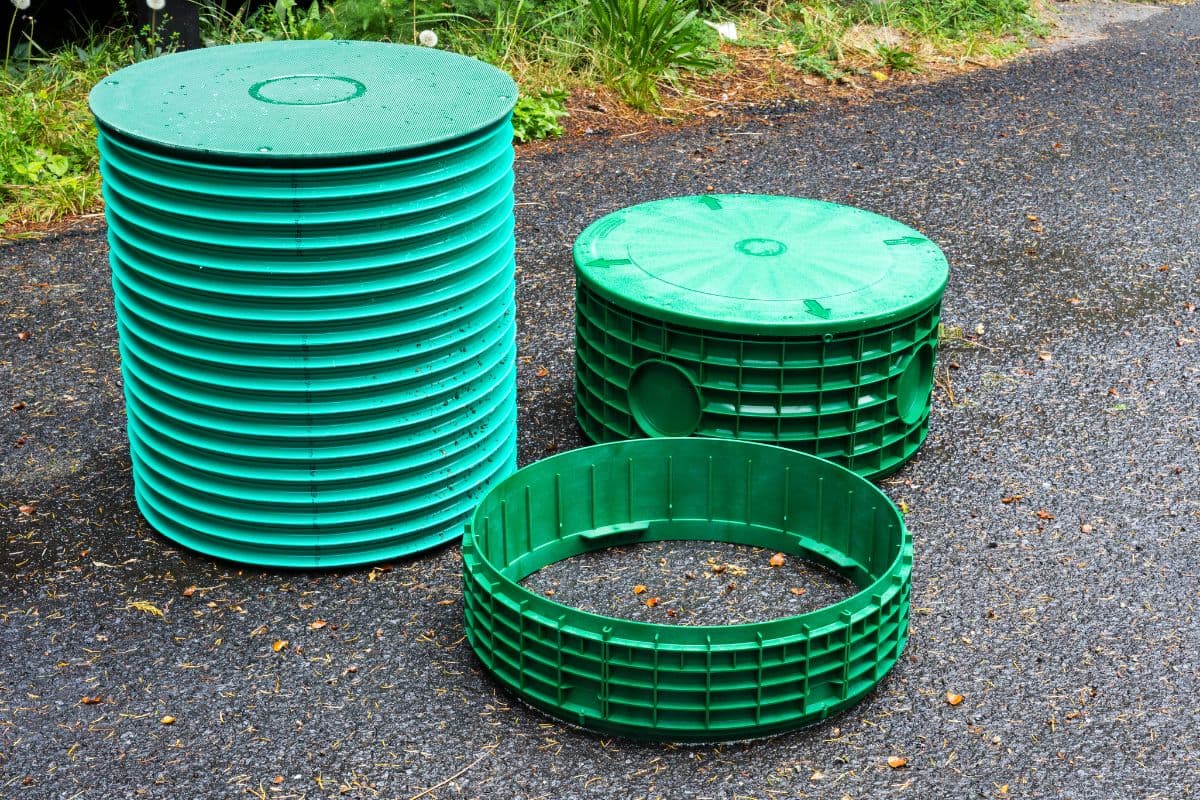
A septic tank riser is a cylindrical polyethylene or PVC extension installed on top of a septic tank's access opening that brings the buried lid from underground to ground level, eliminating the need to dig up the yard every time the tank needs pumping, inspection, or repair. The best septic tank risers in 2026 cost $100 to $300 for a complete kit, come in 16-inch, 20-inch, and 24-inch diameters to match standard tank openings, and stack in 6-inch and 12-inch sections to reach any burial depth. This guide reviews the 5 best riser kits available on Amazon, explains how to choose the right size for your tank, breaks down the full cost of DIY vs professional installation, and shows you why this is the single best return-on-investment upgrade for any septic system with buried lids.
If your septic tank lids are buried, installing risers is the single highest-ROI upgrade you can make to your septic system. This guide covers how risers work, how to choose the right size, which kits are best, and whether to install them yourself or hire a professional.
Why Risers Matter
Surface access is especially useful for winter pump-outs on a frozen system, when buried lids add frozen-ground digging costs to every service visit.
Every time a septic professional services your tank, they need to access the lids. If those lids are buried 6 to 24 inches underground, someone has to dig them out. That's $50 to $200 added to every pumping, inspection, or repair visit.
Over the life of your system (20 to 30 years with pumping every 3 to 5 years), that's $300 to $1,500 in digging fees alone. A riser eliminates that cost permanently.
It also means:
- •You can visually check your tank's access point anytime
- •Service calls are faster — the crew arrives and starts immediately instead of digging for 30 minutes
- •Emergency access during a backup is immediate instead of delayed
- •You always know exactly where your tank is located
Most tanks installed since the early 2000s come with risers from the factory. But millions of older tanks, especially concrete tanks installed before 2000, have buried lids with no risers. If you own one of those, this upgrade is for you.
How to Choose the Right Riser
Three measurements determine which riser kit you need.
1. Diameter
Risers come in three standard diameters: 16-inch, 20-inch, and 24-inch. The diameter must match your tank's existing access opening.
| Diameter | Common On | Notes |
|---|---|---|
| 16-inch | Older tanks, smaller access ports | Less common, limited product selection |
| 20-inch | Most residential tanks | The most common size for retrofitting |
| 24-inch | Newer tanks, larger access openings | Provides the most working room for service |
If you're unsure of your opening size, measure the inside diameter of the hole in the top of your tank after exposing it. Or check your as-built drawing from the health department.
2. Height
Measure the distance from the top of your tank to ground level. Risers come in standard heights (6-inch and 12-inch) and can be stacked to reach the exact height you need.
For example, if your tank lid is 18 inches below grade, you'd use a 12-inch riser plus a 6-inch riser stacked together. Most kits include one riser section. Additional sections are sold separately.
3. Tank Material
The adapter ring needs to seal properly to the tank surface. Concrete tanks require an adapter ring that bonds using butyl sealant or adhesive. Plastic and fiberglass tanks may need a different adapter.
Best Septic Tank Risers: Our Picks
| Your Situation | Our Pick | Why |
|---|---|---|
| Most homeowners (20-inch tank opening) | Polylok 20" Riser Kit | Complete kit with safety screen, fits the majority of residential tanks |
| Tank has a 24-inch opening | Polylok 24" Riser Kit | Same quality, larger diameter for maximum service access |
| Budget is the priority | Tuf-Tite 20" Bundle | Reliable brand at a lower price, domed lid sheds water |
| Tank buried deeper than 18 inches | Polylok 24" Kit + Extra Risers | Stackable sections reach any depth, 24-inch gives best access |
| Want everything in one box including safety screen | Tuf-Tite 20" Four-Piece | Only bundle that includes safety lid standard, nothing extra to buy |
| Homes with children | Polylok 20" or 24" Kit | Includes safety screen rated at 250 lbs per square foot |
| Selling your home soon | Polylok 24" Riser Kit | 24-inch is what inspectors and pumpers prefer, best impression at inspection |
Best Overall: Polylok 20" Riser Kit (14" Tall)
Best OverallIncludes: 20" adapter ring, 20"x12" riser, 20" flat lid, 20" safety screen, installation kit with stainless steel screws and sealant
Polylok is the industry standard for septic risers. This kit includes everything needed for a complete installation with no additional purchases required. The 20-inch diameter fits the majority of residential tanks. The 14 inches of height handles most buried-lid situations. Additional 20-inch risers can be stacked on top if you need more height. The safety screen is a critical inclusion that prevents anyone from falling into the tank if the lid is removed. Made in the USA from heavy-duty polyethylene.
Best for: Most homeowners retrofitting risers onto an existing concrete or plastic tank with a 20-inch access opening.
Check Current Price on AmazonBest 24-Inch: Polylok 24" Riser Kit (14" Tall)
Best 24"Includes: 24" adapter ring, 24"x12" riser, 24" flat lid, 24" safety screen, installation kit with stainless steel screws
Same quality as the 20-inch kit but for tanks with larger 24-inch access openings. The larger diameter provides more working room for the pumping crew and makes filter cleaning easier. Stackable for additional height. The 24-inch safety screen is rated at 250 lbs per square foot. This is the size most septic professionals prefer because it gives them the best access.
Best for: Newer tanks with 24-inch openings, or homeowners who want maximum service access.
Check Current Price on AmazonBest Budget: Tuf-Tite 20" Bundle
Best BudgetIncludes: 20"x12" riser, 20" domed lid, 20" adapter ring, stainless steel screws
Tuf-Tite is the other major name in septic risers and their products are widely used by professional installers. This three-piece bundle costs less than the Polylok equivalent while offering comparable durability and fit. The domed lid sheds water and debris better than a flat lid in areas with heavy rain or leaf fall.
Note: This bundle does not include a safety screen. If you want that added layer of protection (recommended, especially with children on the property), you will need to purchase the Tuf-Tite safety pan separately ($30 to $50).
Best for: Budget-conscious homeowners who want a reliable riser from a trusted brand at a lower price point.
Check Current Price on AmazonBest for Deep Burial: Polylok 24" Kit + Extra Risers
Deep BurialIncludes: 24" adapter ring, 24"x6" riser, 24" flat lid, 24" safety screen, installation kit
This kit starts at 8 inches of height, but the real advantage is that Polylok 24-inch risers stack. If your tank is buried 24 to 36 inches deep, you buy this base kit plus two or three additional 24"x12" riser sections ($50 to $80 each) and stack them to reach grade. The system seals between sections with butyl rope sealant, creating a watertight column from tank to surface.
Best for: Tanks buried more than 18 inches below grade that need multiple riser sections stacked to reach the surface.
Check Current Price on AmazonBest Complete Bundle: Tuf-Tite 20" Four-Piece
Complete BundleIncludes: 20"x12" riser, 20" domed lid, 20" adapter ring, 20" safety lid
This bundle packages all four essential components from Tuf-Tite into a single purchase. The safety lid is included (unlike the standard Tuf-Tite kit), so you do not need to buy it separately. The domed lid design is practical for areas with rainfall. All hardware included.
Best for: Homeowners who want a complete, safety-included package in a single order.
Check Current Price on AmazonRiser Cost Breakdown
The total cost of adding risers depends on two factors: the kit itself and whether you install it yourself or hire a professional.
| Item | DIY Cost | Professional Cost |
|---|---|---|
| 20" riser kit (single section) | $100 – $200 | $100 – $200 |
| 24" riser kit (single section) | $150 – $300 | $150 – $300 |
| Additional riser sections | $50 – $80 each | $50 – $80 each |
| Butyl sealant | $10 – $20 | Included |
| Installation labor (per access point) | $0 (your time) | $100 – $300 |
| Total per access point | $110 – $300 | $250 – $600 |
Most residential tanks have two access points (inlet and outlet). If you're doing both, double the cost above. Many homeowners install risers on both access points at the same time to save on labor.
The math is simple: if your pumping company charges $100 to dig out your lids, the riser pays for itself by the second or third service visit. After that, every visit saves you money.
DIY vs. Professional Installation
Riser installation is one of the few septic tasks that a handy homeowner can realistically do themselves. Here's what's involved:
DIY Installation Steps
- Locate your tank and dig down to expose the access lid(s)
- Clean the top surface of the tank around the opening
- Apply butyl sealant rope around the opening
- Set the adapter ring onto the sealant and press firmly
- Stack riser sections to reach ground level
- Apply sealant between each section
- Secure with stainless steel screws
- Install safety screen and lid
- Backfill around the riser with soil
The entire process takes 2 to 4 hours per access point for someone comfortable with basic tools and manual digging. The hardest part is the digging, especially in clay or rocky soil.
When to Hire a Pro
- •Your tank is buried more than 24 inches deep
- •You're not sure where your tank is located
- •The existing concrete lid is cracked or damaged and needs replacement
- •You want the riser installed during a scheduled pumping visit (many companies offer a discount when combined)
- •Local codes require a licensed installer for septic work
Ask your pumping company about riser installation during your next service. Many will install risers while they already have the tank exposed, saving you the digging cost entirely.
Frequently Asked Questions
How much does a septic tank riser cost?
A complete septic tank riser kit costs 100 to 300 for a standard 20-inch or 24-inch single-section kit, which includes the adapter ring, riser section, lid, and hardware. Professional installation adds 100 to 300 per access point for labor, bringing the total installed cost to 200 to 600 per access point. Most residential septic tanks have two access points inlet and outlet, so outfitting both costs 400 to 1,200 total with professional installation or 200 to 600 if you do it yourself. If your tank is buried deeper than 18 inches, you will need additional riser sections at 50 to 80 each to stack to the correct height. The riser pays for itself within two to three service visits because it eliminates the 50 to 200 digging fee that pumping companies charge every time they need to excavate buried lids.
Are septic tank risers worth it?
Yes, septic tank risers are one of the best investments a septic system owner can make. They eliminate the 50 to 200 digging fee charged at every pumping, inspection, or repair visit. With pumping every 3 to 5 years plus periodic inspections, the riser pays for itself within two to three service visits and saves money for the remaining 20 to 30 year lifespan of the system. Beyond the cost savings, risers provide immediate emergency access during a backup no waiting while someone digs up the yard, allow you to visually check your tank access point anytime, and make service visits faster because the crew can start work immediately. If you ever sell your home, risers are a positive feature during the septic inspection that every buyers lender will require.
Can I install a septic tank riser myself?
Yes, septic tank riser installation is a manageable DIY project for homeowners comfortable with basic tools and manual digging. The process involves locating your tank, digging down to expose the access lid, cleaning the tank surface, applying butyl sealant, setting the adapter ring, stacking riser sections to ground level, securing with stainless steel screws, and installing the safety screen and lid. The entire job takes 2 to 4 hours per access point, with the digging being the hardest part, especially in clay or rocky soil. Hire a professional instead if your tank is buried more than 24 inches deep, you are unsure where the tank is located, or the existing concrete lid is cracked and needs replacement. Many pumping companies will install risers during a scheduled pumping visit at a discount since the tank is already exposed.
What size riser do I need?
Septic tank risers come in three standard diameters 16-inch, 20-inch, and 24-inch. The diameter must match the inside diameter of your tanks existing access opening. The 20-inch size fits the majority of residential septic tanks and has the widest product selection. To determine your size, measure the inside diameter of the access hole on top of your tank after exposing it, or check your as-built drawing from the local health department. For height, measure the distance from the top of your tank to ground level and stack 6-inch and 12-inch riser sections to reach grade. If you are unsure of any measurement, ask your pumping company to measure during your next service visit.
Do I need a riser for every access point?
Ideally, yes. Most residential septic tanks have two access points one over the inlet baffle where waste enters the tank from the house, and one over the outlet baffle where effluent exits to the drainfield. The outlet side is the most important access point because that is where the effluent filter is located, and the filter needs to be cleaned every time the tank is pumped. If budget is a concern, install a riser on the outlet access point first and add the inlet side later. Having risers on both access points gives the pumping crew full access to inspect baffles, clean the filter, and pump from both ends of the tank, which results in a more thorough service.
Will a riser affect my lawn appearance?
Riser lids sit at or slightly above ground level and are typically green or black polyethylene, about 20 to 24 inches in diameter. Most homeowners find them unobtrusive, comparable to a sprinkler head cover or utility access cap. Flat lids sit flush with the grass and can be partially concealed by surrounding vegetation. Domed lids sit slightly higher and are more visible but shed rainwater and debris better. Some homeowners place a decorative garden rock, planter, or landscape feature over the lid for aesthetics, but make sure any cover is easily removable since the pumping crew needs quick access. Never bury the riser lid under soil or mulch, as this defeats the entire purpose of the installation.
Glossary of Septic Tank Riser Terms
Septic tank riser
A cylindrical extension made of polyethylene, PVC, or concrete that connects a buried septic tank access opening to ground level. Risers eliminate the need to dig up the yard for pumping, inspection, or repair. They come in standard diameters 16-inch, 20-inch, and 24-inch and stack in 6-inch and 12-inch sections to reach any burial depth.
Adapter ring
The base component of a riser system that attaches directly to the top of the septic tank around the access opening. The adapter ring creates a sealed connection between the tank surface and the first riser section using butyl sealant or adhesive. It must match the diameter of the tank's existing access opening.
Butyl sealant (butyl rope)
A flexible, waterproof sealing material used between the adapter ring and the tank surface and between stacked riser sections. Butyl sealant creates a watertight seal that prevents groundwater from entering the tank and prevents odors from escaping. It comes in a rope form that is pressed into place during installation.
Safety screen (safety pan)
A grated or mesh barrier installed inside the riser below the lid that prevents people, children, or animals from falling into the open tank if the lid is removed. Safety screens are rated by weight capacity typically 250 pounds per square foot and are considered an essential safety component, especially for homes with children.
Effluent filter
A filter device installed in the outlet baffle of the septic tank that catches solids before they exit to the drainfield. The effluent filter must be removed and cleaned during every pumping visit, which is why having a riser on the outlet access point is the highest priority. Without a riser, the pumping crew must dig to reach the filter each time.
Access opening (access port)
The hole in the top of a septic tank that allows service professionals to pump, inspect, and maintain the tank. Most residential tanks have two access openings one over the inlet baffle and one over the outlet baffle. Standard diameters are 16, 20, and 24 inches.
Flat lid vs. domed lid
The two styles of riser covers. Flat lids sit flush with the ground and are less visible but can collect standing water. Domed lids sit slightly higher and shed rainwater and debris naturally. Both styles are available in green and black to blend with lawn surfaces.
Related Guides
Get Expert Septic Help
Connect with qualified septic professionals in your area. Free quotes, no obligation.