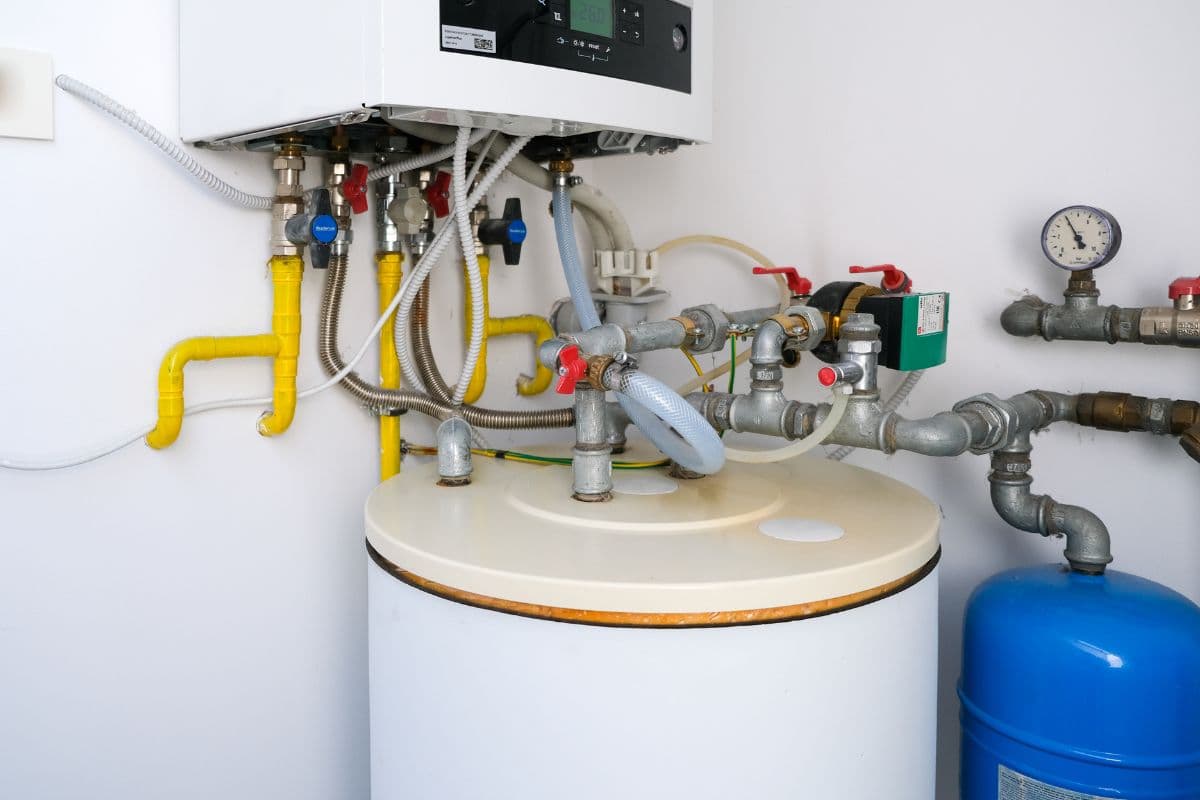
If you have hard water and a septic system, you have probably heard conflicting things about whether a water softener is safe to use. Some people say salt destroys the bacteria your septic tank needs to function. Others say water softeners are perfectly fine. Online, you can find confident articles on both sides of the argument, many of them getting the science wrong.
Here is the honest version: the impact of a water softener on a septic system is real but it depends heavily on the type of softener, how it is set up, the chemistry of your water, and the characteristics of your existing system. The research going back to the 1970s, including studies from the University of Wisconsin, Virginia Tech, NSF International, and the Water Quality Research Foundation, tells a more specific story than either camp usually shares.
This guide covers what that research actually found, what the genuine risks are, what the M/D ratio is and why it is the most important number in this conversation, what your state may require, and exactly what to do to run a water softener without harming your system.
How a Water Softener Works and Why It Matters for Septic
A water softener removes hardness minerals from water through a process called ion exchange. Hard water contains high concentrations of calcium and magnesium, which build up as scale in pipes, water heaters, and appliances. Inside the softener, water passes through a resin tank filled with negatively charged resin beads that have been loaded with sodium ions. Because calcium and magnesium carry a stronger positive charge than sodium, they displace the sodium on the resin beads, and the sodium flows out into the household water supply in their place. The result is water that no longer forms scale.
Over time, the resin beads become saturated with calcium and magnesium and can no longer exchange ions effectively. At that point, the softener runs a regeneration cycle: it flushes the resin tank with a concentrated brine solution drawn from the salt storage tank, which recharges the resin beads with sodium and pushes the accumulated calcium and magnesium down the drain. The brine flush is followed by a fresh water rinse to clear the loosened minerals. The entire process uses 50 to 100 gallons of water per cycle and sends a mix of brine and rinse water through your household drain line and into your septic system.
Two things end up in your septic tank from that process: sodium ions from the brine and additional water volume from the regeneration cycle itself. How much of each, and how often, depends on the type of softener you have.
The Two Types of Water Softeners and How They Compare for Septic
This distinction matters more than anything else in this guide. Not all water softeners create the same risk profile for a septic system.
Timer-based softeners operate on a fixed schedule. Set the timer for every three days and it regenerates every three days, regardless of how much water the household actually used. In a low-use week, the softener regenerates before the resin is even close to depleted. This wastes salt and water, and it consistently sends unnecessary sodium and hydraulic load to the septic system.
Demand-initiated regeneration (DIR) softeners, sometimes called metered softeners, contain a flow meter that tracks actual water consumption. Regeneration only triggers when the measured volume of water treated indicates that the resin capacity has been consumed. DIR softeners use less salt, discharge less water to the drain, and maintain a lower sodium load on the septic system because they only operate when necessary.
This is not a minor distinction. Research from the Water Quality Research Foundation’s 2013 study found that DIR softeners consistently maintained the monovalent-to-divalent cation ratio below the threshold that causes problems for septic systems, while inefficiently operated timer-based softeners often exceeded it.
| Factor | Timer-Based Softener | Demand-Initiated (DIR) Softener |
|---|---|---|
| Regeneration trigger | Fixed schedule | Based on measured water use |
| Salt used per year | Higher (regenerates unnecessarily) | Lower (only regenerates when needed) |
| Water discharged to septic | Higher | Meaningfully lower |
| M/D ratio at septic | More likely to exceed safe threshold | Consistently below threshold in research |
| Recommended for septic | No | Yes |
| Typical cost | $400 to $800 | $600 to $1,500 |
| Required in some states | No | Yes (see state regulations) |
The M/D Ratio: The Number That Actually Determines Risk
Most articles about water softeners and septic systems focus on sodium as the villain, but the research points to something more specific: it is not the total amount of sodium that matters most, it is the ratio of sodium (a monovalent cation) to calcium and magnesium (divalent cations) in the wastewater reaching the septic tank. This is called the monovalent-to-divalent cation ratio, or M/D ratio.
Virginia Tech researchers Dr. John Novak and Patrick Hogan conducted the most detailed study of this relationship, funded by the Water Quality Research Foundation. Their findings, published in 2013, showed that:
- When the M/D ratio in septic tank effluent reaches 11, mimicking inefficient timer-based regeneration, it increases suspended solids, BOD (biological oxygen demand), and COD (chemical oxygen demand) in the effluent leaving the tank toward the drainfield.
- When the M/D ratio is at or below 5, the negative effects on effluent quality were greatly reduced.
- When the M/D ratio was around 3, characteristic of an efficiently operated DIR softener, the effluent quality was actually better than in systems where regeneration was completely diverted away from the septic tank.
This last point is important and gets overlooked in most discussions. The calcium and magnesium ions flushed from the resin during regeneration serve a beneficial function in the septic tank: they aid in flocculation and settling of solids. A small, well-balanced dose of regeneration effluent can actually improve septic tank performance. The problem occurs when the sodium load is disproportionately high relative to those divalent cations.
What causes the M/D ratio to go too high:
- Timer-based regeneration that cycles too frequently relative to actual water use
- A softener set for harder water than you actually have, causing it to use more salt per cycle than necessary
- An oversized softener resin tank that regenerates with more brine than needed
- High iron or manganese in the source water
What keeps the M/D ratio in the safe range:
- A DIR softener calibrated to your actual water hardness
- Regular salt efficiency settings that match measured water hardness, not default factory settings
- Moderately hard water to begin with (the calcium and magnesium being removed provide the divalent cation balance)
What the Research Actually Says
The research on this topic spans more than five decades and involves multiple independent institutions. Here is a summary of what each major study actually found.
University of Wisconsin (1978)
One of the earliest systematic investigations. Researchers found that brine from well-operated softeners did not reduce soil permeability in most soil types at normal operational concentrations. This study focused on the drainfield soil, not the tank itself.
NSF International (1978)
Used aerobic treatment units to study whether water softener brine harmed the treatment process. Found no adverse effects even when simulating higher-than-normal use (10 people per household). Critically, this study used aerobic treatment units, not conventional anaerobic septic tanks, which later researchers noted as a methodological limitation.
Virginia Tech / Water Quality Research Foundation (2013)
The most comprehensive and relevant study for conventional septic systems. Found that M/D ratio is the key predictive variable for effluent quality. DIR softeners consistently kept the ratio in the safe range. Also found that grease flocculation and anaerobic digestion were not significantly affected by sodium level, suggesting the primary risk mechanism is solids stratification and transport, not bacterial die-off.
Creekwood, NC Field Study
Real-world septic systems receiving DIR versus non-DIR softener discharge were monitored. Systems with DIR softeners showed lower salt levels throughout and functioned well. Consistent with the Virginia Tech lab findings under actual field conditions.
10-Year WaterWorld Case Study
A Whirlpool WHES42 DIR water softener was monitored over a decade discharging to a 1,200-gallon two-chamber concrete septic tank. After 10 years, the concrete tank showed no spalling or structural damage. The calculated M/D ratio for the system was 1.8, well within the safe range.
The concrete corrosion question: The Ontario Onsite Wastewater Association found that the primary cause of concrete corrosion in septic tanks is sulfuric acid produced by hydrogen sulfide gas during anaerobic bacterial decomposition, not salt from softener discharge.
The Real Risks, Clearly Stated
The research does not support the blanket claim that water softeners destroy septic systems. It also does not support the claim that all water softeners are completely harmless. The actual risks are more specific:
Risk 1: Hydraulic overloading of an undersized or marginal system. Each regeneration cycle discharges 50 to 100 gallons. A timer-based softener regenerating three times per week adds 7,000 to 15,000+ gallons per year. On a system already near its hydraulic capacity, the additional volume can push effluent through the tank faster than the settling process can handle, increasing solids reaching the drainfield.
Risk 2: Solids stratification from high-sodium slug discharge. The brine entering the septic tank during timer-based regeneration is significantly denser than household wastewater. This heavy brine can sink to the bottom and disturb the sludge layer, causing solids to become suspended in the effluent zone and pass to the drainfield.
Risk 3: M/D ratio exceeding 5 from inefficient regeneration. This is the mechanism behind increased effluent solids when sodium load is disproportionately high relative to the calcium and magnesium content of the regeneration discharge.
Risk 4: Drainfield soil dispersion in clay-heavy soils over time. Sustained high-sodium discharge can raise the sodium adsorption ratio (SAR) high enough to cause clay particles to swell and disperse, reducing soil permeability. Much more pronounced with montmorillonite clay than with sandy or loamy soils.
What is not a well-supported risk: That normal DIR softener operation directly kills beneficial bacteria in the septic tank in meaningful numbers. The Virginia Tech study specifically found that anaerobic digestion was not significantly affected by sodium level.
Aerobic Treatment Units Are a Different Conversation
Everything discussed above relates to conventional anaerobic septic tanks. If your home uses an aerobic treatment unit (ATU), the picture is more complicated.
Some jurisdictions and some ATU manufacturers specifically restrict or prohibit water softener discharge to ATUs. Several ATU manufacturers include language in their warranties voiding coverage if water softener brine is discharged to the treatment unit.
If your home has an ATU, check your system documentation and contact your system’s manufacturer before connecting a water softener discharge to it. Some states and manufacturers require the regeneration water to discharge to a separate drywell rather than the treatment unit.
Potassium Chloride vs. Sodium Chloride: Is It Worth It for Septic?
Standard water softener salt is sodium chloride. Potassium chloride is an alternative regenerant that releases potassium ions instead of sodium. From a septic standpoint, potassium chloride has theoretical advantages: the research on soil dispersion is primarily about sodium, and potassium requires much higher concentrations to produce the same effect.
From a practical standpoint, there are real tradeoffs:
- Potassium chloride costs roughly three to five times as much per bag as sodium chloride
- You need approximately 25% more potassium chloride by weight to achieve the same regeneration
- Potassium chloride can bridge (solidify) in the brine tank more readily, particularly in humid conditions
- Some users report that water softened with potassium chloride feels less soft than sodium chloride-softened water
For most homeowners with a DIR softener and an otherwise healthy system, switching from sodium to potassium chloride for septic system reasons alone is not necessary based on current evidence. For homeowners with heavy clay soil drainfields or in restricted jurisdictions, it is worth the cost consideration.
State Regulations and Legal Requirements
As of 2024, the Water Quality Association reported that 16 U.S. states and one Canadian province had regulations governing water softener discharge to on-site wastewater systems. Here is what the most significant state-level requirements look like:
Texas
Any water softener discharging to an on-site sewage facility must be a demand-initiated regeneration type. Timer-based softeners are not permitted to discharge to septic systems.
Massachusetts
Does not permit self-regenerating salt-based water softeners in homes with a septic system under many interpretations of the regulation. Homes on municipal water are required to use water-conserving, demand-initiated softeners.
Connecticut
The state Public Health Code prohibits brine backwash from water softeners from entering private septic systems entirely.
California
State law allows cities to ban the installation of new salt-based water softeners. Many cities and counties, including Santa Clarita and parts of Los Angeles County, have exercised this authority. Regulations vary at the local level.
Michigan
No statewide prohibition, but numerous cities have adopted restrictions and some have offered softener buyback programs.
What you should do: Before installing any water softener on a home with a septic system, contact your local health department and confirm whether there are specific requirements for your jurisdiction. In some states, violating these requirements can affect your ability to sell the home or obtain permits for other work.
What Actually Affects Whether Your System Is at Risk
Tank size relative to household water use
A tank that is already sized at the minimum for your bedroom count has less hydraulic margin to absorb regeneration water. Our septic tank size guide recommends sizing one step above the bedroom minimum if you use a water softener in daily use.
Water hardness level
Counterintuitively, very hard water is not necessarily more problematic for the septic system than moderately hard water. The calcium and magnesium being removed provide the divalent cations that help keep the M/D ratio balanced. What matters more is whether the softener is calibrated to the actual hardness level rather than factory defaults.
Regeneration frequency
A DIR softener serving a large household with very hard water will regenerate more frequently than one serving a small household with moderate hardness. If yours is regenerating more than two to three times per week, the cumulative sodium and hydraulic load is worth monitoring on a marginal system.
Drainfield soil type
Sandy and loamy soils are much less susceptible to sodium-driven dispersion than clay-heavy soils. If you have montmorillonite (swelling) clay in the drainfield area, the long-term SAR concern is more legitimate. A soil profile report from your original septic permit application will often indicate soil type.
Iron and manganese in source water
High iron or manganese in the source water, common in many private well water supplies, creates a separate risk that gets confused with the sodium issue. Iron and manganese can accumulate in the leach field and cause clogging independent of softener sodium discharge. If your water is high in these minerals, a pre-filter before the softener is worth considering.
System age
An older, well-functioning system that has been receiving DIR softener discharge for years without problems does not need intervention. An older system that was sized at the historical minimum and is now serving a larger household has less margin to absorb any additional load.
Should You Upsize Your Septic Tank If You Have a Water Softener?
If you are installing a new septic system and know you will use a water softener, sizing one step above the bedroom minimum is a reasonable precaution. The additional tank capacity increases the retention time for effluent in the tank, which supports better solids settling before liquid reaches the drainfield.
If you already have an existing system, the practical steps are: confirm the tank is correctly sized for your household (see the septic tank size guide), switch to a DIR softener if you are not already using one, and maintain the pumping schedule. Those three steps address the meaningful risks in nearly all situations without requiring tank replacement.
How to Minimize the Impact of a Water Softener on Your Septic System
Switch to a demand-initiated (metered) softener
If you currently have a timer-based softener, this is the single most impactful change available. A DIR softener reduces both the sodium load and the water volume discharged to your septic system, in some cases dramatically. This is also required by law in several states.
Calibrate the softener to your actual water hardness
Have your water hardness tested and set the softener accordingly. A softener set for 25 grains per gallon when your water is 12 grains per gallon uses far more salt per cycle than necessary, raising the M/D ratio without any benefit to water quality.
Check the M/D ratio for your specific situation
The WQA provides a free spreadsheet tool that calculates the expected M/D ratio for your system based on your water chemistry and softener settings. If the calculated ratio is above 5, your settings are putting your system at more risk than necessary.
Consider potassium chloride if you are in a restricted state or have clay soil
Potassium chloride eliminates the sodium-specific drainfield concerns and is permitted in many jurisdictions where sodium chloride is restricted.
Do not bypass the softener discharge to an unpermitted location
Some homeowners route regeneration water to a drywell, directly to the yard, or to a gray water system. In some jurisdictions this is permitted. In others it is explicitly prohibited and can create compliance problems when the property is sold. Check with your local health department before making any drainage changes.
Pump your tank on schedule
For a home with a properly configured DIR softener and a correctly sized tank, the pumping schedule remains the same: typically every 3 to 5 years. See our how often to pump guide for the schedule.
Monitor the drainfield seasonally
If you have clay soil and a water softener, walk the drainfield area in early spring when ground saturation is highest and check for standing water, wet patches, or odors. Our signs your drainfield is failing guide covers what to look for.
What About Salt-Free Water Conditioners?
Salt-free water conditioners do not use ion exchange. Instead, they use template-assisted crystallization (TAC) or other physical processes to change the structure of calcium and magnesium minerals so they are less likely to deposit as scale, without actually removing the minerals from the water.
From a septic system perspective, salt-free conditioners have zero impact. No brine is produced, no sodium is added, no additional water volume enters the drain. If the only concern is protecting the septic system, a salt-free conditioner eliminates all of the issues discussed in this guide.
The tradeoffs: salt-free conditioners do not reduce dissolved mineral content, so the water does not produce the characteristic silky feel of ion-exchange-softened water. Their scale-prevention performance varies by water chemistry. They tend to perform well for moderate hardness levels but may underperform compared to ion exchange at very high hardness.
For homeowners on a private well dealing with hardness, see our complete guide on how hard water affects your septic system for the specific softener sizing, salt type, and regeneration scheduling practices that protect both your water quality and your septic system.
Decision Guide
| Your Situation | Recommended Action |
|---|---|
| Planning new septic system, will use water softener | Size tank one step above bedroom minimum, use DIR softener calibrated to actual hardness |
| Existing adequate system, adding new water softener | Use DIR softener, calibrate to actual hardness, maintain normal pumping schedule |
| Already have timer-based softener, system functioning | Replace with DIR softener at next service or failure, confirm your state allows current setup |
| Heavy clay soil drainfield, any water softener | Prioritize DIR, check M/D ratio, monitor drainfield seasonally, consider potassium chloride |
| Small or undersized tank with water softener | Reduce regeneration frequency, upsize at next major service, switch to DIR |
| Softener regenerating more than 3 times per week | Recalibrate to actual water hardness, confirm DIR operation, reduce salt dose |
| ATU instead of conventional septic tank | Check manufacturer warranty and local code before connecting |
| Live in TX, MA, CT, or parts of CA | Confirm local requirements, DIR may be legally required or salt-based may be prohibited |
| Want zero septic impact, scale prevention is enough | Salt-free conditioner eliminates all septic concerns |
| Already have DIR softener, system healthy | No action needed, maintain normal schedule |
Frequently Asked Questions
Are water softeners bad for septic systems?
What is the M/D ratio and why does it matter?
Does the salt from a water softener kill septic bacteria?
How much water does a water softener discharge to a septic system?
What type of water softener is best for a septic system?
Should I pump my septic tank more often if I have a water softener?
Can I discharge softener regeneration water somewhere other than the septic system?
Is potassium chloride safer for septic systems than sodium chloride?
Does a water softener affect whether my concrete septic tank will deteriorate?
Glossary of Water Softener and Septic Terms
Regeneration cycle
The process by which a water softener recharges its resin tank by flushing it with a concentrated salt brine solution to displace the accumulated calcium and magnesium ions, then rinsing with fresh water. A typical cycle uses 50 to 100 gallons of water and discharges a combination of brine and rinse water to the household drain. In a DIR softener, this cycle is triggered by measured water consumption. In a timer-based softener, it runs on a fixed schedule regardless of actual water use.
Ion exchange
The water softening process in which calcium and magnesium ions are exchanged for sodium ions on resin beads inside the softener. The sodium released into the water is why softened water contains sodium and why the resin must be periodically recharged with salt brine. Salt-free conditioners do not use ion exchange and do not remove minerals.
Demand-initiated regeneration (DIR)
A regeneration method in which the softener only recharges the resin when a flow meter determines that the resin capacity has been consumed based on actual water volume treated. DIR softeners use significantly less salt and discharge significantly less water to the drain than timer-based softeners, and they maintain the M/D ratio in the safe range for septic system operation. Required by law in Texas and several other states.
Monovalent-to-divalent cation ratio (M/D ratio)
The ratio of monovalent cations (primarily sodium, Na+) to divalent cations (primarily calcium, Ca2+, and magnesium, Mg2+) in wastewater. Virginia Tech research established that an M/D ratio above 5 in septic tank effluent correlates with increased solids discharge to the drainfield. Below 5, negative effects are greatly reduced. Around 3, effluent quality is often better than in systems with no softener discharge at all.
Sodium adsorption ratio (SAR)
A measure of the sodium concentration in water relative to calcium and magnesium concentrations, used in soil science to assess whether sodium will displace calcium and magnesium on clay soil particles and cause soil dispersion. In the drainfield context, high sodium discharge over years can raise the SAR enough to reduce soil permeability in clay-heavy soils, especially those containing montmorillonite (swelling clay).
Salt-free water conditioner
A water treatment device that prevents scale formation without removing minerals from the water through ion exchange. Salt-free conditioners use physical or catalytic processes to change the structure of calcium and magnesium minerals so they resist depositing as scale. They produce no brine discharge and have no impact on a septic system.
Resin tank
The main treatment vessel in a water softener containing resin beads coated with sodium ions that exchange for calcium and magnesium as water passes through. The resin tank has a finite capacity in grains of hardness before the sodium charge is depleted and regeneration is required. A DIR softener tracks when this capacity is consumed through a flow meter.
Related Guides
On theseptic.guide
Septic Tank Size Guide
Why homes with water softeners in daily use are recommended to size one step above the bedroom minimum, with the full tank sizing calculation.
How Often Should You Pump Your Septic Tank?
The pumping schedule by tank size and household size, with guidance on when softener use might affect the interval.
Signs Your Drainfield Is Failing
The warning signs to watch for, particularly relevant for homeowners with water softeners and clay soil.
Complete Septic System Guide
How the full septic system works and why both water volume and sodium chemistry affect the treatment process.
Septic System Maintenance Checklist
The full maintenance schedule for any home on a septic system, including those with water softeners.
Septic Dos and Don'ts
Household habits that protect or harm a septic system, including water use practices relevant to softener-connected homes.
What You Can and Cannot Flush
Broader household product reference useful alongside this guide.
Septic System Repair Cost 2026
What drainfield repairs cost if reduced absorption or hydraulic overloading reaches the point of requiring intervention.
Drainfield Replacement Cost 2026
The cost of full drainfield replacement, which proper softener management is designed to prevent.
From Our Network
Also on The Well Guide
External Resources
WQA / NOWRA Guidance Document (2013) · WQA
The joint operational guidance from the Water Quality Association and National Onsite Wastewater Recycling Association, including the M/D ratio calculation tool.
EPA Septic System Care Guidance · U.S. EPA
The EPA's official homeowner guidance on septic system care and water use practices.
Need Professional Septic Service?
Connect with licensed septic professionals in your area for inspection, pumping, or repair.
Get Free QuotesGet Expert Septic Help
Connect with qualified septic professionals in your area. Free quotes, no obligation.