A septic tank sludge dissolver is a biological product containing bacteria, enzymes, or both that accelerates the natural digestion of organic solids accumulating in the sludge layer at the bottom of a septic tank, reducing the volume of organic material and supporting the bacterial ecosystem that processes waste. The sludge layer forms continuously as wastewater enters the tank and solids that the existing bacterial colony cannot fully break down settle to the bottom, and it includes both organic materials that a biological dissolver can partially reduce and inorganic materials, including minerals, synthetic fibers, and non-biodegradable particles that no additive can dissolve. The EPA does not recommend additives for properly functioning septic systems because the tank already contains the bacteria it needs, but biological sludge dissolvers serve a genuine and specific purpose as recovery tools after disruption events that have crashed the bacterial population. No sludge dissolver of any type eliminates the need for scheduled pump-outs, which remain the only way to physically remove accumulated solids from the tank.
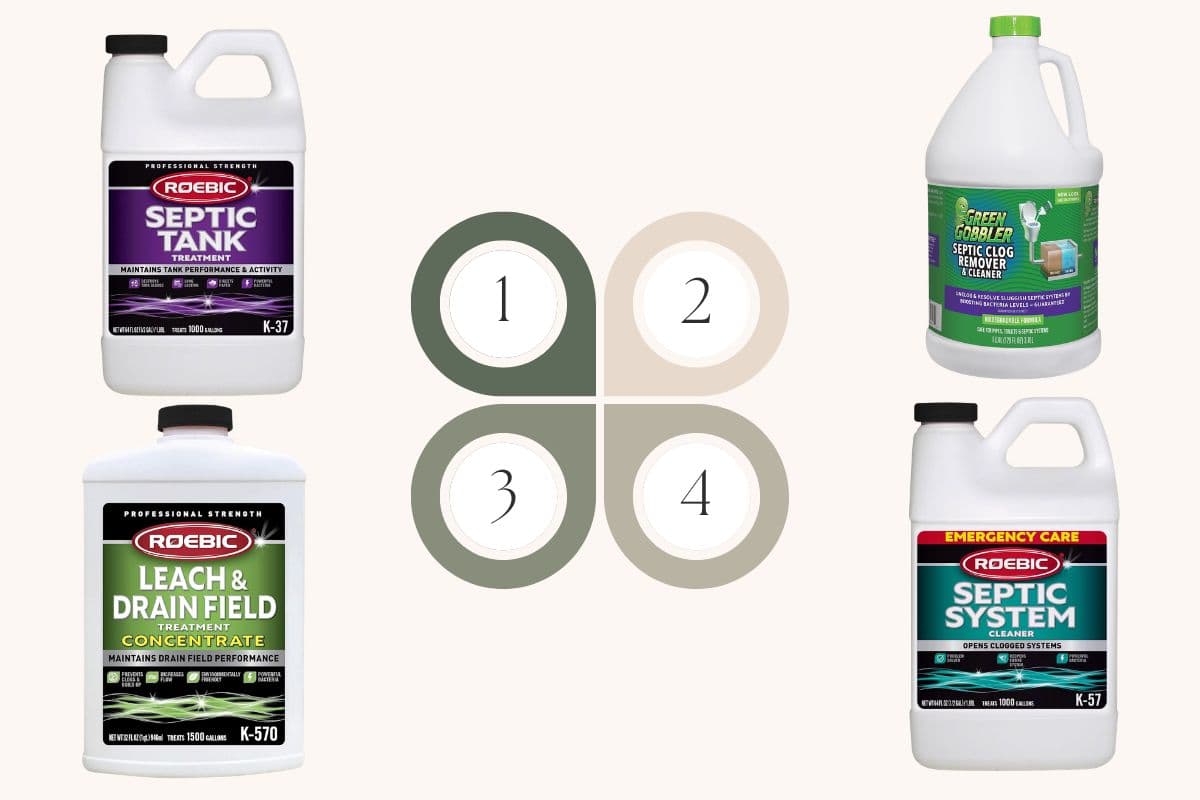
The market for these products is crowded with misleading claims. Products that promise to dissolve all sludge, eliminate the need for pumping, or restore a completely failed drainfield are overstating what biology can do. The four products reviewed below make honest claims, contain effective biological formulas, have strong track records in real-world use, and cover the full spectrum from routine maintenance to emergency recovery to drainfield-adjacent sludge specifically. None of these four products appear in our best septic tank treatments guide, which covers general maintenance products — this guide is specifically for homeowners researching sludge reduction.
The Honest Truth About Sludge Dissolvers Before You Buy
What biological sludge dissolvers can do:
- Accelerate the digestion of organic waste including proteins, greases, carbohydrates, and cellulose
- Restore bacterial populations after a specific disruption event
- Reduce organic sludge volume over time with consistent use
- Reduce odor caused by incomplete waste digestion
- Support the biological health of the drainfield inlet and distribution area
What biological sludge dissolvers cannot do:
- Dissolve inorganic materials, including minerals, synthetic fibers, and non-biodegradable solids
- Replace or substitute for scheduled pump-outs
- Restore a drainfield that has completely failed from physical damage or end-of-life soil compaction
- Provide measurable benefit to a healthy, properly maintained tank that has not experienced a disruption event
Products to avoid entirely: Chemical sludge dissolvers containing inorganic acids, sodium hydroxide, organic solvents, hydrogen peroxide, or formaldehyde kill the bacteria the system depends on, corrode tank components, and pose a groundwater risk. Every product reviewed below is strictly biological.
Quick Comparison
| Product | Best For | Formula Type | Price Range |
|---|---|---|---|
| Roebic K-37 Septic Tank Treatment | Routine quarterly or biannual maintenance | Liquid biological, patented spore-bearing bacteria | $ |
| Roebic K-57 Septic System Cleaner | Stressed or overloaded system, early stress symptoms | Concentrated liquid biological | $ |
| Green Gobbler Emergency Septic Sludge Remover | Active backup, sluggish system, emergency first response | Liquid probiotic plus enzymes, high-volume dose | $$ |
| Roebic K-570 Leach and Drain Field Opener | Sludge at the drainfield inlet and distribution area | Concentrated biological specifically for drainfield sludge | $ |
Best Septic Tank Sludge Dissolvers 2026
Roebic K-37 Septic Tank Treatment
Liquid biological · 32 oz
Roebic K-37 Septic Tank Treatment 32oz — Available on Amazon
Why it works: Roebic has been manufacturing septic treatments since 1959, making it the oldest continuously operating company in this product category. The K-37 is their flagship maintenance product, formulated with Roebic's patented Roetech bacteria that are aerobic and spore-bearing, meaning they form protective endospores when exposed to soaps, detergents, and diluted cleaning chemicals that would kill less robust bacterial strains. This makes K-37 significantly more effective in real-world household conditions than products using non-spore-forming bacteria that lose viability on contact with normal household wastewater chemistry.
K-37 is designed for regular preventive use rather than emergency recovery. The standard application is one quart every six months for a 500-gallon tank, with water use reduced for eight hours after application to allow the bacteria to colonize the pipe walls and tank surfaces. The formula promotes efficient breakdown of proteins, starches, fats, greases, and cellulose — the primary organic components of the sludge layer.
What makes it stand out: The 60-plus-year track record and the patented spore-bearing bacteria are the strongest differentiators in this product category. Spore-bearing bacteria maintain effectiveness through the chemical exposure that is unavoidable in any active household, which is why K-37 performs consistently across households with varying cleaning habits. The liquid format requires no mixing, and the dosing is straightforward.
Best use case: Quarterly or biannual maintenance for any septic system, particularly those that receive regular antibiotic exposure from household members, use antibacterial cleaning products, or have a history of high chemical use. Also appropriate as a post-pump-out recovery dose to accelerate bacterial recolonization.
Cost: $15 to $20 for a 32 oz bottle treating a 500-gallon tank for approximately one year at the biannual dose. One of the most cost-effective biological maintenance products in this category.
Check Price on AmazonRoebic K-57 Septic System Cleaner
Concentrated liquid biological · 32 oz
Roebic K-57 Septic System Cleaner 32oz — Available on Amazon
Why it works: Where K-37 is Roebic's maintenance product, K-57 is their intervention product. It is formulated with a higher concentration of the patented Roetech bacteria specifically for systems that are overworked, sluggish, or showing signs of stress from overloading, neglect, or chemical disruption. The full 32-ounce bottle is poured into the toilet at once and flushed, with water use reduced for 24 hours — a more aggressive protocol than K-37's eight-hour window, reflecting the product's intent as a targeted intervention.
K-57 is the appropriate product when the system is functioning but showing symptoms: slightly slow drains, mild yard odor, gurgling sounds, or a tank that has been pumped recently but is still performing below normal. The concentrated bacterial load targets clogged areas in the tank, connecting pipes, and distribution box rather than distributing evenly through the system at maintenance levels.
What makes it stand out: The 24-hour reduced water use protocol combined with the concentrated dose allows the Roetech bacteria to establish in the specific areas of the system that are sluggish or beginning to accumulate sludge beyond the normal digestion rate. This is the most aggressive purely biological intervention available for a system showing early stress symptoms without requiring a professional call.
Best use case: When a system is showing early stress symptoms and professional inspection has ruled out mechanical causes such as root intrusion, pipe damage, or a distribution box problem. Biannual intervention treatment for high-use households, systems with garbage disposals, or systems that regularly receive antibiotic or chemical disruption.
Cost: $15 to $20 for a 32 oz bottle. Used less frequently than K-37 as an intervention rather than a maintenance product, making the annual cost lower than that of routine maintenance products.
Check Price on AmazonGreen Gobbler Emergency Septic Sludge Remover
Liquid probiotic + enzymes · 1 gallon
Green Gobbler Emergency Septic Sludge Remover 1 Gallon — Available on Amazon
Why it works: Green Gobbler's Emergency Septic Sludge Remover is formulated specifically for situations where the system is showing active symptoms rather than for routine maintenance. The one-gallon probiotic formula uses a high-concentration bacterial and enzyme blend designed to rapidly address grease accumulation, organic sludge, odor, and the biological conditions that precede backups and overflow.
Unlike the K-37 or K-57, which require 8 to 24-hour reduced water use windows and deliver concentrated doses into specific areas, the Green Gobbler emergency product delivers a large-volume biological intervention in a single application. Pour approximately two cups into a ground-floor toilet and flush twice, then repeat as needed across the gallon container over several days.
What makes it stand out: The large-volume liquid format delivers a significantly higher bacterial and enzyme dose in a single application than monthly maintenance products. For a system that has experienced a sudden bacterial crash from chemical exposure, has been showing slow drains for weeks, or is on the verge of needing a professional emergency call, this is the strongest biological first response available without picking up the phone.
Important limitation: The Green Gobbler Emergency product cannot fix a mechanically failed system, a drainfield that has completely lost absorption capacity, crushed or collapsed pipes, or root intrusion. It targets organic sludge and biological balance, not structural problems. If symptoms do not improve within 48 to 72 hours of application with reduced water use, a professional inspection is the next step. See our septic tank backing up guide for when to escalate.
Best use case: First biological response when a system is showing active symptoms including slow drains throughout the house, sewage odor in the yard, or odors inside the home, before calling a professional for an inspection. Use in combination with reduced water use for 24 hours after application.
Cost: $25 to $35 for a one-gallon container providing multiple emergency treatment doses.
Check Price on AmazonRoebic K-570 Leach and Drain Field Opener
Concentrated biological · 32 oz
Roebic K-570 Leach and Drain Field Opener 32oz — Available on Amazon
Why it works: The K-570 is the only product in this review specifically formulated to address sludge accumulation at the drainfield inlet and distribution area rather than inside the tank itself. This is a critically important distinction because the sludge and biomat that form at the drainfield inlet, in the distribution box, and in the first sections of the drainfield trenches are responsible for more septic failures than sludge inside the tank.
Roebic formulated K-570 with bacteria specifically selected for their ability to travel through the outlet pipe, survive the transition from the tank environment to the drainfield environment, and establish in the biomat and organic accumulation at the drainfield inlet. The application is similar to K-57 — the full bottle poured into the toilet and flushed, with an extended 24 to 48 hour reduced water use period to allow maximum biological penetration into the drainfield inlet area.
What makes it stand out: No other widely available consumer product specifically targets the drainfield inlet as its primary mechanism. Every other biological product in this category focuses on the tank interior. The K-570 addresses the point in the system where sludge and biomat accumulation is most consequential for system performance, making it uniquely positioned for homeowners whose professional inspection identified drainfield inlet accumulation as an early-stage problem.
Real-world performance: K-570 is most frequently used by homeowners who have had a professional assessment identifying early-stage drainfield stress but not yet complete failure, and who want a biological intervention before committing to the cost of professional drainfield rejuvenation at $1,000 to $5,000. Multiple users report that technicians found improved drainfield inlet conditions at follow-up inspections after consistent K-570 use alongside reduced water use and a pump-out.
What it will not do: K-570 cannot restore a drainfield that has completely failed, fix physical pipe damage or root intrusion, or address problems in the tank interior. It is specifically a drainfield-inlet sludge reduction tool and should be used after the tank has been pumped so the biological dose reaches the drainfield area rather than being absorbed by the tank sludge.
Best use case: Early-stage drainfield inlet sludge accumulation identified by a professional inspection. Use immediately after a pump-out for maximum penetration to the drainfield area. Annual treatment for systems that historically develop biomat faster than average due to high use or garbage disposal use.
Cost: $15 to $20 for a 32 oz bottle. Used once or twice per year rather than monthly.
Check Price on AmazonWhen to Use a Sludge Dissolver vs When to Call a Professional
| Situation | Biological Dissolver Appropriate? | Which Product | What to Do |
|---|---|---|---|
| Tank recently pumped, system functioning normally | Yes — optional | K-37 quarterly | Routine maintenance support |
| Household member completed antibiotics | Yes — recovery | K-37 or K-57 | Single dose after course ends |
| Home vacant for 6 or more months | Yes — recovery | K-57 | Full bottle dose, reduce water use 24 hours |
| Slight drain slowdown, tank pumped within 2 years | Yes — try first | K-57 | Dose plus 24 hour reduced water use, monitor 48 hours |
| Professional found early drainfield inlet sludge | Yes — targeted | K-570 after pump-out | Annual treatment, use after pump-out |
| Whole-house slow drains, tank overdue for pumping | No — pump first | K-37 after pump-out | Schedule pump-out, use K-37 after |
| Active backup symptoms, system still functioning | Yes — emergency first response | Green Gobbler Emergency | Dose, reduce water 24 hours, call pro if no improvement in 72 hours |
| Standing water over drainfield in dry weather | No | None | Professional inspection required |
| Sewage surfacing in yard | No | None | Emergency professional service |
| Sewage backing up into house | No | None | Emergency professional service immediately |
| System 20 plus years old with multiple symptoms | No | None | Professional assessment for replacement vs rejuvenation |
Frequently Asked Questions
Do septic tank sludge dissolvers actually work?
What is the best septic tank sludge dissolver?
Can a sludge dissolver replace septic tank pumping?
When should I use a septic sludge dissolver?
Are chemical sludge dissolvers safe for septic systems?
How long does it take for a sludge dissolver to work?
What sludge can a dissolver not break down?
Glossary
Related Guides
Best Septic Tank Treatments 2026
Our broader review of the best biological maintenance treatments for ongoing tank health including monthly dose products, pod formats, and annual treatments for different household situations.
Do Septic Tank Additives Work?
The complete research-backed guide covering every additive type, what the EPA says, and the specific recovery scenarios where biological products provide genuine value.
How Often Should You Pump Your Septic Tank?
The pumping schedule that no sludge dissolver can replace, by tank size and household size.
Septic Tank Pumping Cost 2026
What the pump-out costs that a sludge dissolver cannot substitute, by tank size and region.
Septic Tank Cleaning vs Pumping
The difference between a thorough pump-out and a basic service, and why physical sludge removal remains essential regardless of additive use.
Signs Your Drainfield Is Failing
When symptoms go beyond what any sludge dissolver can address, this guide covers the full warning sign progression and what each stage means for repair vs replacement.
Septic Tank Backing Up Into House
When the system has progressed beyond what a biological product can address, with emergency steps and the repairs required.
Slow Drains on a Septic System
How to determine whether slow drains are a biological issue a dissolver can address or a mechanical problem requiring professional attention before spending money on products.
Septic System Maintenance Checklist
How biological treatments fit into a complete maintenance program alongside pumping, filter cleaning, and inspections.
Septic Dos and Don'ts
The household habits that either support or disrupt the bacterial ecosystem that sludge dissolvers are designed to restore.
What You Can and Cannot Flush
What enters the tank and contributes to sludge accumulation, and why avoiding the don'ts is more effective than any additive at keeping sludge levels manageable.
Drainfield Replacement Cost
What happens when sludge accumulation in the drainfield inlet goes unaddressed long enough to cause complete failure.
External Resource
Need Professional Septic Service?
Connect with licensed septic professionals in your area for pumping, inspection, or repair.
Get Free QuotesGet Expert Septic Help
Connect with qualified septic professionals in your area. Free quotes, no obligation.
This article contains affiliate links. If you purchase a product through our links, we may earn a small commission at no additional cost to you. This helps support our site and allows us to continue providing honest, independent reviews. See our affiliate disclosure for details.