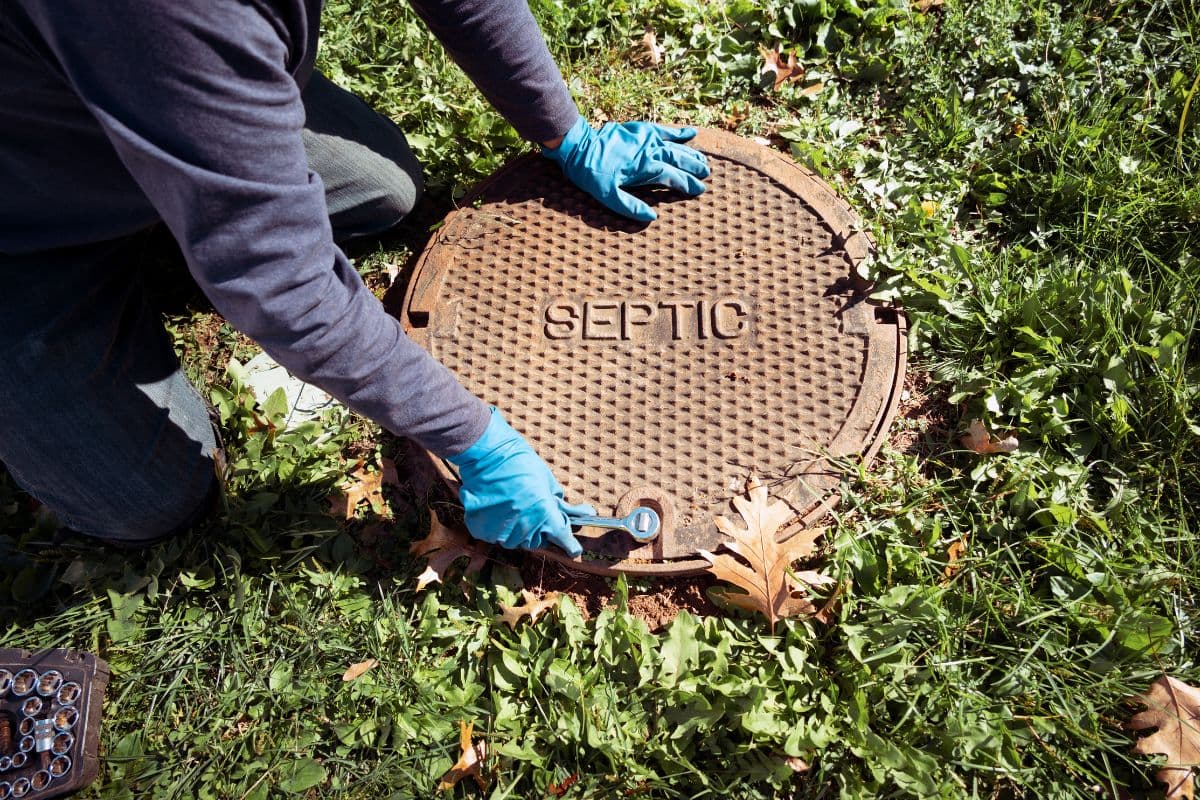
A septic inspection is a professional evaluation of an on-site wastewater treatment system in which a licensed inspector assesses the condition and functionality of the septic tank, drainfield, baffles, effluent filter, and distribution box to determine whether the system is operating correctly and identify any deficiencies requiring repair. The EPA recommends inspections every one to three years for routine homeowner maintenance, and most real estate transactions involving a property with a septic system require one before closing. Unlike a home inspection, which covers the septic system only superficially, a dedicated septic inspection opens the tank, measures sludge and scum levels, and evaluates components that are entirely underground and invisible from the surface.
A septic inspection costs $150 to $650 depending on the type. A routine maintenance inspection runs $150 to $300 and takes 30 to 60 minutes. A real estate transaction inspection costs $300 to $650 and takes 2 to 4 hours. A camera inspection adds $125 to $500 on top of either type. The national average across all inspection types is approximately $400.
The problem with these numbers is that “septic inspection” means different things to different companies. A $150 inspection from one provider might be a 20-minute visual check that tells you almost nothing. A $500 inspection from another might include pumping, camera scoping, and a full written report suitable for a mortgage lender.
If you do not know exactly what is included before you book, you will either overpay for a basic check or underpay for an inspection that misses critical problems. This guide breaks down each inspection type, what should be included at every price point, the add-on fees that inflate the bill, and specific guidance for homebuyers, sellers, and homeowners scheduling routine maintenance.
For a complete overview of how septic systems work and why inspections matter, see our complete septic system guide.
Inspection Costs by Type
| Inspection Type | Cost Range | Duration | When You Need It |
|---|---|---|---|
| Visual/basic inspection | $100 – $200 | 20 – 30 min | Quick annual check between full inspections |
| Routine maintenance inspection | $150 – $300 | 30 – 60 min | Every 1 to 3 years per EPA recommendation |
| Full/comprehensive inspection | $300 – $500 | 2 – 3 hours | Every 3 to 5 years, or when problems are suspected |
| Real estate transaction inspection | $300 – $650 | 2 – 4 hours | Buying or selling a home with a septic system |
| Title 5 inspection (MA and similar) | $400 – $900 | 2 – 4 hours | Required by state law at property transfer |
| Camera/scoped inspection (add-on) | $125 – $500 | 30 – 60 min | Suspected pipe damage, root intrusion, or blockage |
| Dye test (add-on) | $150 – $250 | 1 – 2 hours | Tracing flow path, confirming drainfield absorption |
Which Inspection Do I Need?
Match your situation to the inspection type, minimum requirements, and realistic all-in budget.
| Your Situation | Inspection Type Needed | Minimum Requirements | Realistic All-In Cost |
|---|---|---|---|
| Routine homeowner maintenance, system functioning normally | Routine maintenance inspection | Open tank, measure sludge and scum, check baffles and filter, written report | $150 – $300 plus $300 – $600 if pumping needed |
| System not inspected in 3 or more years | Full comprehensive inspection | Everything above plus D-box check, drainfield probe, flow test | $300 – $500 including pump-out |
| Slow drains, odor in yard, or soggy drainfield | Diagnostic comprehensive inspection | Full inspection plus camera scope of sewer line and dye test | $500 – $900 |
| Buying a home with a septic system | Real estate transaction inspection | Full inspection, flow test, written report for lender, camera scope strongly recommended | $500 – $800 |
| Selling a home with a septic system | Pre-listing comprehensive inspection | Full inspection, written report, all deficiencies identified before listing | $300 – $500 |
| State-mandated inspection at property transfer (MA, NJ, CT) | Title 5 or equivalent | State-specific protocol, written report filed with health department | $400 – $900 |
| System is 15 or more years old | Annual comprehensive inspection | Full inspection plus camera scope of sewer line | $500 – $800 |
| Suspected root intrusion or pipe damage | Camera inspection add-on | Camera scope of sewer line from house to tank, written findings | $125 – $500 on top of base inspection |
| Property has both a well and a septic system | Combined well and septic inspection | Full septic inspection plus well water quality testing | $600 – $1,200 |
| After heavy rain caused system overflow or backup | Emergency diagnostic inspection | Full inspection focused on drainfield saturation and tank capacity | $300 – $600 |
| New homeowner, no inspection history available | Full comprehensive inspection | Full inspection, establish baseline sludge accumulation rate | $300 – $500 including pump-out |
What Each Inspection Level Includes
The biggest gap in this space is that nobody tells you exactly what you should get for your money. Here is what each tier should include, and what it should not.
Visual/Basic Inspection
$100 – $200
What's included:
- Walk the property and visually inspect the drainfield area for standing water, soggy soil, or odor
- Check the area around the tank for surface-level signs of problems
- Verify the tank location
- Provide a verbal summary of findings
What's NOT included:
- Opening the tank
- Measuring sludge or scum levels
- Checking baffles, filters, or internal components
- Written report
- Any testing (dye, camera, flow)
When this is sufficient: As a quick annual check between full inspections for a system you know is healthy and well-maintained. This is not sufficient for a real estate transaction, a suspected problem, or a system you have not inspected in 3+ years.
Routine Maintenance Inspection
$150 – $300
What's included:
- Open the tank (requires accessible risers or digging to the lid)
- Measure sludge and scum levels
- Inspect inlet and outlet baffles for damage or blockage
- Check the effluent filter (clean if needed)
- Run water in the house and verify flow into the tank
- Check the drainfield area visually
- Written report with findings and recommended next steps
What's NOT included:
- Pumping the tank (usually quoted separately at $300 to $600)
- Camera inspection of pipes
- Dye testing
- Drainfield probing or excavation
- Distribution box inspection (unless accessible)
When this is sufficient: For routine maintenance every 1 to 3 years on a system that is functioning normally. This is the inspection the EPA recommends as standard homeowner maintenance.
Full/Comprehensive Inspection
$300 – $500
What's included:
- Everything in the maintenance inspection, plus:
- Pump the tank (often included in the price or quoted as a package)
- Inspect the distribution box (D-box)
- Probe the drainfield for saturation or failure
- Check for backflow from the drainfield into the tank
- Detailed written report with photos
- Recommendations for repairs with estimated costs
What's NOT included:
- Camera inspection (add-on)
- Dye test (add-on)
- Soil testing or perc testing
- Repair work
When this is sufficient: Every 3 to 5 years as a thorough system evaluation, or any time you suspect a problem. This is the inspection level that catches developing issues before they become emergencies. If you are noticing slow drains or septic odors in your yard, start here.
Real Estate Transaction Inspection
$300 – $650
What's included:
- Everything in the comprehensive inspection, plus:
- Formatted written report suitable for lenders, attorneys, and health departments
- Documentation of system type, age, size, and maintenance history
- Assessment of remaining system lifespan
- Identification of code compliance issues
- Flow test — run a specific volume of water to verify the system processes it
- May include water quality testing if the property also has a well
What's NOT included:
- Repair work
- Guarantees about future performance
- Camera inspection (add-on, but strongly recommended for transactions)
When this is required: Any time a property with a septic system changes ownership. Many states, municipalities, and lenders require a septic inspection before closing. Some states (Massachusetts, New Jersey, parts of New York) mandate specific inspection protocols (Title 5 or equivalent). See our buying a home with septic guide for more details.
Hidden Fees and Add-On Costs
These are the charges that turn a $300 quote into a $700 bill. Ask about every one of them before booking.
| Add-On | Cost | When It Applies |
|---|---|---|
| Digging to expose tank lid (no risers) | $50 – $250 | Tank is buried without risers |
| Pumping the tank | $300 – $600 | Often quoted separately from the inspection fee |
| Camera inspection of sewer line | $125 – $500 | Suspected pipe damage, root intrusion, or blockage |
| Dye test | $150 – $250 | Tracing system flow, checking for surface breakout |
| Locating the tank (no records) | $100 – $300 | Tank location unknown, no as-built drawing |
| Second trip / re-inspection | $100 – $200 | Common in real estate transactions |
| Rush/emergency scheduling | $50 – $100 premium | Inspection needed within 24 to 48 hours |
| Report formatting for lender/health dept | $50 – $150 | Some companies charge extra for official documentation |
The riser savings: Installing septic tank risers ($100 to $400 one-time cost) eliminates the $50 to $250 digging fee at every service visit. If you plan to stay in the home for more than 2 to 3 years, risers pay for themselves and make every future inspection and pumping faster and cheaper.
Septic Inspection for Homebuyers
If you are buying a home with a septic system, the inspection is one of the most important due diligence steps in the transaction. A $300 to $650 inspection can reveal problems costing $5,000 to $25,000 to fix.
For a detailed walkthrough of the entire homebuying process with septic, see our buying a home with septic guide.
What Buyers Should Insist On
| Non-Negotiable | Why It Matters |
|---|---|
| Tank must be pumped as part of the inspection | You cannot assess baffle condition, tank integrity, or sludge levels without pumping. An inspector who does not pump is guessing. |
| Distribution box must be opened and inspected | The D-box is a common failure point. If it is not inspected, a cracked or tilted D-box can cause drainfield failure within months of closing. |
| Written report with photos | A verbal “looks fine” is worthless if problems emerge after closing. The written report is your documentation. |
| Flow test | Running a known volume of water through the system confirms it can handle a household load. Without this, you are buying a system that might fail under normal use. |
| Camera inspection of the sewer line (recommended) | The pipe from house to tank is buried and invisible. Tree roots, pipe bellies, and cracks are only visible with a camera. Adds $125 to $500 but can reveal $2,000 to $5,000 problems. |
Who Pays for the Inspection?
In most markets, the buyer pays for the septic inspection as part of their due diligence, similar to the home inspection. However, this is negotiable. In some states and municipalities, the seller is required to provide a passing septic inspection before transfer. Check local requirements with your real estate agent.
What to Do If the System Fails Inspection
If the inspection reveals problems, you have several options:
- Negotiate a price reduction equal to the estimated repair cost
- Require the seller to complete repairs before closing
- Walk away if the problems are severe and the seller will not negotiate — this is what the inspection contingency in your contract protects
- Accept the condition with full knowledge of what repairs you will need and their cost
See our septic system repair cost guide for pricing on every common repair.
If inspection reveals tank or drainfield failure, use our septic tank cost calculator to estimate the cost of replacement before requesting contractor quotes.
Septic Inspection for Sellers
Sellers benefit from a pre-listing septic inspection. Discovering and fixing a $500 problem before listing is far better than having a buyer's inspection reveal it during negotiations, which often results in a larger price concession than the actual repair cost.
A pre-listing inspection costs the same $300 to $500 as any full inspection. If the system passes, you can include the inspection report in your listing materials, which builds buyer confidence and can speed up the closing process.
If it does not pass, you have time to make repairs on your schedule rather than under the pressure of a closing deadline.
How Often Do You Need a Septic Inspection?
| Situation | Recommended Inspection Frequency |
|---|---|
| Standard homeowner maintenance | Every 1 to 3 years (visual or routine) |
| System is 15+ years old | Annually |
| Household size increased since install | Annually until confirmed adequate |
| After heavy rain caused system overflow | As soon as the ground dries |
| Slow drains or odor in yard | Immediately (diagnostic inspection) |
| Buying or selling a home | Required before closing in most areas |
| After major landscaping or construction near system | Within 30 days |
The EPA recommends inspecting every 1 to 3 years and pumping every 3 to 5 years. Many homeowners combine the inspection with pumping to save on the service call fee. See our pumping frequency guide for the exact schedule based on your tank size and household size.
How to Choose a Septic Inspector
Verify licensing
Most states require septic inspectors to hold a specific license or certification. Check with your state's department of environmental quality or health department for licensing requirements.
Ask what's included
Get a written list of exactly what the inspection covers before booking. If the answer is vague (“we'll check everything”), find a different inspector.
Confirm they will pump the tank
Any comprehensive inspection should include pumping. If it does not, the inspector cannot evaluate internal tank conditions and baffle integrity. An inspection without pumping is incomplete.
Get at least three quotes
Pricing varies 30% to 50% between providers in the same market. Compare not just price but what is included at each price point.
Check for conflicts of interest
Some inspectors also sell repair services. This creates a financial incentive to find problems. Consider using an independent inspector for the evaluation and a separate contractor for any repairs.
Ask for a sample report
A quality inspector produces a detailed written report with photos, measurements, and specific recommendations. If they cannot show you a sample, their reporting may be inadequate.
Frequently Asked Questions
How much does a septic inspection cost for a home sale?
Is a septic inspection required when buying a house?
Can I do a septic inspection myself?
What happens if a septic system fails inspection?
Does the septic inspection include pumping?
How long does a septic inspection take?
Can a septic inspection find all problems?
Should I combine the septic inspection with a well inspection?
Glossary
Visual inspection
A visual inspection is the most basic level of septic evaluation in which the inspector walks the property surface, checks the drainfield area for standing water, soggy soil, odor, and unusually green grass, and provides a verbal summary of findings without opening the tank or measuring any internal components. It is useful as a quick annual check between full inspections for a system known to be healthy and well-maintained, but it is not sufficient for a real estate transaction, a suspected problem, or any system that has not been professionally inspected in more than three years.
Comprehensive inspection
A comprehensive inspection is a thorough professional evaluation that includes pumping the tank, measuring sludge and scum levels with a sludge judge, inspecting the inlet and outlet baffles and effluent filter, opening and checking the distribution box, probing the drainfield for saturation or failure, running a flow test, and producing a detailed written report with photos and repair recommendations. It is the appropriate inspection level every three to five years for routine homeowner maintenance and the minimum standard for any real estate transaction involving a property with a septic system.
Title 5 inspection
A Title 5 inspection is a state-mandated septic evaluation protocol required in Massachusetts at every property transfer, refinancing, and change of use, established under the Massachusetts Title 5 regulations to protect public health and groundwater quality. It is more rigorous and more expensive than a standard inspection, typically costing 400 to 900, and a system that fails Title 5 must be repaired or replaced before the property can be transferred.
Flow test
A flow test is a procedure conducted during a comprehensive or real estate transaction inspection in which a known volume of water is run through the household plumbing and into the septic system to verify that the system can handle a realistic household load and that effluent is flowing freely from the tank to the drainfield without backing up. A system that passes a static visual inspection but fails a flow test under realistic water use conditions reveals a functional limitation that would only become apparent when the home is occupied, making the flow test a critical component of any transaction inspection.
Dye test
A dye test is a diagnostic procedure in which non-toxic colored dye is flushed into the septic system and the inspector then checks the drainfield area, surrounding soil, and nearby water features for dye breakout, which indicates that the drainfield is not properly containing and absorbing effluent. It is an effective and inexpensive way to confirm suspected drainfield failure or surface breakout of effluent, though it cannot detect problems in the tank interior or pipe condition.
Distribution box (D-box)
A distribution box is a small concrete or plastic underground chamber located between the septic tank outlet and the drainfield that receives effluent and divides it equally among multiple drainfield trench lines to prevent any single section from being hydraulically overloaded. A cracked, tilted, or partially blocked D-box is one of the most commonly overlooked failure points in a septic system and can cause premature drainfield failure in the overloaded section while leaving other sections underused.
Sludge level
The sludge level is the measured depth of settled solid waste at the bottom of the septic tank, determined during an inspection using a sludge judge or similar measuring tool, and compared to the tanks total depth to calculate what percentage of the tanks capacity has been consumed by accumulated solids. When the sludge layer reaches one third of the tanks total depth or comes within 12 inches of the outlet tee, the EPA recommends pumping to prevent solids from escaping into the drainfield where they cause irreversible clogging.
Effluent filter
An effluent filter is a removable screen installed at the outlet pipe of the septic tank that catches suspended solids before they reach the drainfield, and it should be checked, cleaned, and if necessary replaced at every inspection and pump-out visit. A clogged effluent filter restricts outflow from the tank and produces the same whole-house slow drain symptoms as a full tank, making it one of the most commonly overlooked causes of apparent system problems that is actually an inexpensive maintenance fix.
Related Guides
On theseptic.guide
Septic Tank Pumping Cost 2026
What pump-outs cost by tank size and region, and how to combine pumping with your inspection to save on service call fees.
GuideHow Often Should You Pump Your Septic Tank?
The EPA-based pumping and inspection schedule by tank size and household size, so you know how often to book each service.
Cost GuideSeptic System Repair Cost
What every common repair costs after a failed inspection, from a cracked baffle to full drainfield replacement.
Cost GuideSeptic System Installation Cost 2026
Full cost breakdown for new and replacement systems, relevant when an inspection reveals the system has reached end of life.
Cost GuideDrainfield Replacement Cost
The most expensive outcome of a failed inspection, with a full cost breakdown by system type and site condition.
ProblemSigns Your Drainfield Is Failing
The warning sign progression that a thorough inspection is designed to catch early, from slow drains to surfacing sewage.
GuideBuying a Home with a Septic System
The complete homebuyer's guide to septic due diligence, what to insist on in the inspection, and how to negotiate repairs.
GuideSelling a Home with a Septic System
How a pre-listing inspection protects your asking price and speeds up the closing process.
GuideSeptic System Maintenance Checklist
The full ongoing maintenance schedule that keeps your system in passing condition between professional inspections.
ReviewBest Septic Tank Risers
The one upgrade that eliminates the $50 to $250 digging fee at every inspection and pump-out visit, paying for itself within two to three service calls.
ProblemSlow Drains on a Septic System
When slow drains prompt an unscheduled inspection, this guide helps you diagnose whether the cause is a full tank, a clogged filter, or a drainfield problem before you call.
GuideComplete Septic System Guide
How every component of the system works and what inspectors are looking for when they evaluate each one.
GuideDoes Insurance Cover Septic Repair and Replacement?
What homeowners insurance covers when an inspection reveals a failed component, and what riders are available to reduce out-of-pocket repair costs.
From Our Network
Sump Pump Design Ideas for 2026
For homes where a basement inspection and a septic inspection are being scheduled together, this guide covers basement water management equipment that protects both systems.
ReviewBest Sump Pumps 2026
Homes on septic systems with high water tables often need sump pumps to manage groundwater that would otherwise saturate the drainfield. Reviewed and ranked for every budget.
Get Expert Septic Help
Connect with qualified septic professionals in your area. Free quotes, no obligation.